Short answer. Start about six to eight weeks before the move. Measure the new flat and plan where each piece of furniture goes, so you sell or give away what will not fit instead of carrying it. Book the move and ask the building about the lift and parking. Tell your suppliers the dates, book the internet, redirect the post and pack by room. On the day, photograph the meters and any damage before the boxes come in. In the first week, find the stopcock and the fuse box, test the alarms and change your address everywhere.
Will it fit through the door?New-build snagging checklistWill my sofa fit?
When to do what
| When | What to do | Why |
|---|---|---|
| About 6 to 8 weeks before | Measure the new flat, plan the furniture, decide what goes | Everything else follows from what you take |
| About 4 to 6 weeks before | Get quotes and book the move; book internet | Good dates and installers fill up early |
| About 2 to 4 weeks before | Tell suppliers your dates; redirect the post; pack what you rarely use | Accounts close and open on the right day |
| The last week | Pack most rooms, confirm times, empty the freezer | Nothing left for the last night |
| The day before | Pack the first-night box, charge phones, keep keys and papers apart | You need them before anything else |
These are common guidelines. A short-notice move squeezes them; the order stays.
Before moving day: measure and plan
- Get the plan. A listing or developer's plan shows how the rooms connect. Check its sizes against one real wall.
- Measure what matters. Each room wall to wall, the doors, halls and lift on the way in, ceilings under slopes, and where radiators, sockets and window sills sit.
- Measure your furniture. Width, depth and height of every big piece.
- Place it. Decide where each piece goes. This is when you find the wardrobe taller than the sloped ceiling.
- Sort what goes. Sell, give away or recycle what will not fit. Every piece left behind is one less to pay for and carry.
- List what you need, and order big items to arrive after you move in.
For big pieces and narrow stairs, see our guide "Will it fit through the door?".
Before moving day: book the move
- Removals firm or a van. Ask two or three firms for quotes; many survey by video. Ask what is included: packing, taking furniture apart, insurance, stairs.
- Both buildings. Ask about booking the lift, quiet hours and where a van can stop. Some streets need a parking permit; ask the local authority well ahead.
- The old flat. Book the cleaning and find out when the keys go back, and whether there is a final check.
Before moving day: utilities, meters and post
- Find out who supplies the new flat. Energy, water and heating may come from different firms, or through the building.
- Tell old and new suppliers your dates, and ask how to send the readings.
- Book internet early. A new line can take weeks.
- Redirect the post. It catches what you forget to change.
| Who to tell | Examples |
|---|---|
| Money | Bank, cards, pension, loans, insurance |
| Work and tax | Employer, the tax office, any benefits |
| Health | Doctor, dentist, pharmacy, vet |
| Home | Energy, water, internet, contents insurance |
| Car | Registration and licence, where your country asks for it |
| Everyday | Online shops, subscriptions, family and friends |
Rules for registering a new address differ from country to country. Check what yours asks for, and by when.
Packing
- Label by room. Write the new room's name on the top and one side of each box, and number them.
- Heavy things in small boxes. Books in small ones, bedding in big ones.
- Screws in bags, taped to the piece they came from.
- The first-night box. Kettle, mugs, chargers, toilet roll, soap, towels, bedding, medicines, a torch, basic tools and something to eat.
- Papers and keys in a bag you carry.
Moving day
- Photograph the old flat empty, and its meters with the readings clear.
- Reach the new flat first if you can. Photograph any damage before a single box comes in.
- Read and photograph the meters there too.
- Check the basics. Heating, hot water, lights and the door lock.
- Tape the room name on each door, matching the box labels.
- Put the plan on the wall. One person directs where furniture goes.
- Build the beds first.
- Read the manuals. Many fridges should stand upright for some hours before you switch them on; a washing machine has transit bolts to remove.
The first week
- Find the stopcock, the fuse box and the heating controls. Learn to turn off the water before you need to.
- Test the smoke and carbon monoxide alarms.
- Think about the locks. You do not know how many keys are out there. If you own the flat, consider changing them; if you rent, ask first.
- Unpack in order. Kitchen basics, bathroom, beds, then the living room.
- Write down faults. If you rent, compare the flat with the check-in record and send any faults in writing, with photos.
- Change your address with everyone on the list.
- Learn the building. Bin days, recycling and the neighbours' names.
Common mistakes
- Moving everything, then sorting. You pay to carry what you then give away.
- Booking internet last. You may wait weeks.
- No meter photos. Readings are easy to argue about without them.
- Packing the kettle and the chargers. Keep them in the first-night box.
- Buying furniture before measuring. Measure the room, the doors and the route first.
Plan the new flat before the boxes
In Flatwalk you upload the new flat's plan as a photo or a PDF, or draw it by typing the wall lengths. If you can visit, use "Scan your whole room": tap each floor corner through the camera and the room appears in the plan.
Then place your own furniture at its measured size, and real pieces from real shops for what you still need; the shopping list keeps their prices and links. Tap both sides of a doorway with the tape measure to read its width, and walk from the front door to each room at eye level.
What it does not do: Flatwalk does not book anything, tell your suppliers or test the route for you, and the plan is only as true as the sizes you give it. Measure the real flat with a tape.
What Flatwalk does that older planners skip
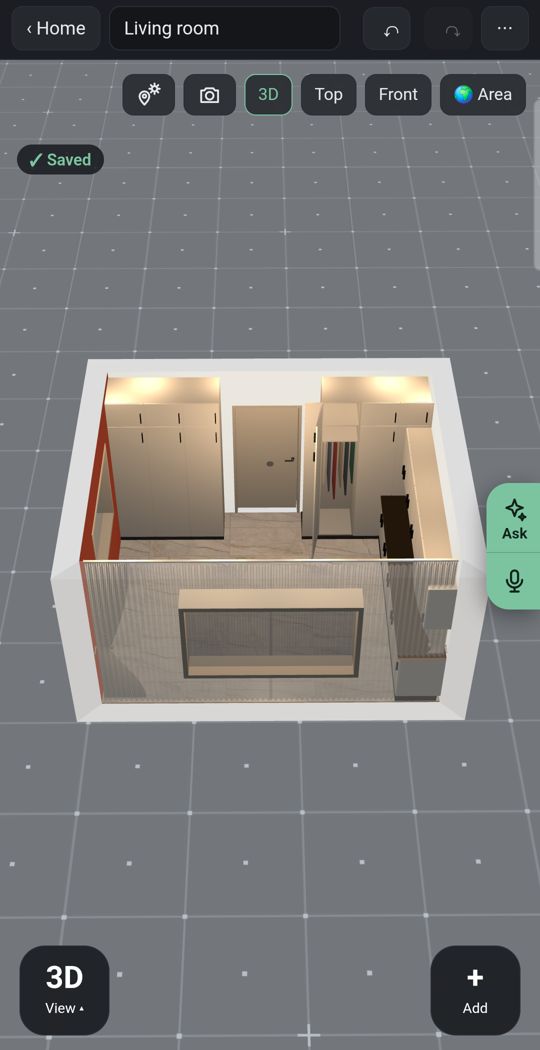
Lights
Add ceiling lights, lamps and LED strips and see which rooms need a lamp before the first evening.
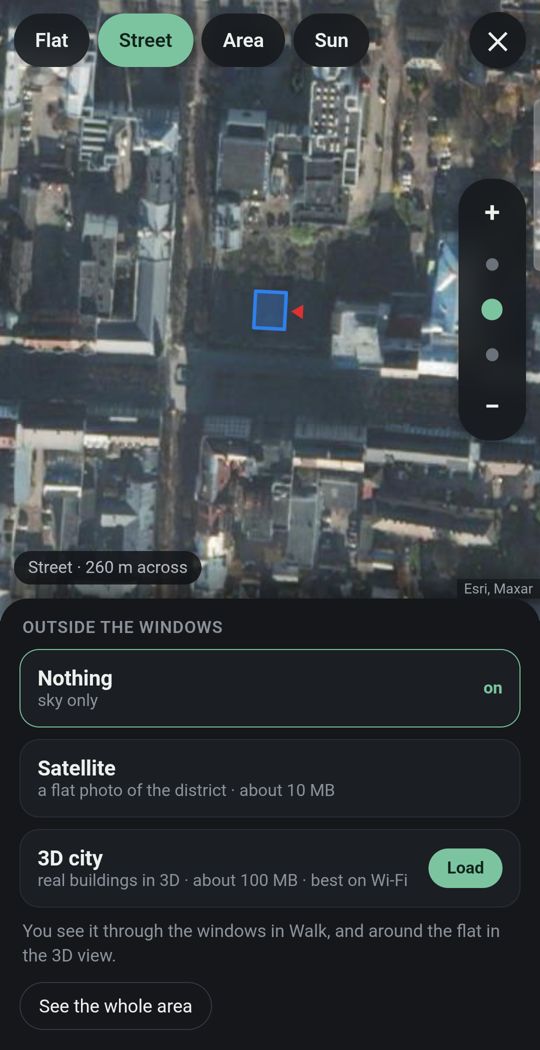
Your flat in its city
Give the address and the street and buildings around you appear in 3D where the map has them.
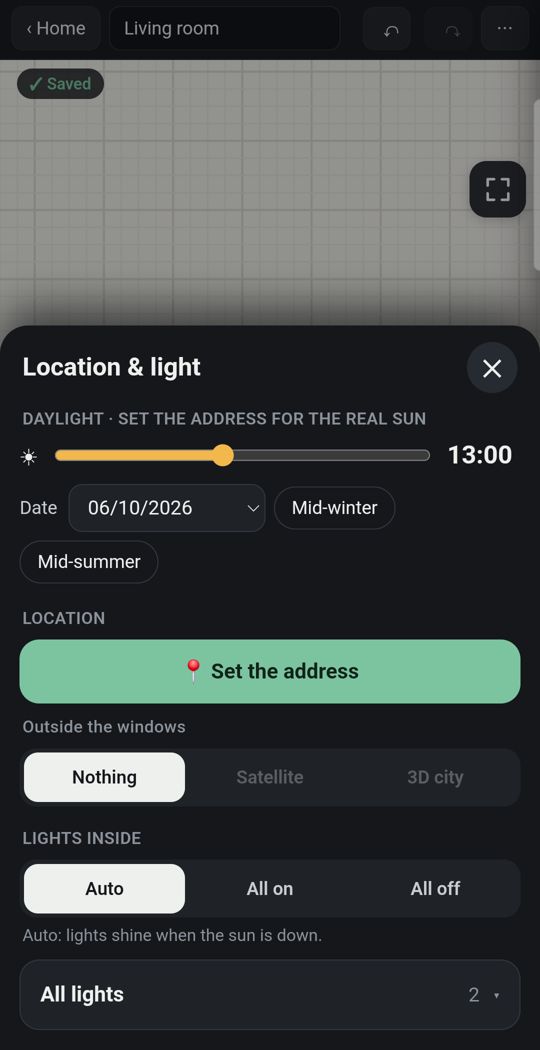
Sun for your address
See which rooms get the morning or evening sun, by date and hour, before you choose blinds.
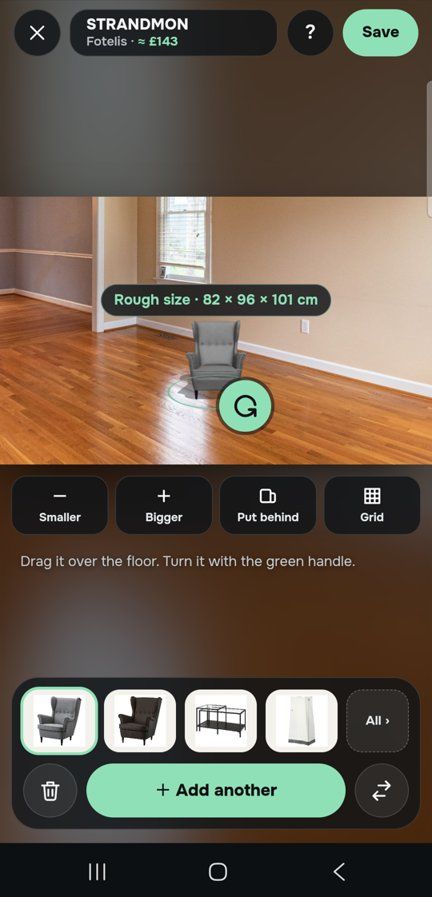
One piece, in your own room
Through the live camera or in a photo of the room, stand a sofa on your new floor at its true size before you buy.
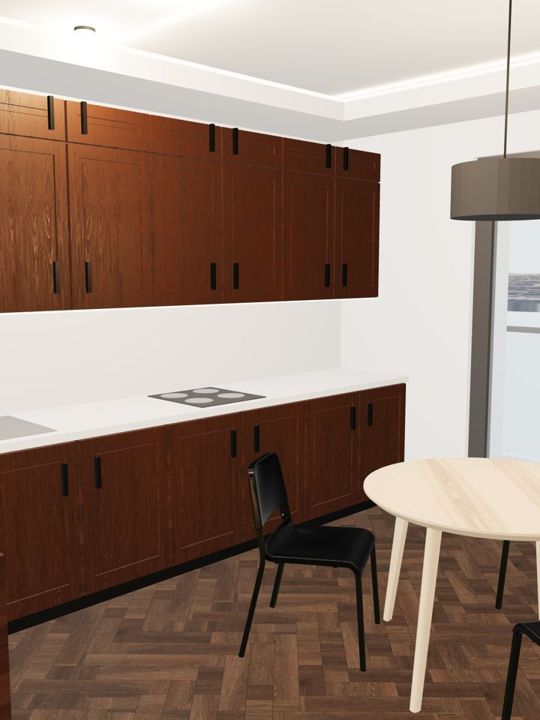
Detail
Kitchens, wardrobes, bathrooms, floors, tiles and paint, built piece by piece.
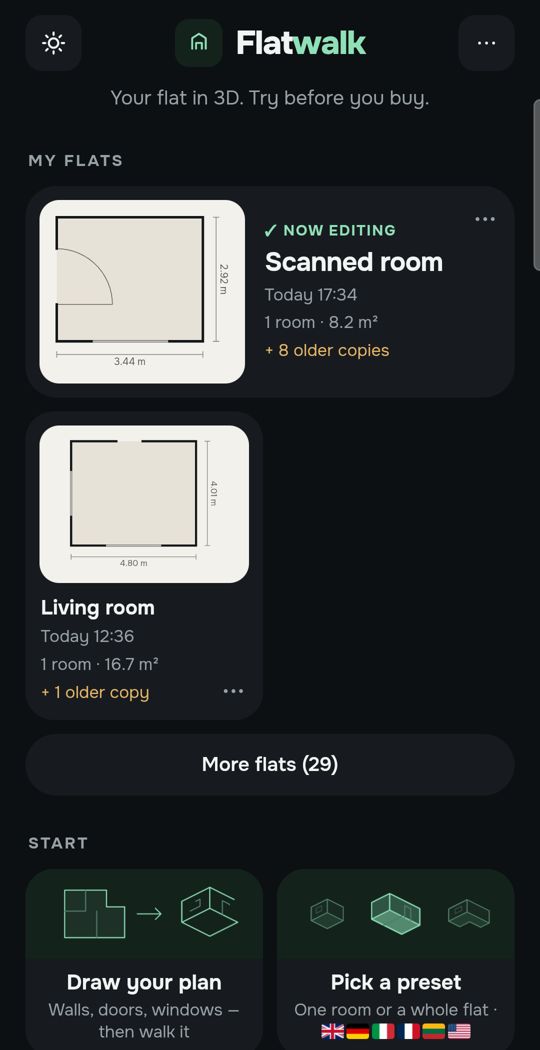
Made for a thumb
Tap a piece and its choices appear: move it, turn it, replace it with another.
Swipe for more. Every picture is the app itself.
One flat, free
Most people plan one home. For that, Flatwalk costs nothing: no trial clock and no card. Drawing the new flat, scanning its rooms, the tape measure, furniture at its true size, lights, sun and walking are all part of it, and each AI tool gives one free try. A membership is for people who want more flats or more AI.
Questions people ask
How far ahead should I plan a move? A common guideline is six to eight weeks. Measure and plan the furniture first, then book the move and the internet, then tell suppliers and redirect the post.
What should I do first when I move into a new flat? Photograph the meters and any damage, check the heating, hot water and locks, and find the stopcock and the fuse box.
What goes in a first-night box? A kettle, mugs, chargers, toilet roll, soap, towels, bedding, medicines, a torch, basic tools and some food.
How do I know my furniture will fit in the new flat? Measure the rooms, the doors and the route in, and place each piece at its true size in a plan before moving day.
Flatwalk turns your new flat's plan into a 3D flat where you place your own furniture at its true size before moving day, free for one flat. It is launching on Google Play; join the waiting list at flatwalk.app.
Join the waiting list