Short answer. Snagging means listing the faults in a new home before, or soon after, you take the keys. Go in daylight, allow two to three hours, and bring the plan, the finish list, a tape measure, a level, a torch, a charger and sticky labels. Label and photograph every fault, room by room, and give the developer one numbered list. Deadlines differ by country: check your contract first.
Walk your new-build flat before handoverMoving into a new flatBuying a flat off-plan
What snagging is, and when it happens
A snag is anything unfinished, damaged or not as agreed: a door that catches, a scratched window, a dead socket, a room smaller than the plan. Some countries record faults at handover, others give you set periods after moving in; either way, find them early, write them down and get a written answer.
Before the day
- Read the contract and the finish list. They say what you should find: floors, tiles, doors, sockets, the kitchen.
- Get the floor plan of your own flat and the table of room sizes.
- Ask about the rules. How long you have to report faults, and what the developer must fix by when. Your contract and local law decide.
- Book daylight. Many faults only show in daylight or under a torch held flat.
- Bring a second person. One checks, one writes.
- Think about a professional. Paid inspectors work in many countries and know what local standards allow.
What to bring
- The floor plan, the room sizes and the finish list.
- A tape measure, or a laser measure for long rooms.
- A spirit level, ideally a long one, for walls, floors and sills.
- A torch, to shine along walls and ceilings.
- A phone charger or a plug-in socket tester.
- Sticky labels, a pen, and a phone with plenty of battery.
- A bottle of water, to test the balcony and shower drains.
- A sheet of tissue paper, to see whether air vents draw.
How to record each fault
- Go in the same order in every room: door, walls, ceiling, floor, windows, then fittings, sockets and heating, clockwise from the door.
- Put a numbered label next to each fault.
- Take two photos: one close up with the label in it, one wide to show where it is.
- Write one line per fault: number, room, where, what. "7. Bedroom 1, window left of bed: scratch on the glass, lower corner."
- Note what you could not check, such as heating in summer or a lift not yet running, so it stays open.
Give the developer one written list, keep a copy, and ask for a written answer with the dates for each repair.
The checklist, room by room
Front door and hall
- The door opens, closes and locks smoothly; every key works; the seals are whole.
- The frame and the door are free of dents and scratches.
- The intercom and doorbell work, where fitted.
Every room
- Room sizes match the plan within a few centimetres; the ceiling height is as promised.
- Walls and ceilings: shine the torch along them for bumps, cracks and patchy paint. Hold the level against them; large gaps under it are worth noting.
- Floors are level, with no cracks, chips, gaps or hollow sounds. On tiles, tap with a knuckle: a hollow tile sounds different.
- Windows open, tilt where they should, close and lock. Seals are whole; glass and frames are not scratched; sills are firm.
- Internal doors, where fitted, open and close without catching.
- Every socket and switch works. Light, TV and data points are where the plan shows them.
- Radiators or underfloor heating come on and warm up. Valves do not drip.
- Air vents draw: hold the tissue against them.
- No damp patches, stains or smells.
Kitchen
- Units, doors and drawers are fitted straight and close properly, where a kitchen is included.
- Worktops have no chips, and their joins and seals are complete.
- Taps run hot and cold; the sink drains quickly; nothing drips underneath.
- Appliances switch on, and the extractor runs.
Bathroom and toilet
- Toilet flushes and refills; basin, bath and shower drain quickly.
- Sealant round the bath, shower and basin is unbroken.
- Tiles are flat, with even joints and no cracks.
- A shower floor falls towards the drain: pour a little water and watch.
- The extractor fan runs.
Balcony or terrace
- Pour water: it should run to the drain, not pool against the door.
- Railings are firm; the floor has no cracks; the door threshold is sealed.
Services and paperwork
- Photograph every meter with its reading and number.
- The fuse box or consumer unit is labelled.
- Smoke alarms work, where fitted.
- Collect keys, fobs, manuals, guarantees and any certificates your country requires.
- Check the extras in your contract: storage room, parking space, post box.
After the inspection
- Do not sign that the flat has no faults if you found some. Make sure the list goes on the record.
- Ask what happens with a serious fault. In some places you can refuse the flat until it is put right; your contract and local law decide.
- Check the repairs and tick them off the same list.
- Keep the list and photos until your warranty periods have run out.
- Look again later. Small cracks often appear after the first heating season. Report them in writing, in time.
Common mistakes
- Rushing. One hour is not enough for most flats.
- Inspecting after dark or with furniture in. Faults hide in poor light and behind boxes.
- Letting your own builders start first. Then it is hard to show who caused a scratch.
- A list in your head. Only a written list with photos counts.
Before the keys, and after them
Snagging checks what was built; the same plan shows how you will live in it. In Flatwalk you upload the developer's plan, walk it with real furniture at its true size, and type in any wall that was built a few centimetres different, so what you order fits the flat as built. For snagging itself, use a real tape.
What Flatwalk does that older planners skip
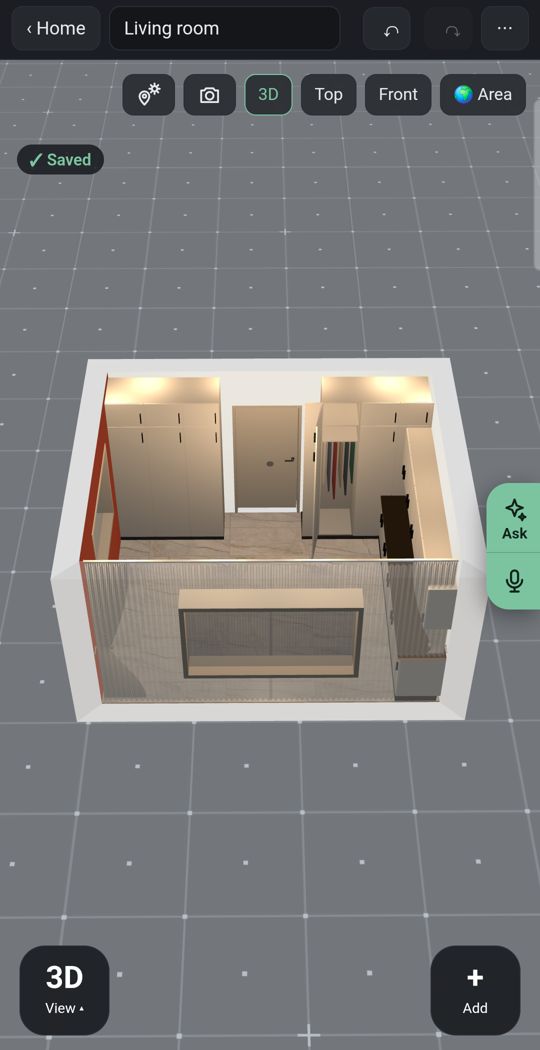
Lights
Add ceiling lights, lamps and LED strips and see the new flat at night before you live there.
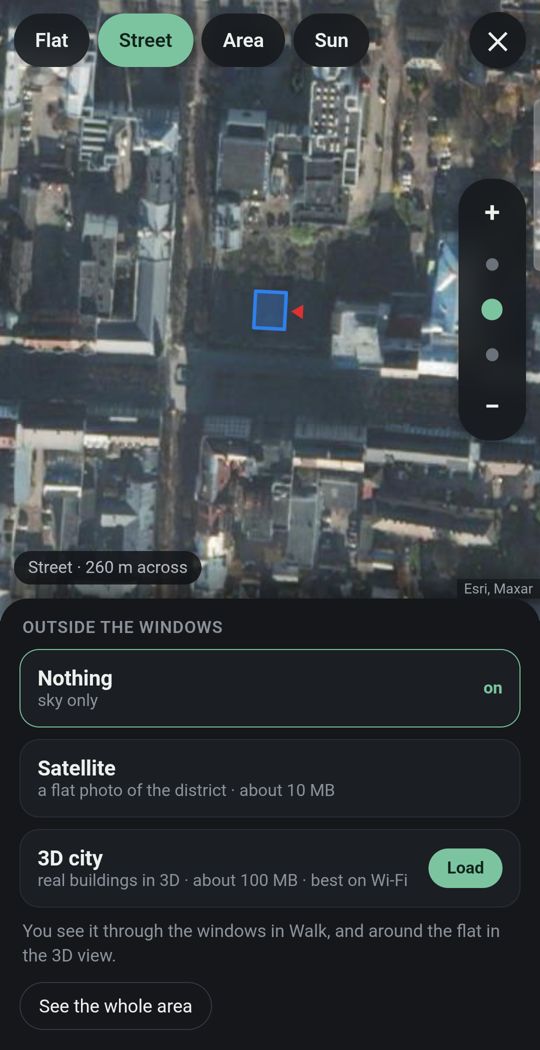
Your flat in its city
Give the address and the street and buildings around you appear in 3D where the map has them.
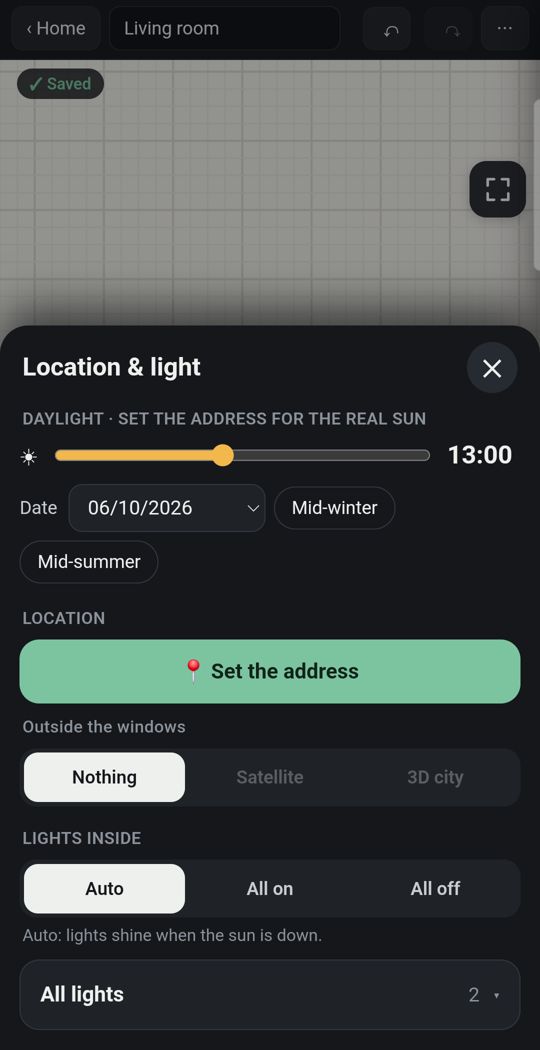
Sun for your address
Real sunlight through your new windows, by date and hour.
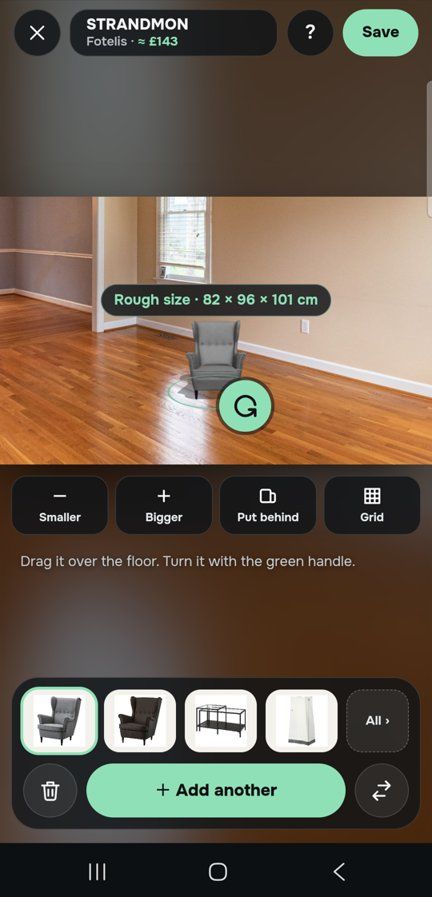
One piece, in your own room
Once you have the keys, stand a sofa on your new floor at its true size through the live camera or in a photo of the room.
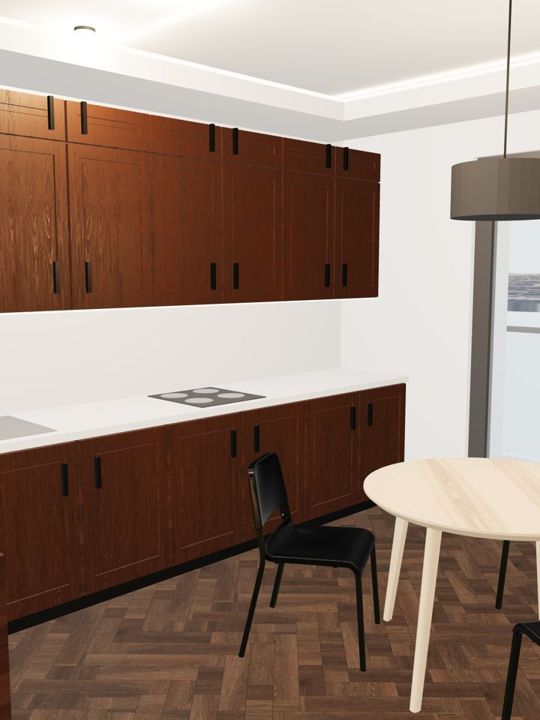
Detail
Kitchens, wardrobes, bathrooms, floors, tiles and paint, built piece by piece.
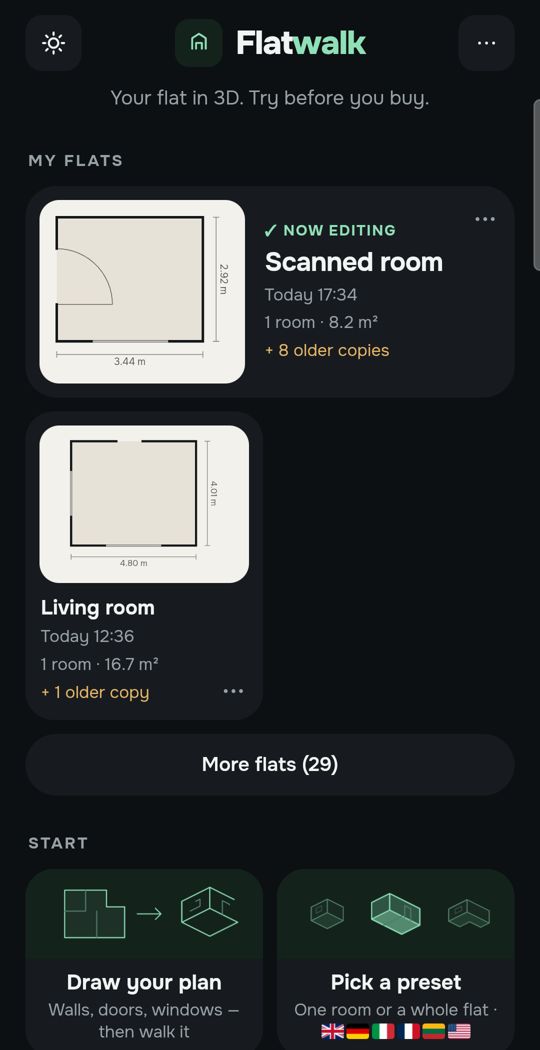
Made for a thumb
Tap a wall that was built differently and type its real length.
Swipe for more. Every picture is the app itself.
One flat, free
Most people plan one home. For that, Flatwalk costs nothing: no trial clock and no card. Drawing, exact wall sizes, furniture, lights, sun and walking are all part of it, and each AI tool, such as reading your floor plan from a picture, gives one free try. A membership is for people who want more flats or more AI.
Questions people ask
What is snagging? Finding and listing the faults in a new home, from scratches and loose fittings to sockets that do not work, so the developer can put them right.
What should I bring to a snagging inspection? The floor plan, the finish list, a tape measure, a spirit level, a torch, a socket tester or charger, labels and a phone for photos.
How long does a snagging inspection take? Allow two to three hours for most flats, in daylight. Larger flats take longer.
Should I sign the handover papers if I find faults? Make sure every fault is written into the record first. What you can refuse, and how long the developer has to fix things, depends on your contract and local law.
How long do I have to report faults in a new-build flat? It differs from country to country and from contract to contract. Check both before the day, and report faults in writing as soon as you find them.
Flatwalk turns your developer's floor plan into a flat you can walk through and furnish before handover, and correct to the sizes as built after it, free for one flat. It is launching on Google Play; join the waiting list at flatwalk.app.
Join the waiting list