Short answer. A north-facing room gets little or no direct sun, only light from the sky. That light is cool, slightly blue and very even through the day, so colours look greyer and colder than on the card. Colours with a warm undertone usually look better there; cool greys and bright whites often look flat. Test large samples on more than one wall, look at them morning, midday and evening and under your lamps, and add warm lamps so the room is not lit only from the ceiling.
How the sun moves through your flatHow much sun will my flat get?Living room layout
Why north light is cool and even
Sun time: in summer time add about an hour. A clear day with nothing in the way; buildings and trees opposite cut it, most of all in winter. For your own address and any date, use the sun tool.
In the northern hemisphere the sun moves across the south of the sky, so a north window sees it only early and late on summer days. The rest of the time it gets light from the sky itself, bluer than sunlight and nearly the same from morning to evening. Colours look cooler, there are few shadows, and the light fades towards the back wall. In the southern hemisphere, swap north and south.
Warm or cool colours
Every colour has an undertone, the hint of another colour you notice next to a purer version, and north light makes it show.
- Warm undertones (yellow, red, pink, brown) balance the blue light: creamy whites, soft yellows, warm beiges, terracotta, greys that lean brown.
- Cool undertones (blue, green, grey) are pushed further towards cold: cool greys and icy whites often look drab.
- Going dark is the other answer: a deep, warm colour and good lamps make the room cosy rather than bright.
A paint's light reflectance value, from 0 for black to 100 for white, tells you how much light it sends back, but it cannot add light the window does not bring in.
How the other directions change a colour
| Window faces (northern hemisphere) | The light | Colours that often suit | Watch out for |
|---|---|---|---|
| North | Cool and even, little direct sun | Warm whites, creams, warm neutrals, deep warm colours | Cool greys and bright whites looking cold |
| South | Warm and bright, strong at midday | Most colours; cool and pale ones stay fresh | Pale colours washing out at midday; fading fabrics |
| East | Warm in the morning, cooler after midday | Soft neutrals that work warm and cool | A colour that glows at breakfast and turns grey by evening |
| West | Cooler in the morning, warm and orange in the evening | Colours that can take a warm glow | Warm colours turning orange at sunset |
Testing samples, and lighting
- Go big: a sample at least A4 size, two coats, on card you can move.
- Try more than one wall: in a north room the change from wall to wall is larger than the change through the day.
- Look morning, midday, evening and at night under the lamps you will really use, and beside a sheet of white paper.
- Choose a little lighter: a colour on four walls looks stronger than a patch.
For lamps, warm white (about 2700 to 3000 K) suits living rooms and bedrooms, neutral (3500 to 4000 K) kitchens and desks; cool daylight bulbs add blue to blue. Use two or three lamps at different heights, light the wall furthest from the window, and pick bulbs with a colour rendering index of 90 or more.
Try it in your own flat
In Flatwalk you give the address, put the flat on the map and choose any date and hour. The real sun falls through the windows in 3D and a list shows how long each room gets direct sun, so you see which rooms get almost none. Paint the walls, add ceiling lights, lamps and LED strips, and let the lights follow the hour. A phone screen does not show paint as it looks on a real wall, so use real samples to choose the colour; Flatwalk's sun counts a clear day without buildings and trees outside.
What Flatwalk does that older planners skip
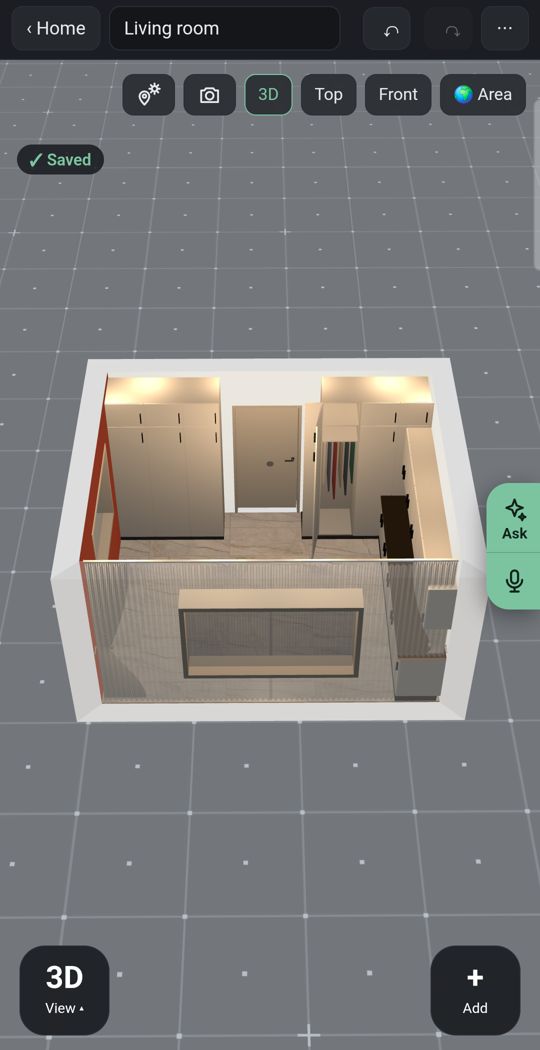
Lights
Add ceiling lights, lamps and LED strips and see where a north room needs them after dark.
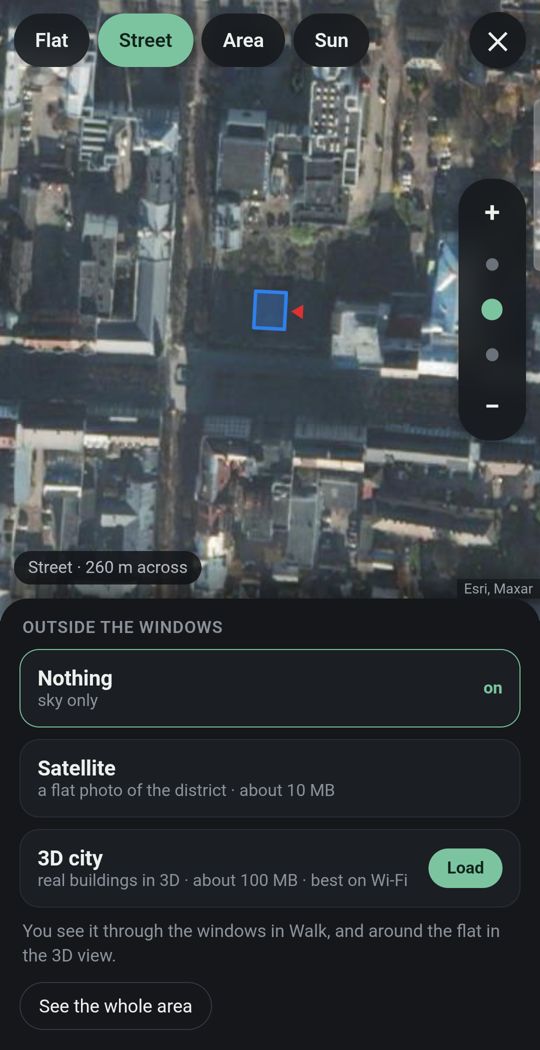
Your flat in its city
Give the address and the street and buildings around you appear in 3D where the map has them.
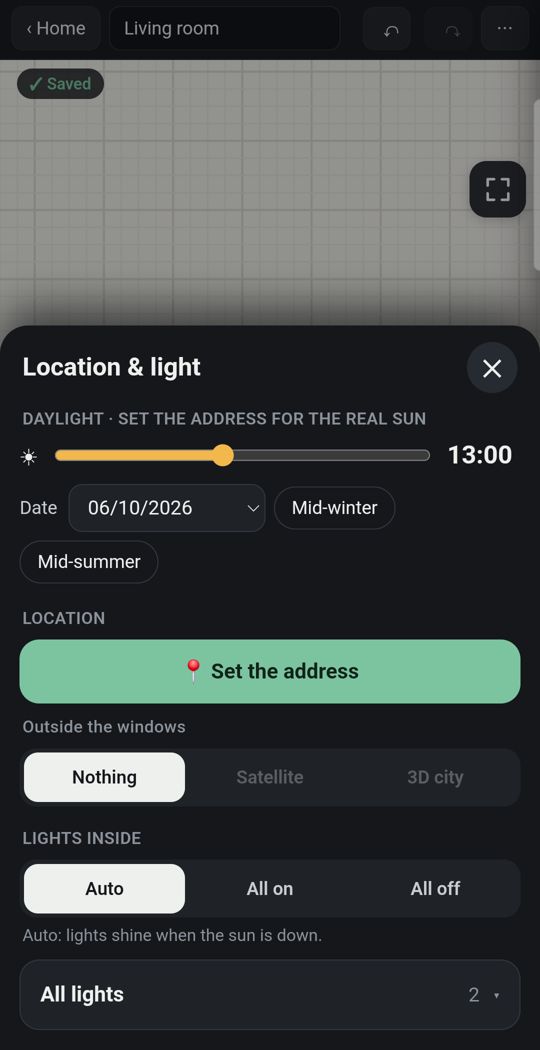
Sun for your address
Real sunlight by date and hour, and how long each room gets direct sun.
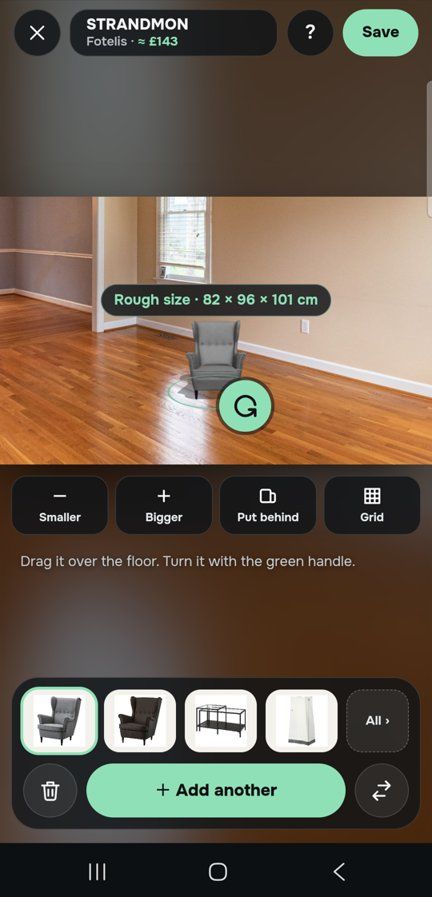
One piece, in your own room
Through the live camera or in a photo of the room, stand a sofa on your own floor at its true size, next to your painted sample.
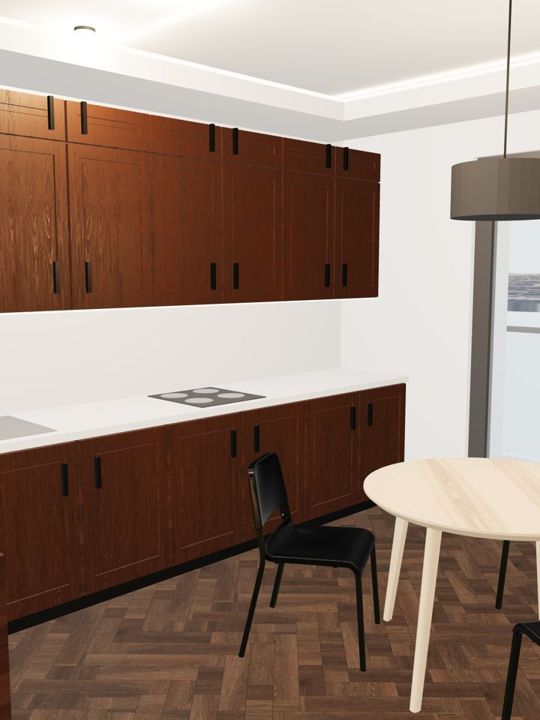
Detail
Floors, tiles and paint, kitchens, wardrobes and bathrooms, built piece by piece.
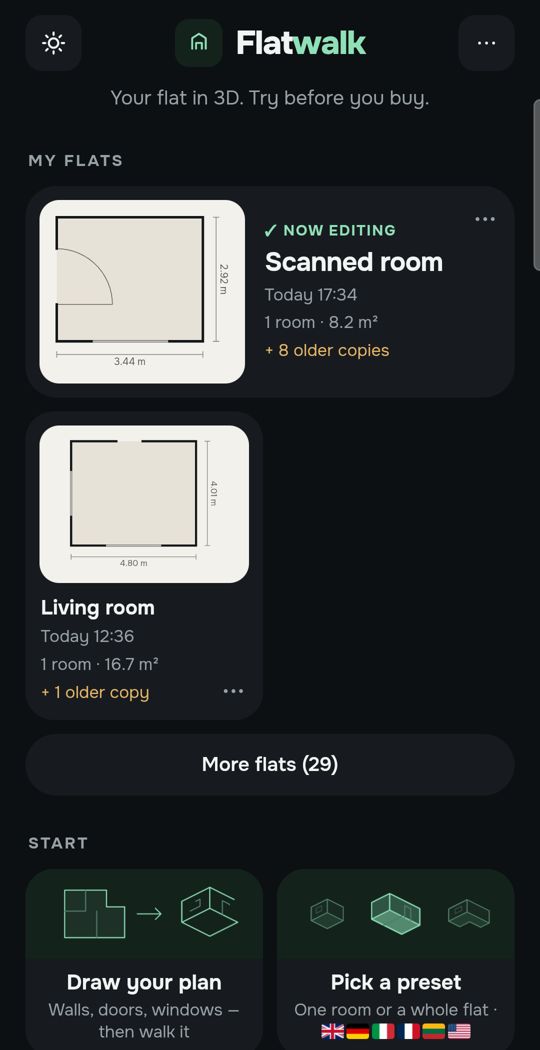
Made for a thumb
Slide the hour with one finger and watch the light move through the rooms.
Swipe for more. Every picture is the app itself.
One flat, free
Most people plan one home. For that, Flatwalk costs nothing: no trial clock and no card. Drawing the flat, the sun for its address, paint, lights, furniture and walking through it are all part of it, and each AI tool gives one free try. A membership is for people who want more flats or more AI.
Questions people ask
What colour is best for a north-facing room? Usually one with a warm undertone: a creamy white, a warm neutral, a soft yellow or a deep warm shade. Cool greys and bright whites often look cold there.
Why does my paint look grey in a north-facing room? North light comes from the sky, not straight from the sun, and it is cool and slightly blue. It pulls colours towards grey, most of all cool ones and pure whites.
Should I use warm or cool bulbs in a north-facing room? Warm white, about 2700 to 3000 K, for living rooms and bedrooms. Neutral white suits a kitchen or a desk.
How do I test a paint colour? Paint a large sample, at least A4 size, try it on more than one wall, and look at it in the morning, at midday, in the evening and under your lamps for a few days.
Flatwalk shows the real sun for your address moving through a 3D plan of your flat, with paint and lights, free for one flat. It is launching on Google Play; join the waiting list at flatwalk.app.
Join the waiting list