Short answer. Find which way the main windows face, then check how high the sun climbs at that address in winter and in summer, and what stands in its way. A compass on your phone, a free sun-path map and two visits at different hours answer most of it. To see where the light will actually fall inside each room, hour by hour, put the flat's plan into an app that draws the sun for your address and date.
How the sun moves through your flatNorth-facing room coloursBuying a flat off-plan
Check the sun at your own window, with the buildings around it, in the free sun tool
Step 1: which way do the windows face?
In the northern hemisphere, south gets the most direct sun and the most summer heat, east the mornings, west the afternoons and evenings (and the hottest rooms on a summer evening), and north little or no direct sun but steady, even light. In the southern hemisphere, swap north and south.
Stand at the window with your phone's compass, away from radiators and steel frames, then check on a map: the building's outline and the street usually give the answer within a few degrees. A listing's "south-facing" may mean the balcony, not the bedrooms, so check each room.
Step 2: how high does the sun climb?
| City | Noon sun, 21 December | Noon sun, 21 June |
|---|---|---|
| London | About 15° | About 62° |
| Warsaw | About 14° | About 61° |
| Vilnius | About 12° | About 59° |
| New York | About 26° | About 73° |
Low winter sun reaches deeper into rooms but is blocked more easily by anything opposite. For your exact address and any date, Flatwalk's free sun tool shows the hours of direct sun at your own window, with the buildings and trees around it; SunCalc (suncalc.org) is a second free option for the sun's path alone.
Step 3: what is in the way?
A building opposite blocks the sun whenever the sun is lower than the angle from your window to its top. In December in London, a building only 10 m (33 ft) taller than your window and 37 m (121 ft) away shades it at midday. So count the floors opposite and how far away they are, note your own floor, look up for a balcony above, picture the trees in leaf, and check the council's planning search for empty plots.
Step 4: visit at the hours you live there
Go back on a weekday morning for the bedroom and in the early evening for the living room or balcony, and ask a neighbour about winter.
Step 5: see it inside the rooms
What you notice living there is where the sun lands: a patch on the sofa at four o'clock, a bedroom flooded at six in the morning. In Flatwalk you give the address, put the flat on the map and choose any date and hour; the sunlight falls through the windows in 3D, and a list shows how long each room gets direct sun. The app counts a clear day and not the buildings and trees outside, so use Step 3, or the web sun tool, for what stands opposite.
Common mistakes
- Trusting the listing's word "sunny". Check each room's direction yourself.
- Visiting only at noon. Mornings and evenings are when you are home.
- Forgetting summer heat behind large south- or west-facing windows with no shade.
- Forgetting what may be built opposite. Check the planning search.
What Flatwalk does that older planners skip
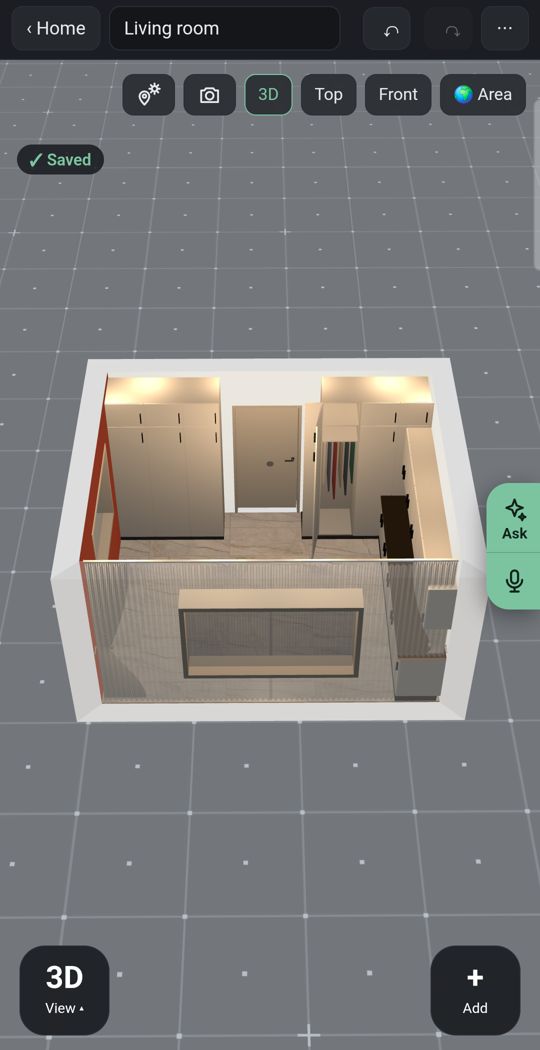
Lights
Add ceiling lights, lamps and LED strips and see the room after the sun goes down.
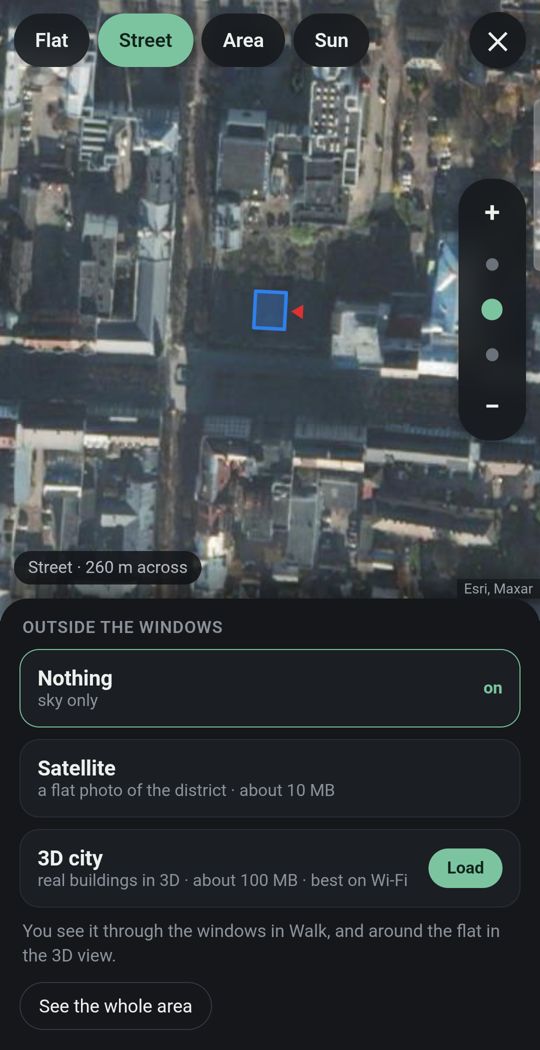
Your flat in its city
Give the address and the street and buildings around you appear in 3D where the map has them.
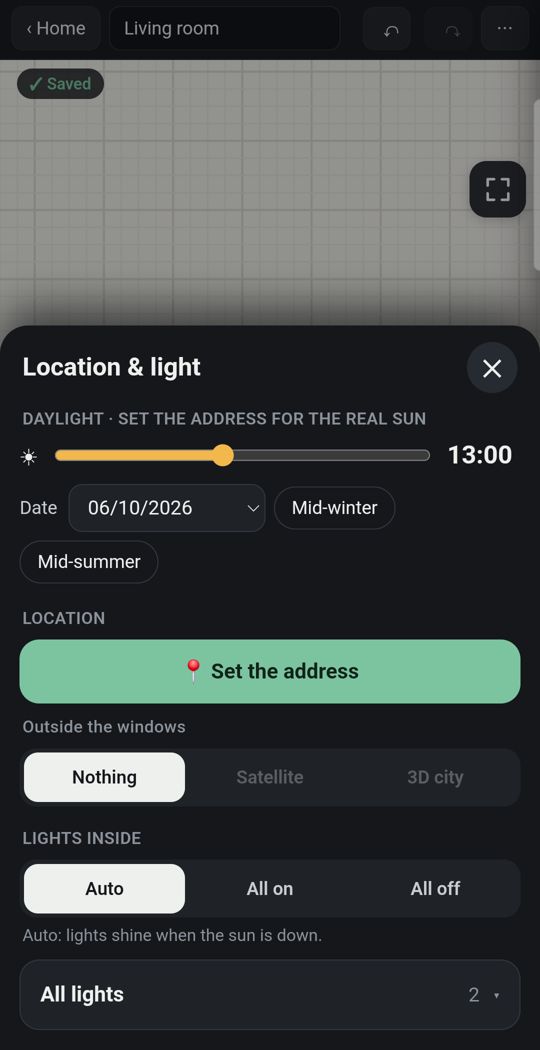
Sun for your address
Real sunlight by date and hour, and how long each room gets direct sun.
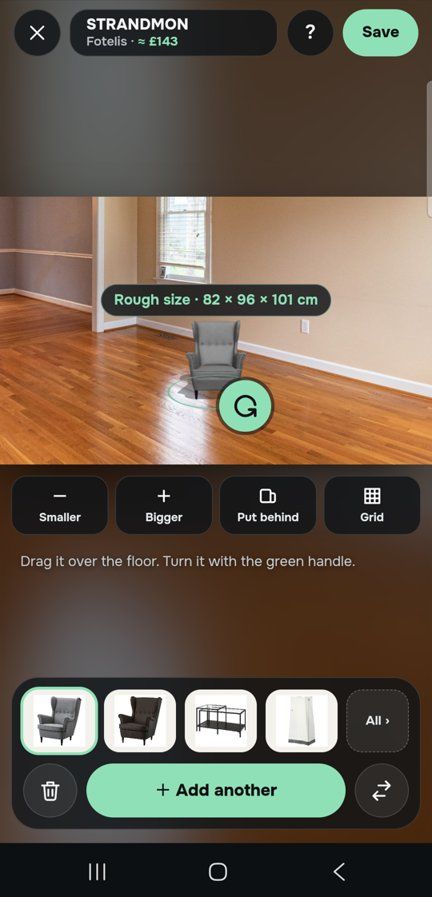
One piece, in your own room
Through the live camera or in a photo, stand a sofa on your own floor at its true size, then see where the sun falls on it.
Detail
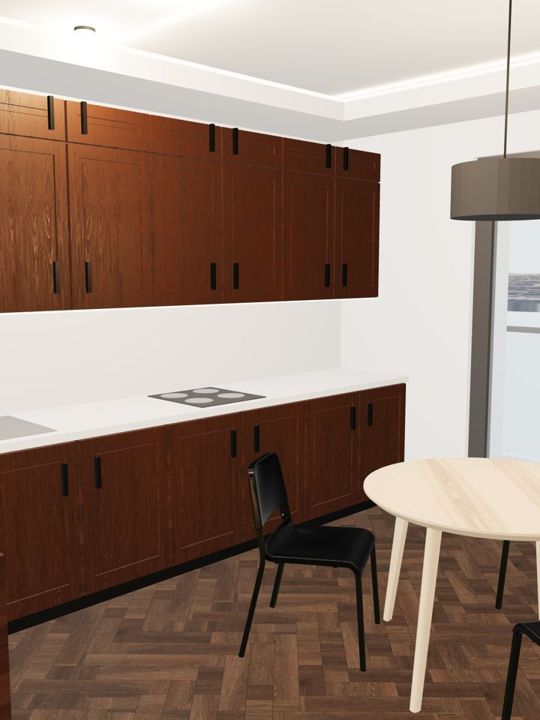
Window and door types, kitchens, wardrobes and bathrooms built piece by piece.
Made for a thumb
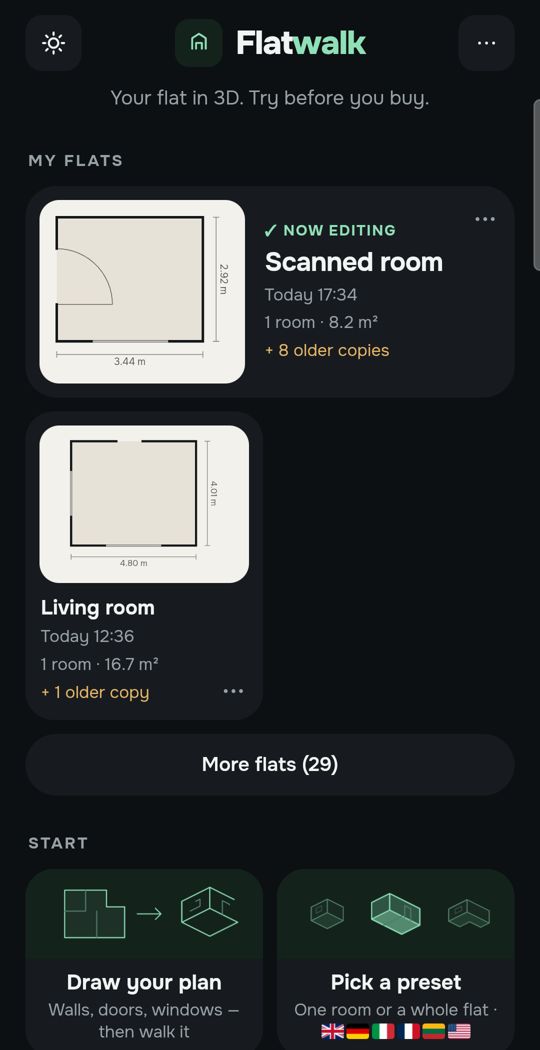
Slide the hour with one finger and watch the light move.
Swipe for more. Every picture is the app itself.
One flat, free
Most people plan one home. For that, Flatwalk costs nothing: no trial clock and no card. Drawing the flat, the sun for its address, lights, furniture and walking through it are all part of it, and each AI tool gives one free try. A membership is for people who want more flats or more AI.
Questions people ask
How can I check how much sun a flat gets? Find which way the main windows face, check the sun's path for the address on a sun-path map, count what stands opposite, and visit at the hours you will be home.
Which direction is best for a flat? In the northern hemisphere, south gives the most sun through the day, east the mornings and west the evenings. Many people like a south- or west-facing living room and an east-facing bedroom.
Can I see sunlight by address for any date? Yes. Free sun-path websites show the sun's path for any address and date. Flatwalk shows it inside a 3D plan of your own flat, by date and hour.
Does a north-facing flat get any sun? Little or none directly in the middle of the day, though in summer a north-facing window can catch early morning or late evening sun. It does get steady daylight.
Do neighbouring buildings matter? Yes, most of all in winter, when the sun is low. A building opposite that rises above your window's line to the sun will shade it.
Flatwalk puts the real sun for your address into a 3D plan of your flat, by date and hour, free for one flat. It is launching on Google Play; join the waiting list at flatwalk.app.
Join the waiting list