Short answer. In the northern hemisphere the sun rises in the east, stands due south at its midday and sets in the west. In summer it rises in the northeast, climbs high and sets in the northwest; in winter it rises in the southeast, stays low and sets in the southwest. So east rooms get the mornings, south rooms the middle of the day and west rooms the evenings, and low winter sun reaches far deeper into a room than high summer sun.
How much sun will my flat get?North-facing room coloursLiving room layout
See the sun for your own address, by hour, in the free sun tool
The sun's path over one day and the year
- Morning. The sun rises in the east, low, and reaches far into east rooms.
- Midday. It stands due south, at its highest; with summer time that is often around 1 pm or later.
- Evening. It moves round to the west and drops again: long, low, warm light in west rooms.
- North. A north window gets direct sun only early and late on summer days.
At about 52° north (London, Amsterdam, Berlin, Warsaw):
| Time of year | Sun rises | Height at midday | Sun sets | Daylight |
|---|---|---|---|---|
| Around 21 December | Southeast | About 14 to 15° | Southwest | About 7½ to 8 hours |
| Around 21 March and 23 September | Due east | About 38° | Due west | About 12 hours |
| Around 21 June | Northeast | About 61 to 62° | Northwest | About 16½ to 17 hours |
In the southern hemisphere, swap north and south.
How deep the sun reaches
Through a south window with its top 2.1 m (about 7 ft) above the floor, December's midday sun at about 15° reaches about 8 m (26 ft) in: across the floor and up the back wall. June's, at about 62°, lands only about 1 m (3 ft) in. A balcony above a south window works like the peak of a cap, shading the high summer sun and letting the low winter sun in underneath; on east and west windows it helps much less. Daylight without direct sun is useful to about two to two and a half times the window head height into the room.
Which rooms want which light
| Room | Light that suits it | Why |
|---|---|---|
| Bedroom | East, or north if you sleep late | Morning sun helps you wake; a west bedroom can be warm at bedtime |
| Living room | South or west | Sun in the afternoon and evening, when most people are home |
| Kitchen and dining | East or south | Breakfast in the sun; an east kitchen stays cooler while you cook dinner |
| Home office | North, or any side with the desk sideways | Even light, little glare on the screen |
| Children's room | East or south | Daylight for play |
Where to put things
- The desk: sideways to the window, so the light falls across it.
- The bed: in an east bedroom the June sun can be in before 5 am, so plan blackout blinds.
- Sofa and TV: keep the screen off the wall opposite a west window; fabrics fade where the sun lands every day.
- Plants: cacti and herbs in south and west windows, flowering plants in the east, ferns in the north.
- Blinds: shutters and external blinds stop far more heat than internal ones; west windows need shade most.
See the sun move in your own flat
In Flatwalk you give the address, put the flat on the map and choose any date and hour. Slide the hour and the sunlight moves through the windows and across the floors in 3D, and a list shows how long each room gets direct sun that day. Flatwalk counts a clear day and does not count buildings and trees outside, so a tall building opposite changes the picture, most of all in winter.
What Flatwalk does that older planners skip
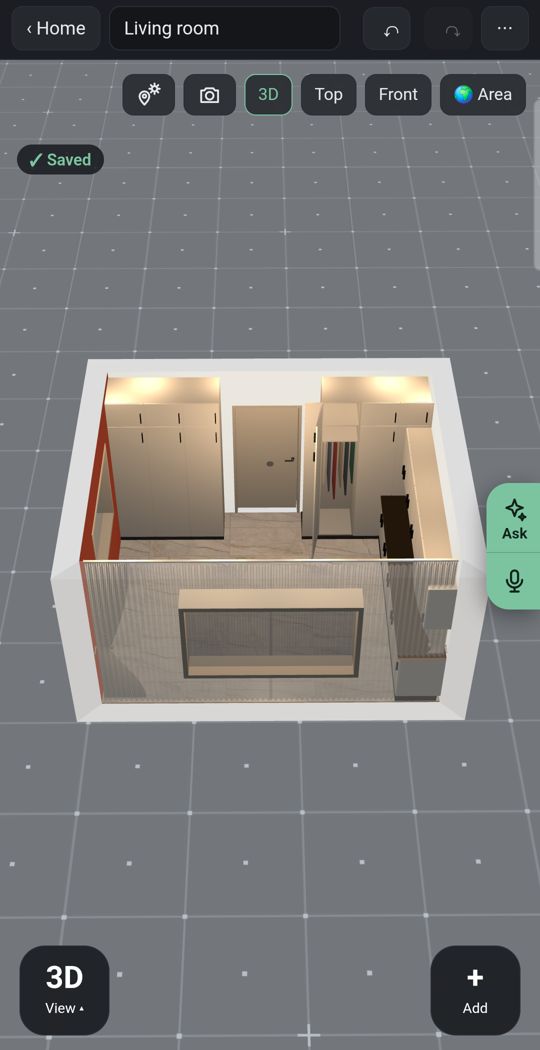
Lights
Add ceiling lights, lamps and LED strips and see where you need them after the sun goes down.
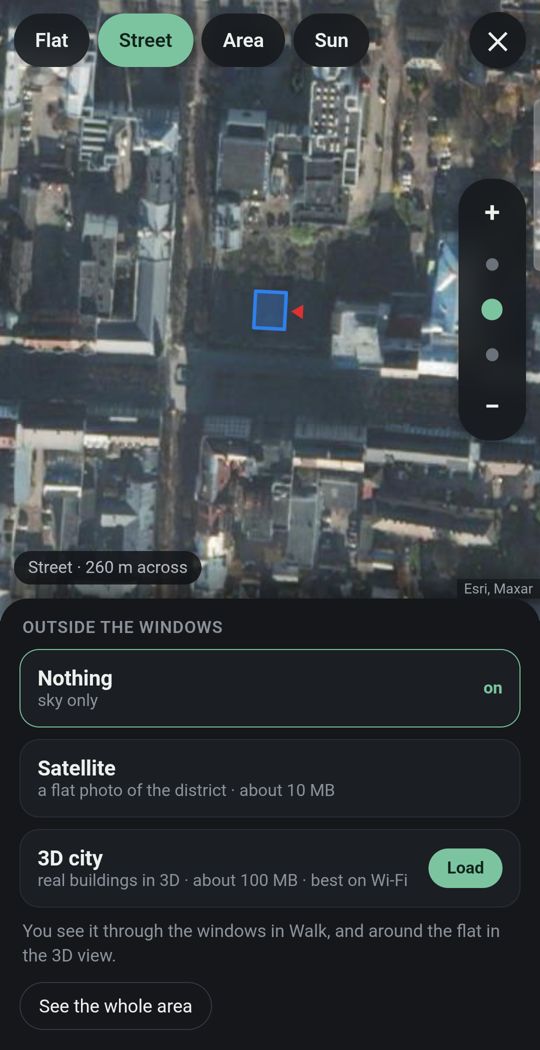
Your flat in its city
Give the address and the street and buildings around you appear in 3D where the map has them.
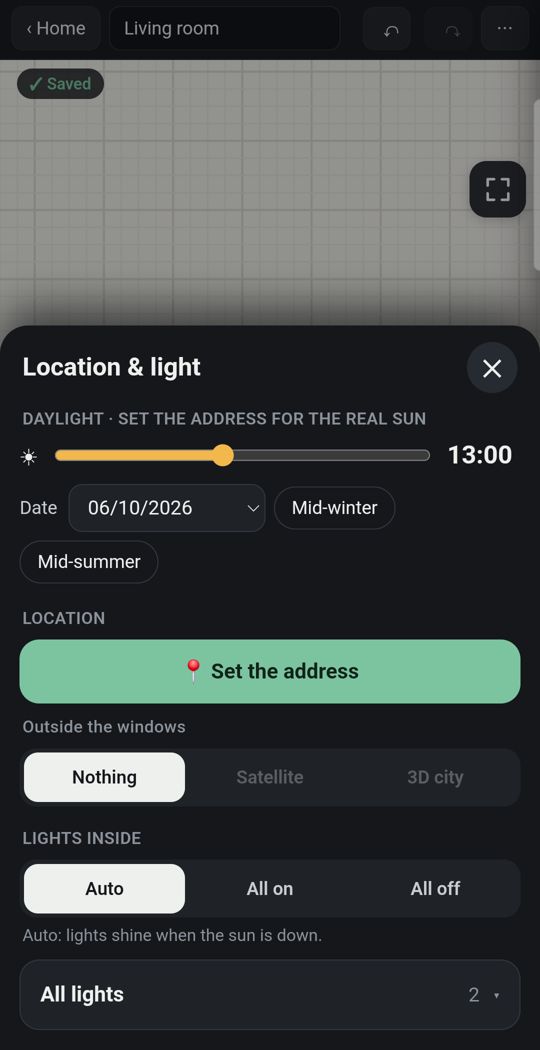
Sun for your address
Real sunlight by date and hour, and how long each room gets direct sun.
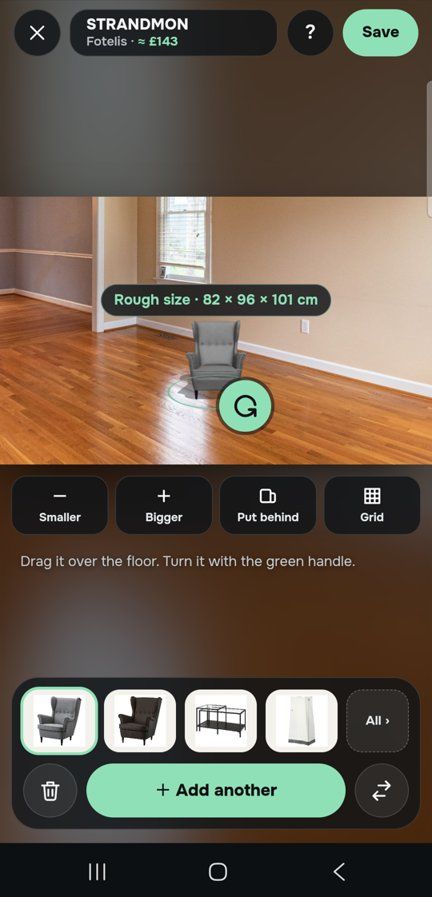
One piece, in your own room
Through the live camera or in a photo of the room, stand a sofa on your own floor at its true size.
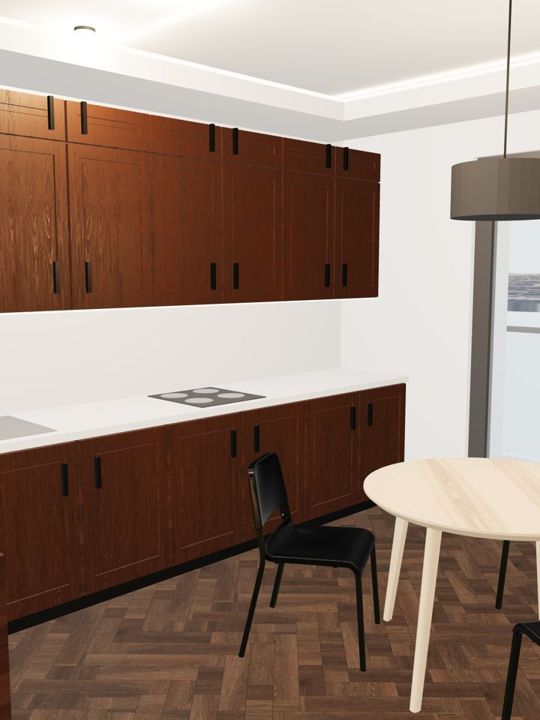
Detail
Window and door types, kitchens, wardrobes and bathrooms built piece by piece.
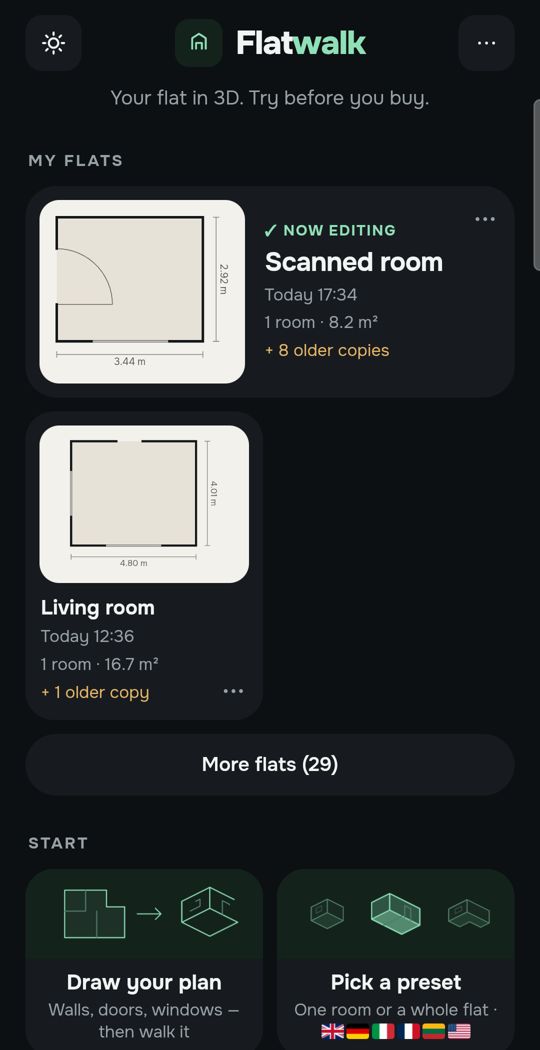
Made for a thumb
Slide the hour with one finger and watch the light move through the rooms.
Swipe for more. Every picture is the app itself.
One flat, free
Most people plan one home. For that, Flatwalk costs nothing: no trial clock and no card. Drawing the flat, the sun for its address, lights, furniture and walking through it are all part of it, and each AI tool gives one free try. A membership is for people who want more flats or more AI.
Questions people ask
How does the sun move through a flat? In the northern hemisphere it rises in the east, stands due south at its midday and sets in the west: east rooms get the morning, south rooms the middle of the day and west rooms the evening. In the southern hemisphere the midday sun is in the north.
Does winter sun reach further into a room? Yes. Winter sun is low, so through a south window it can reach several metres in, often to the back wall. Summer midday sun is high and lands close to the window.
Where should I put my desk? Sideways to the window, so the light falls across the desk, not into your eyes or onto the screen.
Can I see the sun's path in my own flat? Yes. Flatwalk puts the real sun for your address into a 3D plan of your flat, by date and hour.
Flatwalk shows the sun moving through a 3D plan of your own flat, for your address, by date and hour, free for one flat. It is launching on Google Play; join the waiting list at flatwalk.app.
Join the waiting list