Short answer. On an Indian listing, "east facing" or "north facing" usually means the side with the main entrance. The sun cares about the windows. With nothing in the way, a south wall in Delhi can get about 10 hours of direct sun on the shortest day and a north wall none. In June it flips south of the Tropic of Cancer: in Mumbai, Chennai, Bengaluru and Kolkata the midday sun stands to the north, so a north wall gets sun all day and a south wall none. West walls take the hot afternoon sun all year. To see the real hours at your own windows, with the buildings around you, use a free sun tool that starts from the address.
Check the sun at your own window, free
What "facing" means on an Indian listing
Most buyers and sellers in India name a house or flat by the direction its main door faces: stand in the doorway, look out, and read a compass. An east facing house is one whose entrance faces east. Some people use the road side of the plot instead, so ask the seller which one they mean.
For a flat, the main door often opens onto a corridor or a lift lobby. That tells you little about light. A flat sold as "north facing" by its door can have its living room and balcony on the south side, and the other way round. For sun and heat, what counts is which way each window and balcony faces, and what stands in front of it.
Many Indian buyers also check a home against Vastu Shastra, the traditional system of house layout, and searches such as "north facing house vastu", "south facing flat vastu" and "west facing house vastu" are very common. Flatwalk does not give Vastu advice and does not say whether any home follows Vastu; for that, speak to someone you trust. This page sticks to what the sun does on each side.
The sun's path over India
India lies between about 8° and 37° north. That puts much of the country close to the Tropic of Cancer (23.4° N), and it changes the sun's path in ways a European or American guide will not tell you:
- In winter (around 21 December) the sun rises in the south-east, stays in the southern sky and sets in the south-west. The north side of a house gets no direct sun at all.
- Around 21 March and 23 September it rises due east and sets due west, and at midday stands high in the south.
- In early summer it rises in the north-east and sets in the north-west. South of the Tropic of Cancer it even passes north of overhead at midday: from about late April to mid-August in Chennai and Bengaluru, from about mid-May to late July in Mumbai, and for a few weeks around June in Kolkata. Delhi lies north of the Tropic, so there the midday sun always stays to the south, though in June it is almost overhead.
The sun's height at its midday, worked out from each city's latitude:
| City | 21 December | 21 March | 21 June |
|---|---|---|---|
| Delhi | About 38°, to the south | About 61°, to the south | About 85°, to the south |
| Kolkata | About 44°, to the south | About 67°, to the south | About 89°, almost overhead |
| Mumbai | About 47°, to the south | About 71°, to the south | About 86°, to the north |
| Chennai | About 53°, to the south | About 77°, to the south | About 80°, to the north |
| Bengaluru | About 54°, to the south | About 77°, to the south | About 80°, to the north |
India runs on one clock, so the sun's midday comes at different times: about 11:35 to 11:45 IST in Kolkata, 12:05 to 12:15 in Chennai, 12:20 to 12:30 in Delhi and Bengaluru, and 12:35 to 12:45 in Mumbai. The hours below are counted from the sun, not the clock.
How many hours of sun each facing can get
The most hours of direct sun a wall can get, on a clear day, with a flat horizon and nothing in the way. Real numbers are lower once the next building, trees and the monsoon count. East and west get the same number of hours: east in the morning, west in the afternoon.
| City and day | North | East or west | South |
|---|---|---|---|
| Delhi, 21 December | None | About 5 h 05 min | About 10 h 10 min |
| Delhi, 21 March | None | About 6 h | About 12 h |
| Delhi, 21 June | About 8 h 50 min | About 6 h 55 min | About 5 h |
| Kolkata, 21 December | None | About 5 h 20 min | About 10 h 35 min |
| Kolkata, 21 March | None | About 6 h | About 12 h |
| Kolkata, 21 June | About 13 h 25 min (all day) | About 6 h 40 min | None |
| Mumbai, 21 December | None | About 5 h 25 min | About 10 h 50 min |
| Mumbai, 21 March | None | About 6 h | About 12 h |
| Mumbai, 21 June | About 13 h 10 min (all day) | About 6 h 35 min | None |
| Chennai, 21 December | None | About 5 h 35 min | About 11 h 15 min |
| Chennai, 21 March | None | About 6 h | About 12 h |
| Chennai, 21 June | About 12 h 45 min (all day) | About 6 h 25 min | None |
| Bengaluru, 21 December | None | About 5 h 40 min | About 11 h 15 min |
| Bengaluru, 21 March | None | About 6 h | About 12 h |
| Bengaluru, 21 June | About 12 h 45 min (all day) | About 6 h 20 min | None |
Corner directions sit in between. In Delhi on 21 December a south-east or south-west wall can get about 8 hours and a north-east or north-west wall about 2 hours; in Mumbai on 21 June a north-east or north-west wall gets about 6 h 55 min.
Three things to take from the table:
- South gets the winter sun. From October to February a south wall gets sun almost the whole day in every one of these cities. In Delhi, where winter mornings are cold, many people value that.
- North gets the summer sun in the south of India. In Mumbai, Chennai and Bengaluru the north wall gets sun all day from about May to July, but the midday sun is nearly overhead, so it strikes the wall at a steep angle and hardly enters the room. The rest of the year a north window gets soft, steady daylight without direct sun.
- East and west get the low sun, which comes in almost level and deep into the room. East gets it in the cooler morning; west gets it in the afternoon, the hottest part of the day.
Heat and light, side by side
- East facing windows: morning sun from sunrise to about midday, then shade. Rooms stay cooler in the afternoon. People often like this for kitchens, bedrooms and a morning balcony.
- West facing windows: afternoon and evening sun at the hottest hours, from midday to sunset all year. In April and May, before the monsoon, a west room in Delhi or Kolkata can get very hot. Deep balconies, sunshades (chajjas), blinds and trees help.
- South facing windows: the most sun in winter. In summer the sun is high, so a sunshade over the window keeps most of it out. In the south of India a south wall gets little or no direct sun from about May to July.
- North facing windows: the softest, most even light, with little heat for most of the year. Good for a study or work room. In the south of India they take direct sun in early summer.
From about June to September the southwest monsoon covers most of India in cloud, and Chennai gets its heaviest rain from October to December, so the real hours of sun in those months are far below the clear-day figures.
What buyers look for
When people compare flats or houses for light and heat, these are the questions that matter:
- Which way do the living room and the balcony face? Not only the main door.
- What stands opposite? In a dense city the next tower often matters more than the direction. A low winter sun in Delhi (about 38° at midday) is blocked by a building opposite that rises more than about 0.8 times its distance above your window.
- Which floor? A higher floor clears more of the buildings around it. See which floor gets the most sun.
- Where does the afternoon sun hit? A west facing bedroom or living room will be the warmest room in the flat.
- Is anything planned next door? An empty plot opposite can become a tower.
Check the sun at your own address in 3 steps
Flatwalk's free tool, Sun at your window, works out the hours of direct sun on each window you put on your home, with the buildings and trees around it.
- Type your address under "See the sun at your window" and find your building on the satellite map. The one under the pin is green; tap another if it is wrong. If your building is missing, tap "It's not on the map, I'll draw it" and draw its outline.
- Pick A whole house or A flat. For a flat, tap the building's corners on the roof, then set the number of storeys and your floor. Put your windows on the walls: every outside wall has a tag, such as "South wall · sun side". Tap a wall, then tap where the window is, or drag to draw it. Each window shows which way it faces, for example "Faces south-west, 224°".
- Tap See my sun. Read the hours of direct sun, the first and last sun, and the 12 month bars. Tap Shortest for December and Longest for June, and read What takes your sun. In India the building heights are estimated, so if the tower opposite looks too low or too high, tap Something off? and fix its height. Copy link keeps the result.
What it cannot tell you
- Its best data is elsewhere. The tool's measured building heights, trees and ground are in the UK, the US, Canada, Germany, Poland and Lithuania. In India it still works, but it is slower: it fetches the buildings and trees around your address from OpenStreetMap, estimates their heights from their type or size, and treats the ground as flat. It says so on screen. Fix heights you know.
- Modelled, not measured. The hours are worked out from maps and the sun's position, not from a light meter at your window.
- Clouds. Read the hours as clear-sky hours and allow for the monsoon. We have not checked the tool's Typical weather option for Indian cities.
- New buildings and trees. Towers finished after the map data, and trees planted or cut since, are missing or wrong until you add or fix them.
- Windows only. It does not measure a terrace floor or a roof for solar panels.
- Not a certified report, and not Vastu. It shows the sun, nothing more.
- Small things it ignores: window frames, glass tint and your own roof shape. Map outlines can be a metre off the real wall.
See the hours of sun at your window, free
More: south facing house, pros and cons and the shadow calculator for the building opposite.
What Flatwalk does that older planners skip
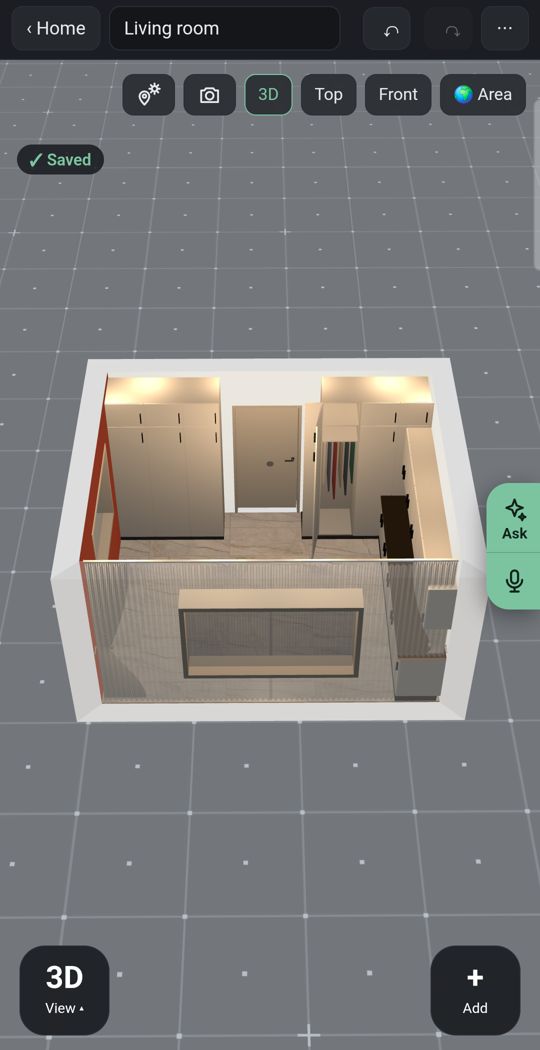
Lights
Add ceiling lights, lamps and LED strips and see where you need them after the sun goes down.
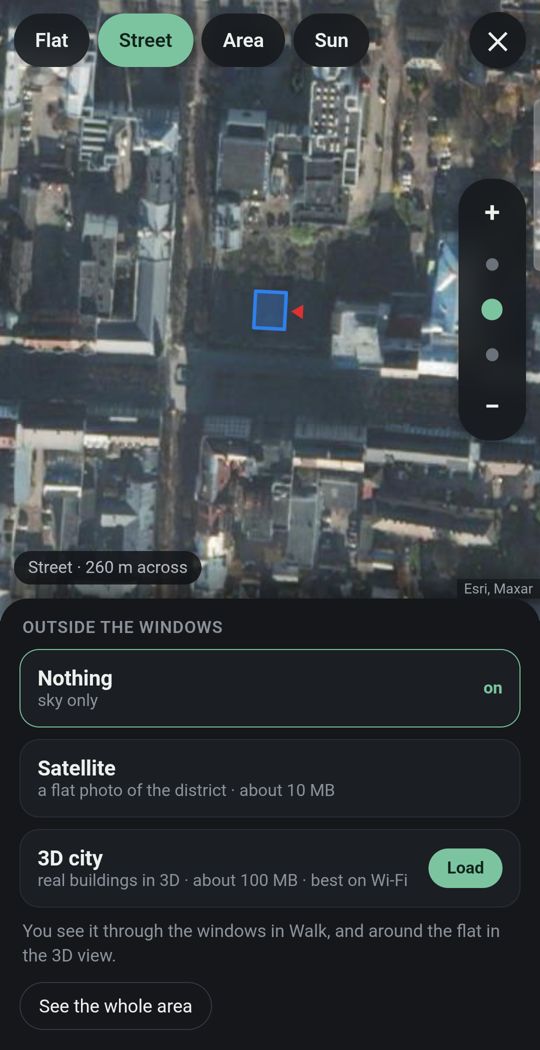
Your flat in its city
Enter your address and the street and buildings around you appear in 3D, wherever the map has them.
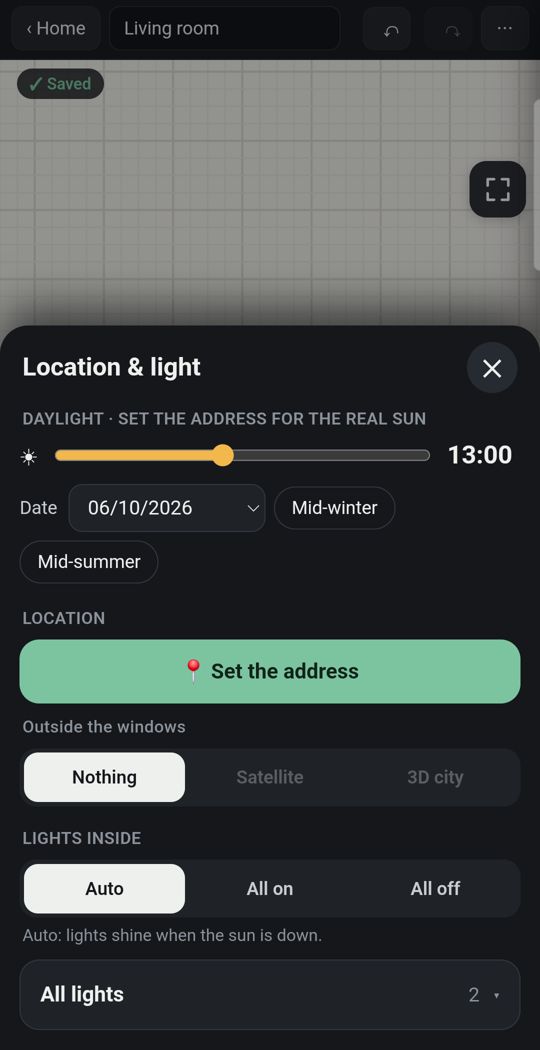
Sun for your address
Real sunlight by date and hour, and how long each room gets direct sun.
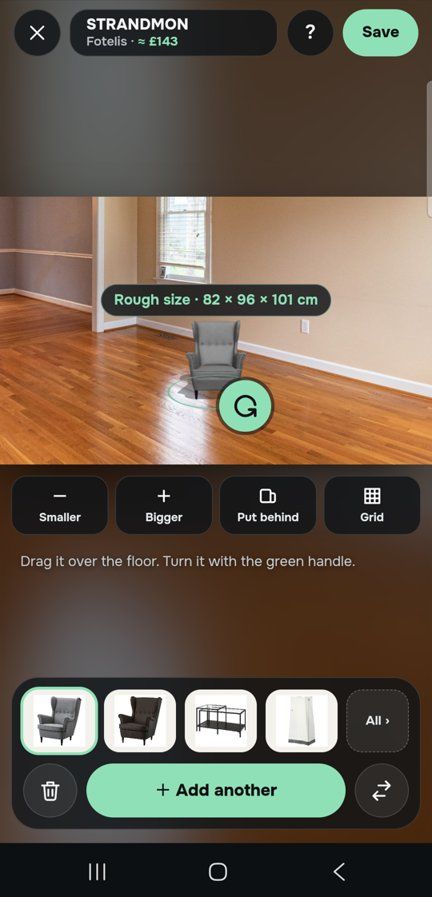
One piece, in your own room
Through the live camera or in a photo of the room, stand a sofa on your own floor at its true size.
Detail
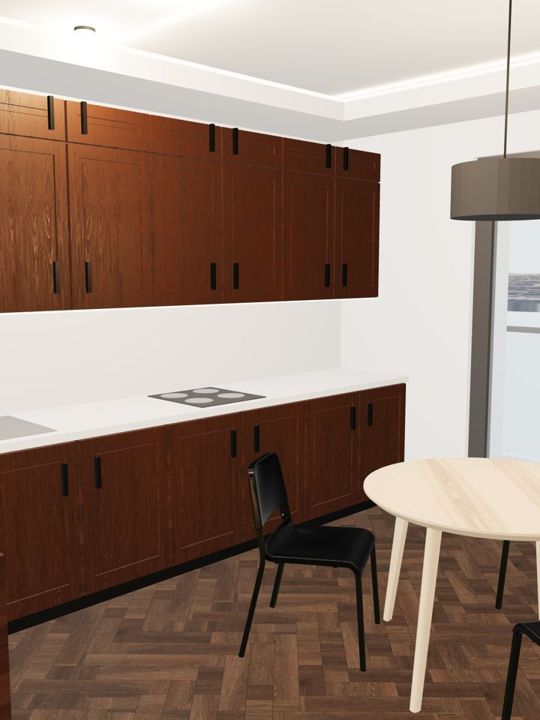
Window and door types, kitchens, wardrobes and bathrooms built piece by piece.
Made for a thumb
Slide the hour with one finger and watch the light move through the rooms.
Swipe for more. Every picture is the app itself.
One flat, free
Most people plan one home. For that, Flatwalk costs nothing: no time-limited trial and no card needed. Drawing the flat, the sun for its address, lights, furniture and walking through it are all part of it, and each AI tool comes with one free try. A membership is for people who want more flats or more AI.
Questions people ask
Does a north facing house get sunlight in India? North windows get soft daylight all year but no direct sun from about late September to late March. In summer they get sun early and late in the day, and in Mumbai, Chennai, Bengaluru and Kolkata the north wall gets sun all day around June, when the midday sun stands to the north.
Is an east facing house good for sunlight? An east wall gets direct sun from sunrise to about midday all year, about 5 to 7 hours on a clear day in the big cities, and then shade in the hot afternoon. "East facing" on a listing usually means the main door, so check where the windows face too.
Is a west facing house hot? West windows take the sun from about midday to sunset, the hottest part of the day, so west rooms are usually the warmest, most of all in April and May. Balconies, sunshades, blinds and trees help.
What does a south facing flat mean? On most Indian listings it means the flat's main door faces south. For sun, a south window gets the most direct sun in winter and, in the south of India, little or none from about May to July. Many buyers also look up Vastu for south facing flats; Flatwalk gives no Vastu advice.
How can I check the sunlight in a flat before I buy? Find which way the living room and balcony face, look at what stands opposite, and type the address into a free sun tool that puts your windows on the right floor and counts the hours. In India its building heights are estimated, so fix the ones you know.
Flatwalk puts the real sun for your address into a 3D plan of your home, by date and hour, free for one home. It is coming soon to Google Play; join the waiting list at flatwalk.app.
Join the waiting list