Short answer. Stand at your back door and look out into the garden: the direction you are facing is the way your garden faces. If you are looking south, it is a south-facing garden, the sunniest kind in the UK, with sun most of the day all year. West-facing gardens get the afternoon and evening sun, east-facing ones the mornings, and north-facing gardens sit in the house's shadow for much of the winter but get sun at the far end in summer. To check yours by address, with the neighbours and trees counted, use a free sun tool.
Try it free: type your address, pick your house, find your garden wall
How to tell which way your garden faces
- With your phone. Stand at the back door, look into the garden and open the compass app. Keep away from metal door frames and radiators, which can upset it.
- With a map. Open your house on an online map with north at the top. The garden faces the way the back of the house faces. If the garden is above the house on the map, it faces north; below it, south.
- With the sun. At midday (about 1 pm in summer time) the sun is due south. If it is shining down the garden towards the house at lunchtime, the garden faces south.
A front garden faces the opposite way to the back. Many gardens face in between, such as southwest or northeast; they take a little from each side.
What does "south-facing garden" mean?
It means the garden lies to the south of the house: stand at the back door looking out and you are facing south. Because the sun is in the southern half of the sky for most of the day in the UK, a south-facing garden gets sun from morning to evening, and the house never stands between the garden and the midday sun. That is why estate agents mention it.
"South-facing" on a listing can mean the garden, the back of the house or a balcony. Check which.
Hours of sun by direction
The most hours of direct sun a garden can get right by the back of the house, in London, with a flat horizon and nothing in the way. Fences, neighbours and trees take some of it.
| Garden faces | 21 December | 21 March | 21 June |
|---|---|---|---|
| South | About 7 h 35 min | About 12 h | About 9 h 20 min |
| Southwest or southeast | About 7 h 10 min | About 8 h 35 min | About 9 h 55 min |
| West or east | About 3 h 50 min | About 6 h | About 8 h 10 min |
| Northwest or northeast | Under half an hour | About 3 h 30 min | About 6 h 30 min |
| North | None | None | About 7 h |
A west-facing garden gets its sun from midday to sunset, an east-facing one from sunrise to midday. In June the sun sets in the northwest, so even a north-facing garden gets sun near the house early in the morning and late in the evening.
Further north the winter numbers shrink: at midday on 21 December the sun is about 15° up in London, about 13° in Manchester and under 11° in Edinburgh.
The house's own shadow
Your house shades the part of the garden right behind it whenever the sun is on the other side, which matters most for a north-facing garden. For a two-storey house about 8 m (26 ft) to the ridge, the midday shadow in London is about:
| Date | Sun at midday | Shadow behind the house |
|---|---|---|
| 21 December | About 15° | About 30 m (98 ft) |
| 21 March | About 38° | About 10 m (33 ft) |
| 21 June | About 62° | About 4 m (14 ft) |
So in a north-facing garden 10 m long, the midday sun reaches the far end only from about late March to late September. Put the patio or the bench at the far end, where the sun is, and keep the shady part by the house for ferns and hostas.
Which way should your garden face?
There is no single best; it depends on how you use it.
- South-facing: the most sun over the year, and sun in winter. Hot at midday in summer: plan some shade.
- West-facing: the afternoon and evening sun, when most people are home. A popular choice for eating outside after work.
- East-facing: the morning sun for breakfast, cooler in the afternoon. Good for plants that dislike harsh afternoon heat.
- North-facing: a shady garden in winter, with sun at the far end in summer. It is not bad, it is different: shade plants thrive, and in a heatwave it is the coolest place to sit. A long garden suffers least.
A yardstick from planning: the BRE guide that UK councils use counts an open space as well sunlit if at least half of it gets two hours of direct sun on 21 March.
Check your garden's sun, step by step
Flatwalk's free tool, Sun at your window, measures sun on windows. For a garden, use the patio door or back window as the stand-in.
- Type your address under "See the sun at your window", and find your house on the satellite map.
- Tap A whole house ("All floors are mine").
- Look at the wall tags on the garden side. Each outside wall has a tag that says its direction, and the sunny ones say "sun side", for example "South wall · sun side". That tells you which way your garden faces.
- Draw your patio door. Tap the garden wall to face it, then drag to draw a wide window low on the wall, where the patio door or back window is. It shows its direction, such as "Faces south-west, 224°".
- Read the hours. See the hours of direct sun that day, the first and last sun, and the 12 month bars ("Hours a day, by month"). Tap Shortest for the winter and Longest for June.
- See what takes your sun. "What takes your sun" names the blockers, such as a building to the south or a tree to the east, with the months and hours. Turn on Typical weather for the hours with the usual clouds.
- Fix what is wrong. If a tree has been cut down or a neighbour's extension is missing, tap Something off? to fix a height, add a tree or remove one. Copy link saves it all.
Remember what you are measuring: the sun at the back wall, at door height. The far end of a long garden, out of the house's shadow, gets more.
What it cannot tell you
- Windows only. It measures sun at the window you draw, not across the lawn, on a terrace floor or on a roof.
- Modelled, not measured. The hours are worked out from maps and the sun's position, not from a light meter.
- Where the data is best. Building heights are measured in London, Manchester, Cardiff, Edinburgh and Glasgow (and some cities abroad). Elsewhere in the UK they are estimated, and the tool says so.
- Trees and new buildings. Tree crowns come from images of about 2017 to 2019, so trees planted or cut since are wrong, and young trees under about 3 m are missing. Buildings finished after the map data are missing until you add them.
- Weather. Typical weather is a monthly average from 2005 to 2023, not a forecast, and can be about 10 to 15% off.
- Not a certified report. It cannot stand in for a professional sunlight survey.
- Small things it ignores: window frames, glass tint and your own roof shape. Map outlines can be a metre off the real wall.
Try it free: see the sun at your patio door
What Flatwalk does that older planners skip
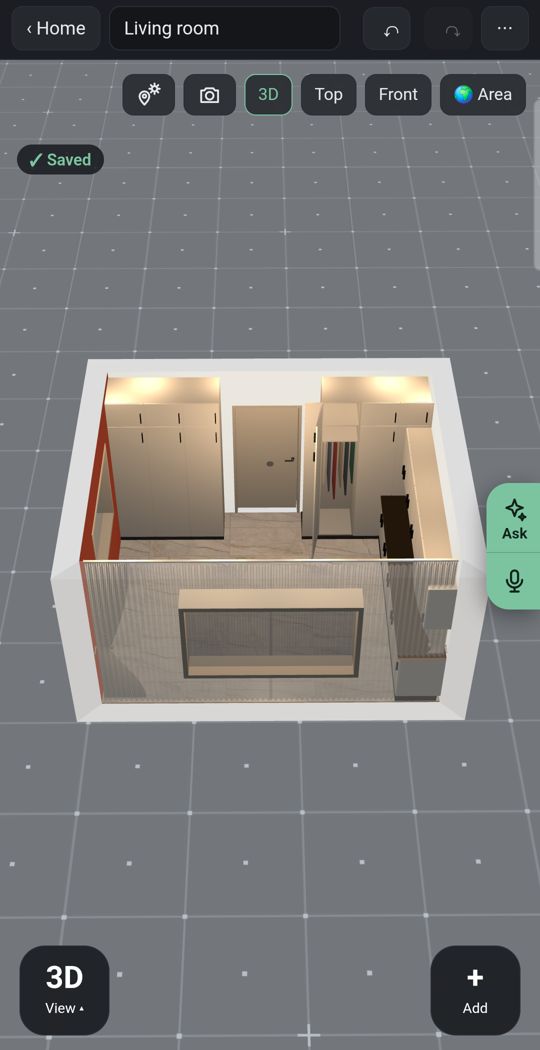
Lights
Add ceiling lights, lamps and LED strips and see where you need them after the sun goes down.
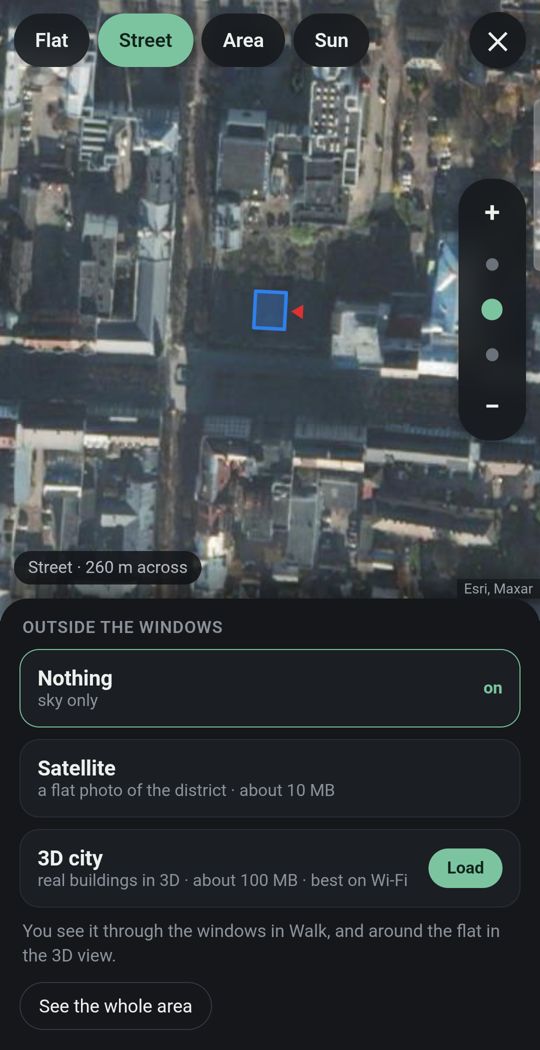
Your home in its city
Enter your address and the street and buildings around you appear in 3D, wherever the map has them.
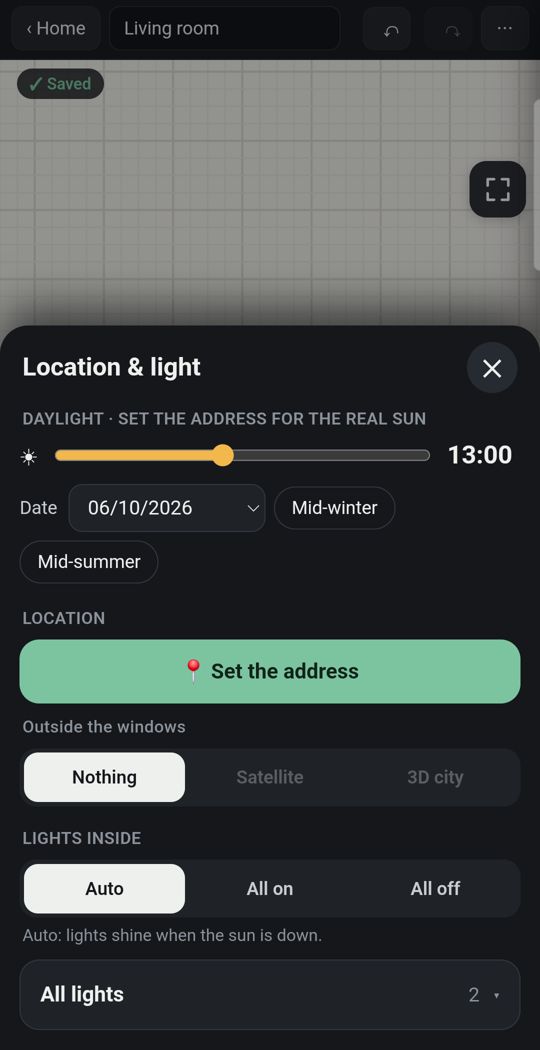
Sun for your address
Real sunlight by date and hour, and how long each room gets direct sun.
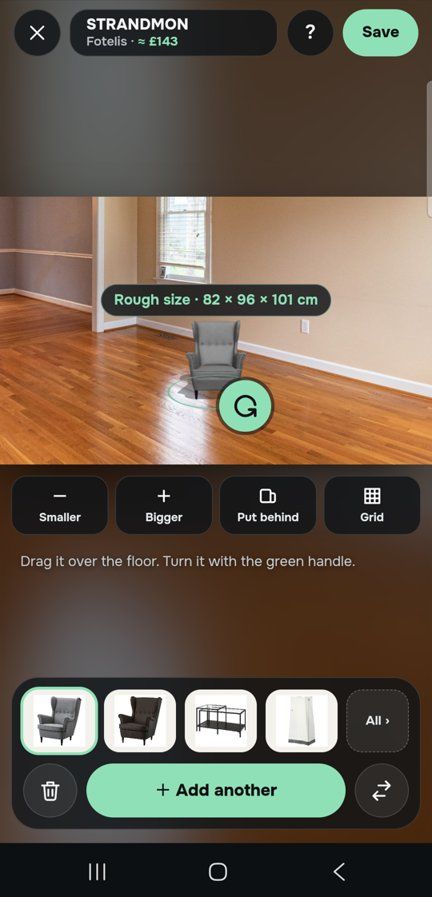
One piece, in your own room
Through the live camera or in a photo of the room, stand a sofa on your own floor at its true size.
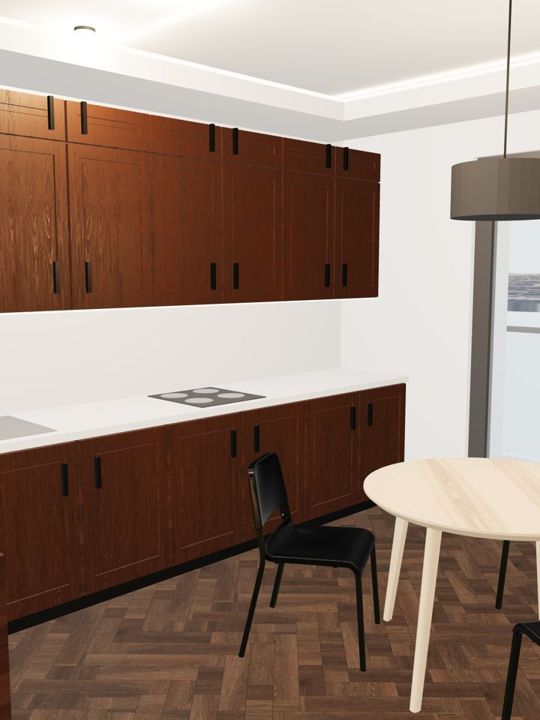
Detail
Window and door types, kitchens, wardrobes and bathrooms built piece by piece.
Made for a thumb
Slide the hour with one finger and watch the light move through the rooms.
Swipe for more. Every picture is the app itself.
One home, free
Most people plan one home. For that, Flatwalk costs nothing: no time-limited trial and no card needed. Drawing your home, the sun for its address, lights, furniture and walking through it are all part of it, and each AI tool comes with one free try. A membership is for people who want more homes or more AI.
Questions people ask
Which way does my garden face? Stand at the back door and look into the garden: the direction you face is the way the garden faces. A phone compass or a map with north at the top tells you which direction that is.
What does south-facing garden mean? That the garden lies to the south of the house. Looking out from the back door you face south, so the garden gets sun for most of the day, all year.
What facing garden is best? South for the most sun all year, west for afternoon and evening sun, east for mornings. North-facing gardens are shadier in winter but cool in summer, with sun at the far end.
Is a north-facing garden bad? Not bad, but shady near the house from autumn to spring. In summer the far end gets midday sun, and the early morning and late evening sun reach it too. A longer garden helps.
How many hours of sun does a south-facing garden get? In London, with nothing in the way, up to about 7½ hours on the shortest day, 12 in March and over 9 in June by the back of the house. Fences, neighbours and trees take some of that.
Flatwalk puts the real sun for your address into a 3D plan of your home, by date and hour, free for one home. It is coming soon to Google Play; join the waiting list at flatwalk.app.
Join the waiting list