Short answer. Midwinter in Edinburgh is brief and the sun hangs low. The sun rises at 08:42 and sets at 15:39 GMT on 21 December, which leaves 6h 57m of daylight, and at midday it gets no higher than about 11°. Midsummer, 21 June, is another world: 17h 36m of daylight from 04:26 to 22:02 BST, with the sun up to about 57°. Sunrise bearings run from about 134° (southeast) in December to about 43° (northeast) in June, and sunset bearings from about 226° (southwest) to about 317° (northwest). A winter sun this low is either seen or lost depending on what lies to your south.
See the sun at your own window
Sunrise, sunset and sun height in Edinburgh, month by month
Every row is worked out for Princes Street, by Waverley, on the 15th of the month in 2026. Read the times straight off the clock: GMT through the winter, BST from 29 March to 25 October. The direction columns treat the compass the usual way, counting clockwise from true north, so east, south and west sit at 90°, 180° and 270°.
| Date | Sunrise | Sunset | Daylight | Sun at noon (height) | Sunrise direction | Sunset direction |
|---|---|---|---|---|---|---|
| 15 Jan | 08:33 GMT | 16:11 GMT | 7h 37m | 13° | 128° (SE) | 232° (SW) |
| 15 Feb | 07:37 GMT | 17:16 GMT | 9h 38m | 22° | 112° (ESE) | 249° (WSW) |
| 15 Mar | 06:28 GMT | 18:16 GMT | 11h 47m | 32° | 93° (E) | 268° (W) |
| 15 Apr | 06:07 BST | 20:19 BST | 14h 11m | 44° | 71° (ENE) | 289° (WNW) |
| 15 May | 05:00 BST | 21:19 BST | 16h 18m | 53° | 53° (NE) | 307° (NW) |
| 15 Jun | 04:26 BST | 22:00 BST | 17h 34m | 57° | 43° (NE) | 317° (NW) |
| 15 Jul | 04:47 BST | 21:48 BST | 17h 00m | 56° | 47° (NE) | 312° (NW) |
| 15 Aug | 05:43 BST | 20:49 BST | 15h 05m | 48° | 63° (ENE) | 297° (WNW) |
| 15 Sep | 06:44 BST | 19:30 BST | 12h 46m | 37° | 83° (E) | 276° (W) |
| 15 Oct | 07:43 BST | 18:12 BST | 10h 28m | 25° | 104° (ESE) | 256° (WSW) |
| 15 Nov | 07:48 GMT | 16:05 GMT | 8h 16m | 16° | 123° (ESE) | 237° (WSW) |
| 15 Dec | 08:37 GMT | 15:37 GMT | 7h 00m | 11° | 133° (SE) | 227° (SW) |
Solstices and the spring equinox in Edinburgh:
- 21 December: 6h 57m between sunrise at 08:42 and sunset at 15:39; at 12:10 GMT the sun is at its highest, about 11°.
- 21 March: both ends of the day sit close to due east and due west, the sun rising at 06:12 and setting at 18:28 GMT and standing about 34° high at noon.
- 21 June: the sun is above the horizon from 04:26 to 22:02, 17h 36m, and peaks at about 57° at 13:14 BST.
Why is midday sun after 12 in Edinburgh? Because the Greenwich meridian lies about 3° to the east, the Edinburgh sun does not stand due south until about 12:10 GMT in winter, or 13:14 BST once the clocks have gone forward.
Hours of sun on each side of a building in Edinburgh
Treat each figure as a ceiling: the direct sun a wall of that facing could get on that date with open sky in front. In a city of tenements, trees and hills, something usually stands in the way and takes hours off, and counting those losses is the sun tool's job.
| Wall faces | 21 December | 21 March | 21 June |
|---|---|---|---|
| North | none | 17m | 7h 52m |
| Northeast | 7m | 3h 29m | 7h 02m |
| East | 3h 28m | 6h 07m | 8h 48m |
| Southeast | 6h 50m | 8h 45m | 10h 33m |
| South | 6h 57m | 11h 57m | 9h 43m |
| Southwest | 6h 50m | 8h 46m | 10h 33m |
| West | 3h 28m | 6h 08m | 8h 48m |
| Northwest | 7m | 3h 30m | 7h 02m |
What to take from it:
- A south wall has the whole winter day. On 21 December it can be in sun from sunrise to sunset, all 6h 57m; a wall facing east or west gets about 3h 28m.
- North walls are summer-only. In June a north window can get about 7h 52m, split between the early morning and the evening and never at midday, but between late September and about 20 March the sun never reaches it directly.
- Southeast and southwest top the June column. Each sees the midday sun and also one end of the long day, which adds up to 10h 33m on 21 June.
What that means for flats in Edinburgh
- Choosing a side. The winter sun stays in the southern sky, so south, southeast and southwest windows are the ones that see it. December has under 7 hours of daylight, and an east or west window sees about half of it, under 3 and a half hours. In summer the west side gets the long light evenings and the east side the early mornings.
- New Town streets. The main streets of the Georgian New Town run mostly east to west, so many of its tenement flats and main door flats look either north or south. On such a street the row on the north side faces south into the winter sun, while the row opposite faces north, which is why flats facing each other across one street can get very different light.
- Height and the winter shadow. A low sun is easily cut off by the building across the road. Take a five-storey block of about 15 m: at midday on 21 December its shadow runs about 79 m, and on a facing wall 20 m away it reaches about 11.2 m up. That leaves storeys one to four in midday shade, with sun only from the fifth storey up. By 21 March the sun has climbed enough for that shadow to shorten to about 22 m, slightly more than the width of the street: it grazes the bottom of a ground-floor window and leaves all the floors above in midday sun. The guide which floor gets the most sun works through more cases.
- South and west balconies. A south balcony gets the winter sun as long as the view south is open. In summer the midday sun is high, and the balcony above throws the window under it into shade. Facing west, a balcony is where the long Edinburgh summer evenings are spent, with the June sun not setting until about 10:02 pm. Houses get the same treatment, side by side, in how much sun each side of a house gets.
- Shared and private gardens. A south-facing back garden has sun through the day. A 7 m high house throws about 35 m of shadow at midday in December, northwards, so ground on the north side of a house, or a shared garden lying north of a tall tenement row, may get little winter sun. Read more in which way does my garden face.
- Ridges, rocks and closes. Edinburgh's hills and ridges, and its tall stone buildings on narrow streets, can hide a sun this low. In the Old Town, narrow closes run steeply down either side of the ridge between high walls, and Arthur's Seat and the Castle rock rise above the streets nearby. The tool counts the measured ground and buildings here, so check each window instead of going by its facing alone.
- Watch the gap sites. A gap site or a planning application to the south of your flat is a warning sign, because whatever is built there could later take hours of winter sun; the guide will a new building block my sun sets out what to check.
Check your own window in Edinburgh in 3 steps
There is no charge for Sun at your window, the Flatwalk tool that sets your building in 3D under the sun's path. Edinburgh is one of the cities where the tool works from real measurements: building heights from the Scottish LiDAR laser survey, plus tree crowns and the ground and hills, so the city's slopes and crags are in the model too.
- Begin with where you live. Your address goes into "See the sun at your window", whether it is a Marchmont tenement or a New Town main door flat, and the satellite map then shows your building to pick out. A flat needs Your floor as well as A flat; a house is simply A whole house.
- Add the window. Each wall shows which way it looks on a small tag, "South wall · sun side" being one, so tap the right wall, tap the window's place on it, and then See my sun.
- Read your December and your year. Shortest day is the hard test in a city this far north; after it, the 12 month bars give the whole year, and Typical weather lays Edinburgh's usual cloud over the hours. Look under What takes your sun for the tenement, tree or hill in the way.
What the tool cannot do:
- No light meter involved. What you see is calculated from map data and the sun's position rather than measured on site.
- The map can lag behind. Edinburgh changes too: anything built after the map data, and any tree planted or taken down since about 2017 to 2019, is absent or wrong in the model until Something off? puts it right.
- Weather in averages. Typical weather draws on monthly cloud averages for 2005 to 2023; it says nothing about next week, and at any one window it may be about 10 to 15% out.
- Only the glass. It times the sun at windows alone, so a lawn, a terrace floor or a roof for solar panels is not part of the sum.
- Useless in a neighbour dispute. Its numbers carry no legal or certified standing, and a right to light survey is a different thing altogether.
- Details it leaves aside. Your own roof's shape is not modelled, nor are window frames or tinted glass, and each map outline is trusted even where it sits a metre off the real wall.
See the sun at your own window
What Flatwalk does that older planners skip
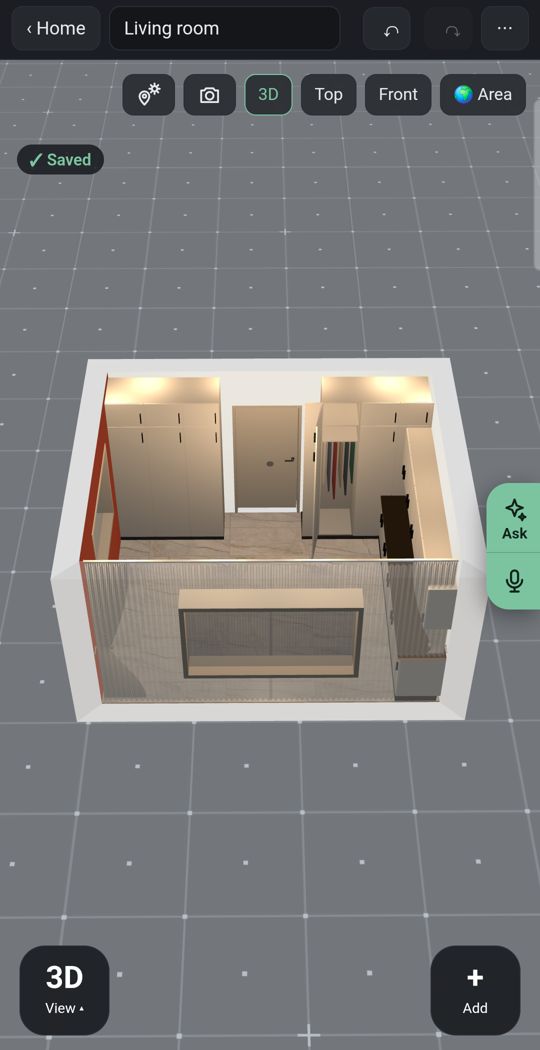
Lighting for dark evenings
By mid-afternoon in December the light is going, so try ceiling lights, lamps and LED strips and see which parts of each room stay dim.
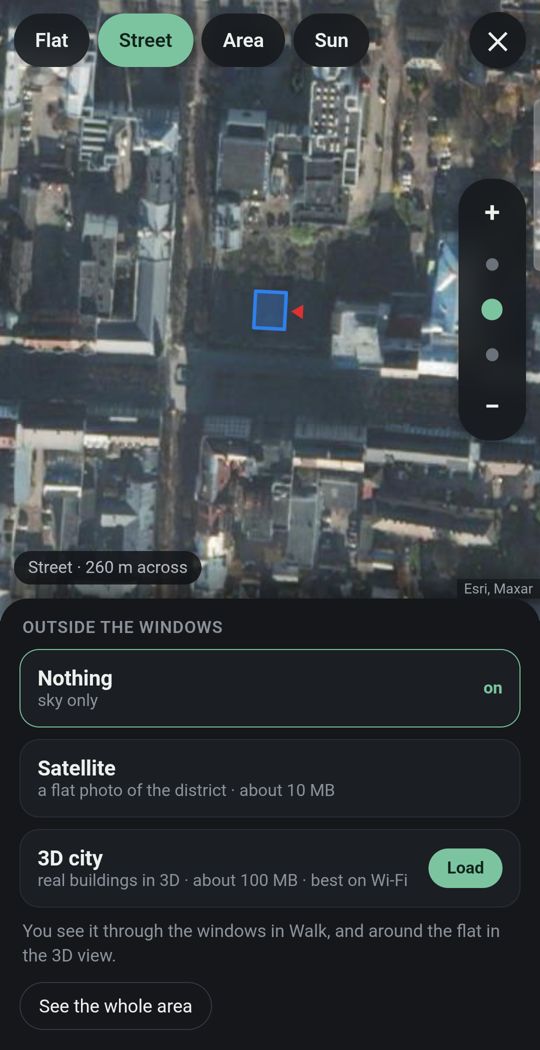
The flat among the tenements
Neighbouring buildings and the street go up in 3D around you once the address is in, where the map holds them.
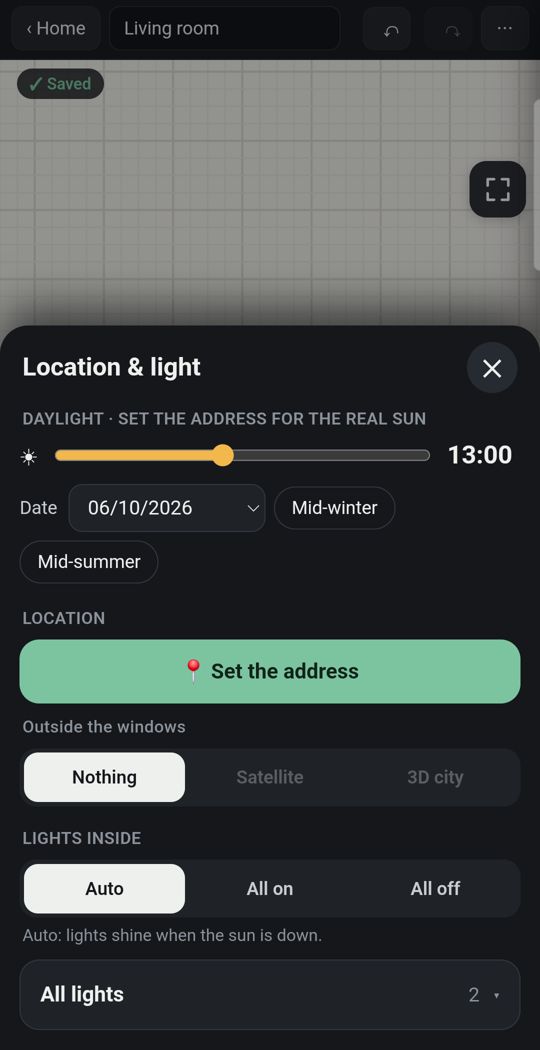
Sun, address by address
Pick a date and an hour and the real sunlight falls on your rooms, with a count of how long each has direct sun.
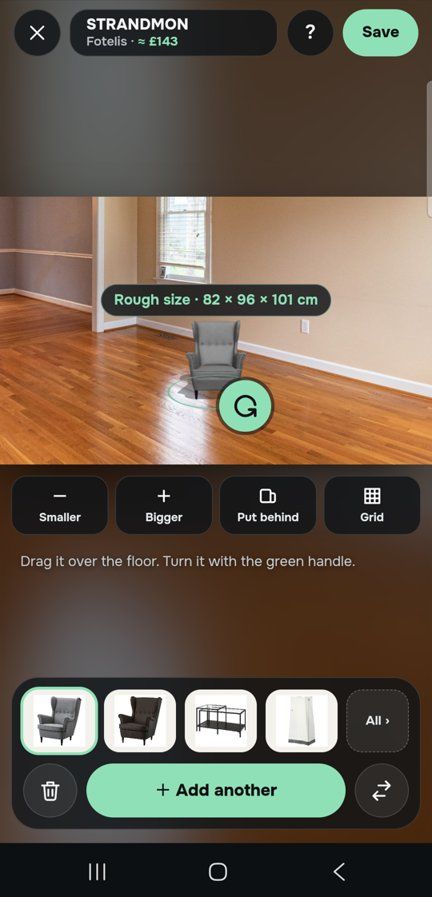
A sofa where it will stand
Before anything is carried up a tenement stair, see one piece on your own floor at its true size, in the live camera or in a photo of the room.
Down to the fittings
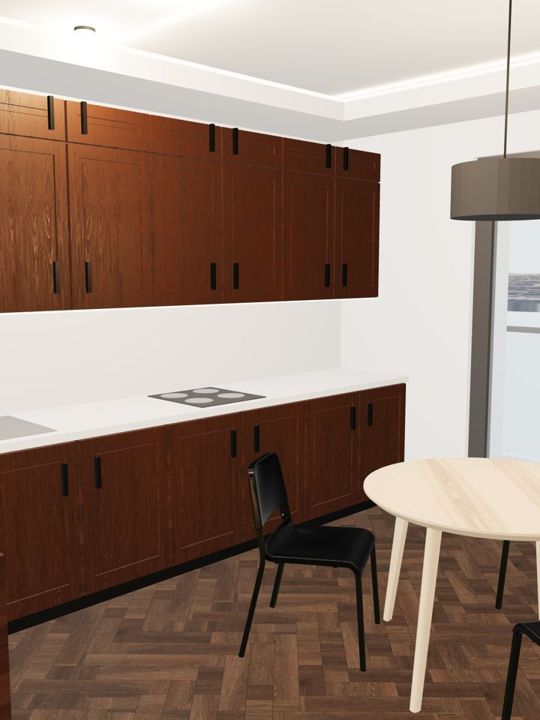
Kitchens, wardrobes and bathrooms are put together in the model one piece at a time, and every window and door has its type.
Built for the phone
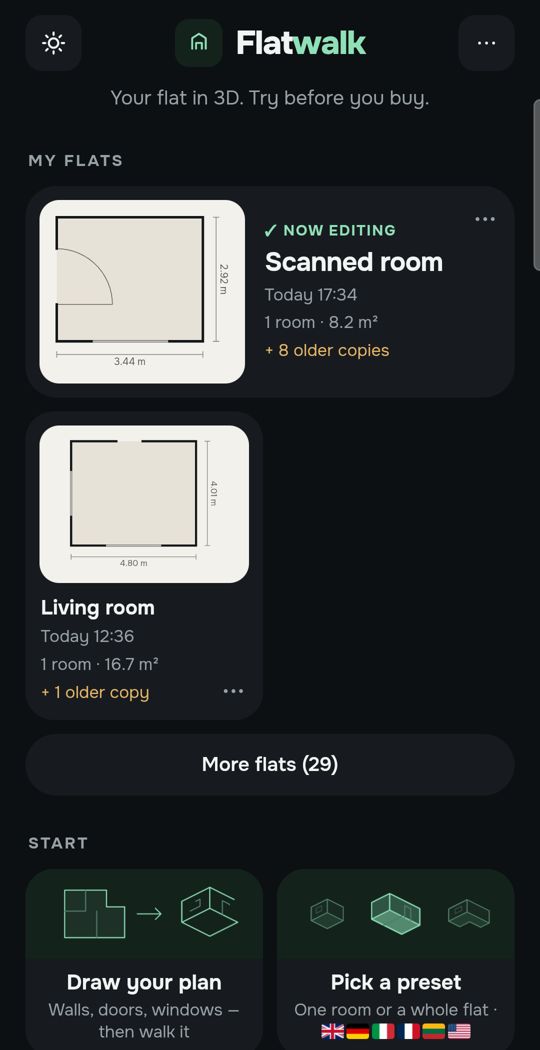
Drag one finger and the day moves on, with the light crossing the rooms as it goes.
Swipe for more. Every picture is the app itself.
One flat, free
For most people there is one home to plan, and that costs nothing on Flatwalk: no trial clock ticking and no card details. Drawing it, its sun, lights, furniture and the walk-through all come free, as does one try of each AI tool. Anyone wanting more flats or more AI can take out a membership; one home never needs it.
Questions people ask
What is the sun path in Edinburgh? A short, low arc in December: the sun rises in the southeast, gets to about 11° at midday and sets in the southwest. The June arc is long and high instead, climbing out of the northeast to about 57° before it drops into the northwest. In late March and late September, between the two, the sun's rising and setting points sit almost due east and due west.
How many hours of daylight does Edinburgh get in winter? On 21 December, 6h 57m, from 08:42 to 15:39 GMT. Compare 21 June, with 17h 36m between 04:26 and 22:02 BST.
Where does the sun rise and set in Edinburgh? On 21 December it rises near 134° (southeast) and sets near 226° (southwest). On 21 June it rises near 43° (northeast) and sets near 317° (northwest).
Which way should my flat face in Edinburgh? For winter sun, south, southeast or southwest, with an open view that way; on an east to west New Town street, that usually means the north side of the street. The summer evenings belong to west windows, the mornings to east ones, and a north-facing room sees no direct sun at all between late September and about 20 March.
How low is the sun in Edinburgh in December? Very low. On 21 December it peaks at about 11°, and the shadow of a five-storey building then reaches about 79 m.
Flatwalk puts the real sun for your address into a 3D plan of your flat, by date and hour, free for one flat. It is coming soon to Google Play; join the waiting list at flatwalk.app.
Join the waiting list