Short answer. Leeds in midwinter: the sun is up at 08:21 and down at 15:46 GMT, 7h 24m in all, and on 21 December its midday best is only about 13° above the rooftops. Leeds in midsummer: up at 04:34, down at 21:41 BST, 17h 06m, with a midday sun near 60° on 21 June. Between those dates the sunrise point travels from about 131° in the southeast round to about 46° in the northeast, and the sunset point from about 229° in the southwest to about 314° in the northwest. Nothing in front? Then a south-facing window has sun the whole December day, and a north-facing one none at all between late September and about 20 March.
See the sun at your own window
Sunrise, sunset and sun height in Leeds, month by month
Every row is the 15th of a month in 2026, for central Leeds near City Square, and every time is as your clock would show it: GMT through the winter, BST from 29 March to 25 October. Sunrise and sunset directions are in degrees round from true north, so a figure near 90° means east, 180° south and 270° west.
| Date | Sunrise | Sunset | Daylight | Sun at noon (height) | Sunrise direction | Sunset direction |
|---|---|---|---|---|---|---|
| 15 Jan | 08:15 GMT | 16:15 GMT | 8h 00m | 15° | 126° (SE) | 234° (SW) |
| 15 Feb | 07:25 GMT | 17:15 GMT | 9h 50m | 24° | 111° (ESE) | 250° (WSW) |
| 15 Mar | 06:21 GMT | 18:10 GMT | 11h 49m | 34° | 92° (E) | 268° (W) |
| 15 Apr | 06:05 BST | 20:07 BST | 14h 01m | 46° | 72° (ENE) | 288° (WNW) |
| 15 May | 05:04 BST | 21:01 BST | 15h 57m | 55° | 55° (NE) | 305° (NW) |
| 15 Jun | 04:34 BST | 21:38 BST | 17h 04m | 60° | 46° (NE) | 314° (NW) |
| 15 Jul | 04:54 BST | 21:29 BST | 16h 34m | 58° | 50° (NE) | 310° (NW) |
| 15 Aug | 05:44 BST | 20:35 BST | 14h 51m | 50° | 64° (ENE) | 295° (WNW) |
| 15 Sep | 06:39 BST | 19:22 BST | 12h 42m | 39° | 84° (E) | 276° (W) |
| 15 Oct | 07:33 BST | 18:09 BST | 10h 35m | 28° | 103° (ESE) | 256° (WSW) |
| 15 Nov | 07:32 GMT | 16:07 GMT | 8h 34m | 18° | 121° (ESE) | 239° (WSW) |
| 15 Dec | 08:17 GMT | 15:44 GMT | 7h 27m | 13° | 130° (SE) | 229° (SW) |
Midwinter, the equinox and midsummer:
- 21 December: daylight of 7h 24m, from 08:21 to 15:46, and a sun no higher than about 13°, reached at 12:04 GMT.
- 21 March: the equinox, give or take, with the sun up at 06:06 almost due east, down at 18:21 GMT almost due west, and about 37° high at midday.
- 21 June: from 04:34 to 21:41 the sun is up, 17h 06m, and at 13:08 BST it peaks at about 60°.
Why 1 pm, not noon, in summer? In Leeds the sun crosses due south at about 12:04 GMT. The few minutes past 12 are there because the city lies west of the Greenwich line, and BST then adds an hour, giving about 13:08.
Hours of sun on each side of a building in Leeds
Stand a wall on a bare hilltop, turn it to each compass point in turn, and these are the hours of direct sun it would catch. Read it as a ceiling: the buildings, trees and slopes in front of a real window take some of it away, and working that out is the sun tool's job.
| Wall faces | 21 December | 21 March | 21 June |
|---|---|---|---|
| North | none | 17m | 7h 34m |
| Northeast | 20m | 3h 31m | 6h 43m |
| East | 3h 42m | 6h 06m | 8h 33m |
| Southeast | 7h 03m | 8h 41m | 10h 22m |
| South | 7h 24m | 11h 57m | 9h 32m |
| Southwest | 7h 04m | 8h 43m | 10h 22m |
| West | 3h 42m | 6h 08m | 8h 33m |
| Northwest | 20m | 3h 33m | 6h 43m |
How the Leeds rows read:
- The south wall owns December. Sunrise to sunset on 21 December, all 7h 24m, falls on a south wall; turn it east or west and it keeps only about 3h 42m.
- North-facing rooms see sun only in summer, and only early and late. Their ration is about 7h 34m in June, at the start and end of the day with midday out of reach, and from late September to about 20 March they go without.
- The summer leaders face southeast and southwest, with 10h 22m on 21 June, since they get both the midday sun and one end of the long day.
What that means for flats in Leeds
- Back-to-backs: one wall decides. Leeds still has many back-to-back terraces, where each house shares its back wall with the house behind, so the windows are on one side only. In a home like that, the way that single wall faces settles almost all of your sun: a south-facing row can have it all winter, while a north-facing one gets only the summer mornings and evenings.
- Down to the Aire. Many streets step down the hillsides towards the Aire valley, and our numbers assume a flat horizon. A home low in the valley, or on a north-facing slope, can lose the low winter sun earlier than the table says, so look at the skyline to the south from the window.
- Riverside and Headingley. In the centre, many flats are in converted warehouses and newer blocks by the river, where the building across a narrow street matters more than any hill. In Headingley, many are in big Victorian terraced houses split up, often on streets with tall trees, so check the trees the tool shows in front of you.
- The facing to aim for. For winter sun, a living room facing south, southeast or southwest; east windows get the mornings and west windows the evenings. A corner flat with a south side and a west side gets the most sun over the year.
- The floor you are on. In a Leeds street the low winter sun disappears behind whatever stands across the road. At midday on 21 December a five-storey block, about 15 m, casts a shadow about 66 m long; across a street 20 m wide it reaches about 10.4 m up the facing wall, which puts the fourth storey right on the line and lets the fifth storey and above see the midday sun. Wait until 21 March and that shadow has drawn back to about 20 m, barely touching the foot of the far wall, which gives every floor its midday sun. The which floor gets the most sun guide runs the same sums for other heights.
- Which balcony to want. Facing south, a balcony catches the low winter sun, but in summer the sun stands so high at midday that the balcony of the flat above shades the room behind yours. Facing west, it gets the summer evenings, with sunset as late as 9:41 pm. To weigh up every side of a home, try how much sun each side of a house gets.
- The garden behind. Where the garden behind a Leeds house faces south, it catches sun right through the day. In December a 7 m high house throws about 30 m of shadow at midday, all of it to the north, so a garden on the north side of a house may see little winter sun close to it, and a short south facing one can sit in the shadow of the next row. Not sure of your garden's facing? which way does my garden face sorts it out.
- Plans next door. Leeds is still growing, and a vacant site or a planning application to your south can take hours of winter sun later; check with will a new building block my sun.
Check your own window in Leeds in 3 steps
Flatwalk gives away a tool called Sun at your window that draws the sun's daily track across a 3D model of your building. For Leeds it holds the outline of every building but estimates each height from the building's type and size, and it tells you so on screen. If the terrace or block opposite comes out too low or too tall, correct its height with Something off?
- Start from the front door. Search for your street in the "See the sun at your window" box, then tap your own roof among the others on the satellite map. Tell it whether this is A whole house or A flat, and if a flat, which storey under Your floor.
- Place the window. Every wall shows a tag ("South wall · sun side" is the one you hope for). Touch the wall with your window, then the window's spot along it, and See my sun does the rest.
- Read off the hours. Try Shortest day first, as it is the toughest test, then scan the 12 month bars; Typical weather re-counts the hours under the cloud Leeds usually gets. Whatever steals the sun, a terrace, a tree or a block up the hill, is named under What takes your sun.
Honest limits:
- Calculated, not metered. Its hours are sums done on maps and the sun's position; nobody has held a light meter to your glass.
- Heights are estimates here. Leeds misses out on the measured heights that London, Manchester, Cardiff, Edinburgh and Glasgow have. Its heights are estimates, so give the buildings outside your window a once-over and put right any height that seems wrong.
- Newer than the map. Until you mend them with Something off?, the model gets wrong, or leaves out, any building finished after the map data and any tree planted or cut since about 2017 to 2019.
- Average cloud only. Leeds's usual cloud, month by month for 2005 to 2023, is what Typical weather uses; it forecasts nothing, and for one window it can be about 10 to 15% off.
- Windows only, not the back yard. Garden lawns, terrace floors and roofs for solar panels are outside its sums; it deals in windows.
- Not for court. In a neighbour dispute it carries no weight, being neither a legal nor a certified report, nor a right to light survey.
- What it skips: your own roof's shape, the window frames and any tint in the glass; and a building's mapped outline can be a metre adrift of its real wall.
See the sun at your own window
What Flatwalk does that older planners skip
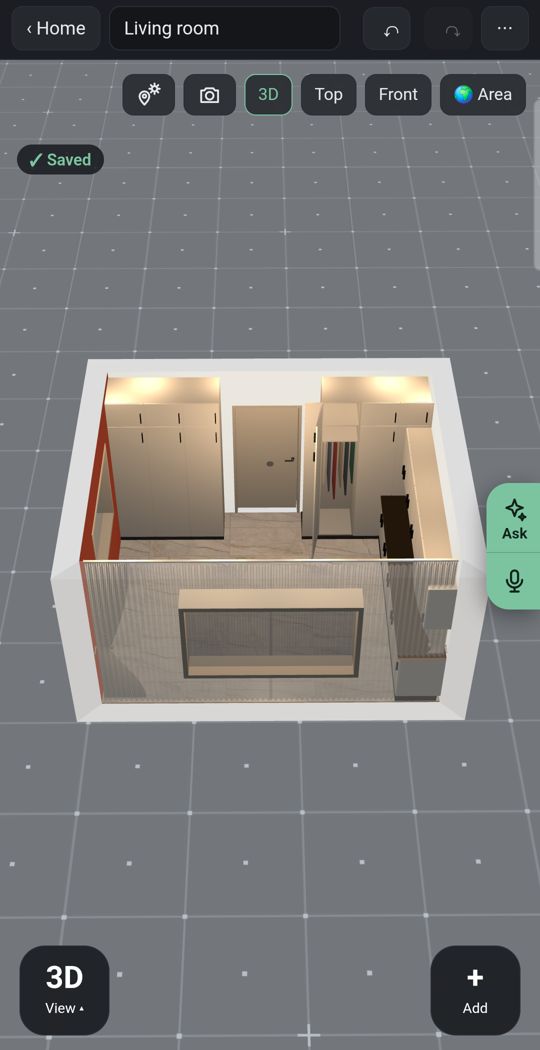
Evening lighting
Brighten a dark Leeds evening with ceiling lights, lamps and LED strips, and see where each one is needed.
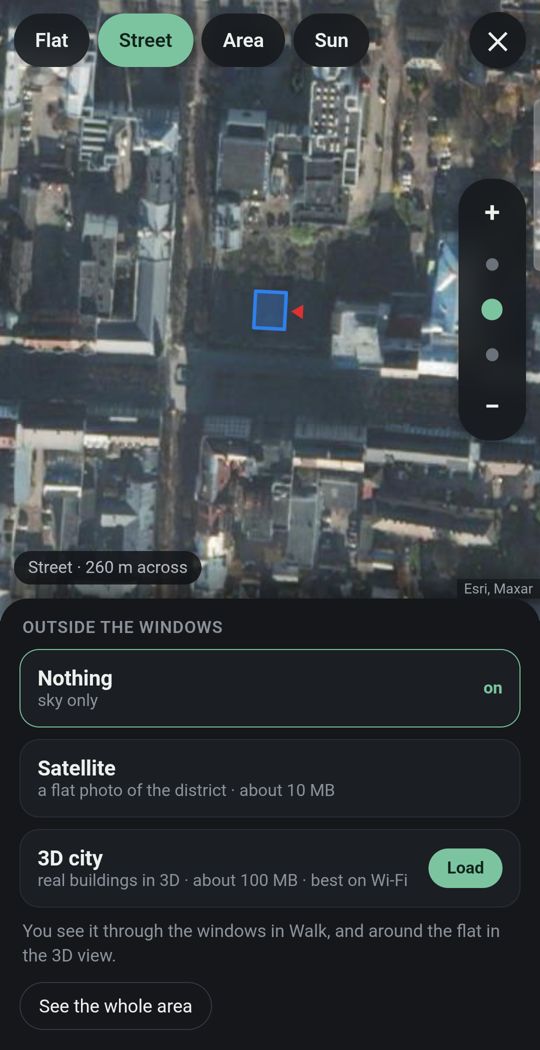
The block around you
From one address, the terraces, blocks and street around you are rebuilt in 3D, wherever the map reaches.
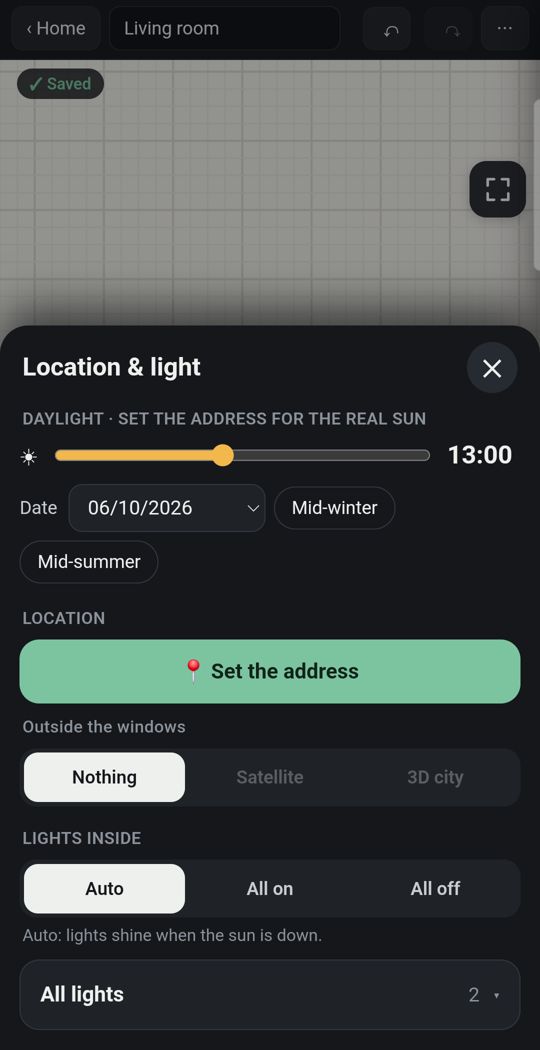
Sun by the hour
Set any date and hour and the sunlight on your address appears, along with the time each room spends in direct sun.
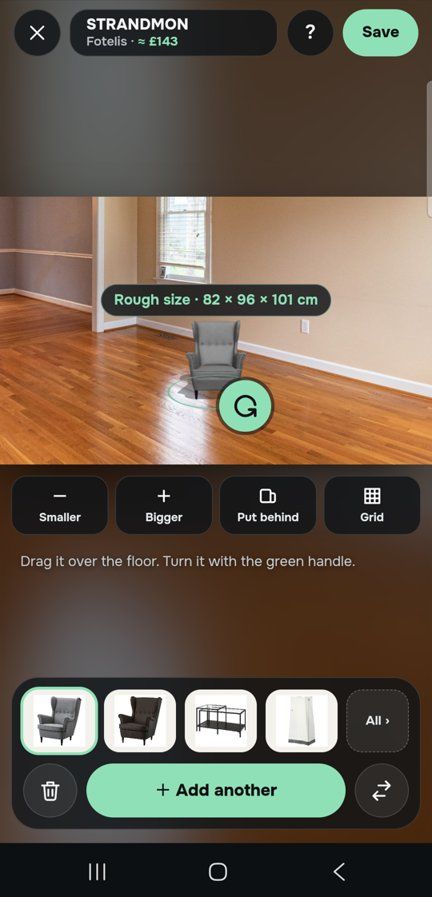
Will it fit?
Through the live camera, or in a photo of the room, one piece is shown at its true size exactly where it would stand.
Doors to wardrobes
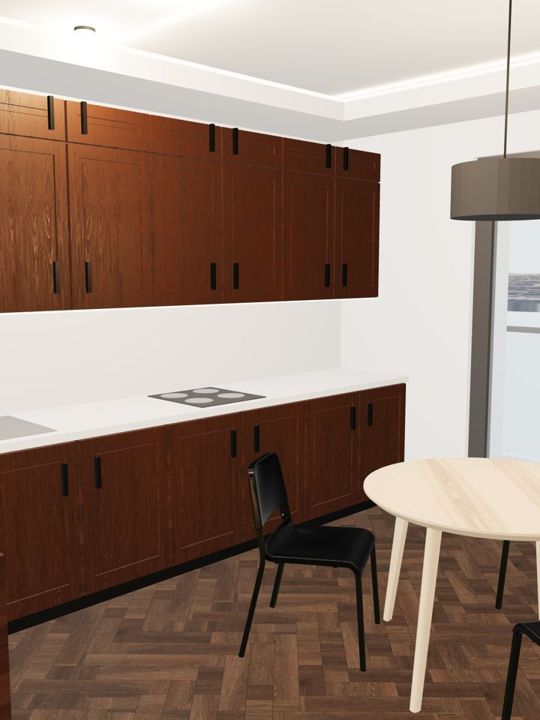
Pick each door and window by its real type; kitchens, wardrobes and bathrooms are pieced together unit by unit.
One hand, one finger
Hold the phone in one hand; a single finger moves the clock and the sunlight follows across each room.
Swipe for more. Every picture is the app itself.
One flat, free
Most people are planning just the one flat, so that is what Flatwalk gives away. There is no trial that runs out and no card. Free here really means it, covering the drawing, the flat's sun, lights and furniture, and the walk-through, with one free try of each AI tool thrown in. Only people who need more flats or more AI would take out a membership.
Questions people ask
What is the sun path in Leeds? Low and short in December: from the southeast, up to about 13° at midday, then down in the southwest. High and long in June: from the northeast to about 60°, then down in the northwest. In between, around 21 March and 23 September, it splits the difference: up near due east, down near due west.
What time is sunrise and sunset in Leeds in December? Leeds sees the sun from 08:21 until 15:46 GMT on 21 December, 7h 24m in total. On 21 June the times are 04:34 and 21:41 BST, a 17h 06m day.
Where does the sun rise and set in Leeds? From about 131° (southeast) to about 229° (southwest) in midwinter, and from about 46° (northeast) to about 314° (northwest) in midsummer.
Which way should my flat face in Leeds? Choose south, southeast or southwest for winter sun, provided no tall building stands close in front. Pick west for summer evenings and east for mornings; in a back-to-back, the one wall with windows settles it. North-facing glass waits from late September to about 20 March without any direct sun at all.
How high is the sun in Leeds in winter? On 21 December it reaches only around 13° at midday, and at that angle a five-storey building throws a shadow about 66 m long, far more than a typical street is wide.
Flatwalk puts the real sun for your address into a 3D plan of your flat, by date and hour, free for one flat. It is coming soon to Google Play; join the waiting list at flatwalk.app.
Join the waiting list