Short answer. From 08:25 to 15:54 GMT on 21 December, Liverpool gets 7h 29m of daylight under a midday sun of about 13°; on 21 June the day runs from 04:43 to 21:44 BST, 17h 01m, and the sun reaches about 60°. Across the year the sunrise slides along the eastern sky, from about 130° (southeast) at midwinter to about 47° (northeast) at midsummer, while sunset slides from about 230° (southwest) to about 313° (northwest), out towards the river. Leave the sky in front open and a south window keeps every hour of December daylight; a north window has no direct sun at all from late September to about 20 March.
See the sun at your own window
Sunrise, sunset and sun height in Liverpool, month by month
Worked out for the Town Hall on Castle Street, in the heart of Liverpool, on the 15th of each month of 2026. Read the summer rows on BST (29 March to 25 October) and the others on GMT, just as the clock shows them. For direction, count degrees from true north the way a ship's compass does: 90° east, 180° south, 270° west.
| Date | Sunrise | Sunset | Daylight | Sun at noon (height) | Sunrise direction | Sunset direction |
|---|---|---|---|---|---|---|
| 15 Jan | 08:19 GMT | 16:23 GMT | 8h 04m | 16° | 126° (SE) | 234° (SW) |
| 15 Feb | 07:30 GMT | 17:22 GMT | 9h 52m | 24° | 110° (ESE) | 250° (WSW) |
| 15 Mar | 06:26 GMT | 18:16 GMT | 11h 49m | 35° | 92° (E) | 268° (W) |
| 15 Apr | 06:12 BST | 20:12 BST | 14h 00m | 46° | 72° (ENE) | 288° (WNW) |
| 15 May | 05:12 BST | 21:05 BST | 15h 53m | 56° | 56° (NE) | 304° (NW) |
| 15 Jun | 04:42 BST | 21:42 BST | 16h 59m | 60° | 47° (NE) | 313° (NW) |
| 15 Jul | 05:02 BST | 21:32 BST | 16h 30m | 58° | 51° (NE) | 309° (NW) |
| 15 Aug | 05:51 BST | 20:40 BST | 14h 48m | 51° | 65° (ENE) | 295° (WNW) |
| 15 Sep | 06:45 BST | 19:27 BST | 12h 42m | 40° | 84° (E) | 276° (W) |
| 15 Oct | 07:38 BST | 18:15 BST | 10h 37m | 28° | 103° (ESE) | 256° (WSW) |
| 15 Nov | 07:37 GMT | 16:15 GMT | 8h 38m | 18° | 121° (ESE) | 239° (WSW) |
| 15 Dec | 08:21 GMT | 15:52 GMT | 7h 31m | 13° | 130° (SE) | 230° (SW) |
Up close, the turning points of the year:
- 21 December: a 7h 29m day from 08:25 to 15:54, its highest point, about 13°, coming at 12:10 GMT.
- 21 March: the sun clears the horizon close to due east at 06:12, drops below it close to due west at 18:27 GMT, and stands about 37° high at midday.
- 21 June: a 17h 01m day, 04:43 to 21:44, with the midday peak of about 60° at 13:13 BST.
Why does the sun set later in Liverpool than in Leeds or Sheffield? Liverpool lies about 3° west of Greenwich, further west than either, and the further west you go the later the sun reaches due south by the clock: here about 12:10 GMT in winter and 13:13 BST in summer. Its sunrise and sunset shift later by the same few minutes.
Hours of sun on each side of a building in Liverpool
Here is the most direct sun a wall can have on 21 December, 21 March and 21 June, by the way it faces, with open sky and nothing in the way. Buildings and trees across from a real window take hours off, and the sun tool counts those for your address.
| Wall faces | 21 December | 21 March | 21 June |
|---|---|---|---|
| North | none | 17m | 7h 31m |
| Northeast | 22m | 3h 32m | 6h 42m |
| East | 3h 44m | 6h 06m | 8h 30m |
| Southeast | 7h 06m | 8h 41m | 10h 18m |
| South | 7h 29m | 11h 57m | 9h 30m |
| Southwest | 7h 06m | 8h 42m | 10h 18m |
| West | 3h 44m | 6h 08m | 8h 30m |
| Northwest | 23m | 3h 33m | 6h 42m |
Patterns worth noticing:
- The south wall wins in winter. It has the sun from sunrise to sunset on 21 December, the full 7h 29m, against about 3h 44m for a wall facing east or west.
- Sun on a north wall is a summer thing. In June it can collect about 7h 31m, but only in the early morning and the evening, never at midday; from late September to about 20 March, nothing.
- Southeast and southwest top the June column, at 10h 18m on 21 June, because each sees the midday sun and one end of the long day as well.
What that means for flats in Liverpool
- The river side. Liverpool's waterfront looks west across the Mersey, so many river-view flats, in converted dock warehouses and newer blocks alike, face west or close to it and get the evening sun. With open water in front, a window looking west or southwest over the river has nothing to block the evening sun or the late winter sun. Point the same window across a narrow street and that advantage is gone.
- Georgian Quarter basements. Many of the Georgian Quarter's tall terraced houses are split into flats, and the lowest often sit in basements below street level. Down there the terrace across the road can keep the low winter sun out for most of the day, while the upper floors of the same house do far better.
- Long terraced streets. Away from the centre, long rows of terraced houses run street after street. On a street running east to west, one side has its fronts facing south and the other its backs, which decides whether your front room or your back room gets the winter sun.
- Which way to face. If winter sun is the aim, look for a main window on the south, southeast or southwest side. Mornings come to east windows, afternoons and evenings to west ones, and windows on two sides, south and west say, give you both.
- Upper or lower floor. The winter sun is low, so a building across the street hides it easily. Take a five-storey block, about 15 m tall, across a street 20 m wide: at midday on 21 December its shadow is about 64 m long and covers the facing wall up to about 10.3 m. The fourth storey sits right on that line, and from the fifth storey up you see the midday sun. Spring changes it: on 21 March the same block's shadow is only about 20 m, which just reaches across the street and lets every floor have the midday sun. For taller blocks and tighter streets, which floor gets the most sun has the detail.
- Balcony by balcony. South gives the low sun all winter, though in summer the sun is high and the balcony above shades your room at midday. On a west balcony the June evenings stay sunny until about 9:44 pm, a real draw on the waterfront. Every other facing is weighed up in how much sun each side of a house gets.
- Out the back. Behind a terraced house, a back garden that faces south has sun through the day. In December a 7 m high house throws about 30 m of shadow at midday towards the north, so where the garden lies north of the house the stretch nearest it may get little winter sun; which way does my garden face shows how to find out.
- Future neighbours. Liverpool still has gap sites waiting for new building, so a vacant plot or a planning application to your south could take hours of winter sun later; will a new building block my sun is worth reading before you commit.
Check your own window in Liverpool in 3 steps
Free to use, Flatwalk's Sun at your window builds your building in 3D and lays the sun's path across it. Every building in Liverpool is there as an outline, but its height is an estimate based on its type and size, and the tool tells you that on screen. If a building across from you looks too low or too tall, tap Something off? and set its height right.
- Your address first. Type the address into "See the sun at your window" and, on the satellite map, find the roof that is yours. Next, mark it as A whole house or A flat, giving Your floor if it is the latter.
- Then the window. Tags such as "South wall · sun side" mark each wall. Choose the wall, tap the window's place on it, and press See my sun.
- Then the answer. Run Shortest day for December's verdict, follow the year in the 12 month bars, and let Typical weather lay Liverpool's usual cloud on top. Should something be stealing your sun, What takes your sun says what it is.
Before you rely on it:
- Worked out, not read off a meter. No one measured your window: maps plus the sun's position produce the hours.
- Heights are estimates in Liverpool. Of the UK cities, London, Manchester, Cardiff, Edinburgh and Glasgow have measured heights, and Liverpool does not. So look hard at what stands outside your window and correct any height that looks wrong.
- Map lag. Anything finished after the map data was gathered, and any tree planted or cut since about 2017 to 2019, appears wrongly or not at all; Something off? is the fix.
- Typical, not tomorrow's. Cloud figures are Liverpool's monthly averages across 2005 to 2023, a typical picture rather than a forecast, and they can be about 10 to 15% off for any given window.
- Glazing only. Its subject is the window. Garden lawns, terrace floors and roofs for solar panels it leaves to others.
- Informal only. Keep it out of legal arguments: no certificate stands behind it, it is not a legal report, and it is not a right to light survey.
- The small print it ignores: your window frames, the glass's tint and your own roof's shape, plus the metre or so by which a map outline can miss the real wall.
See the sun at your own window
What Flatwalk does that older planners skip
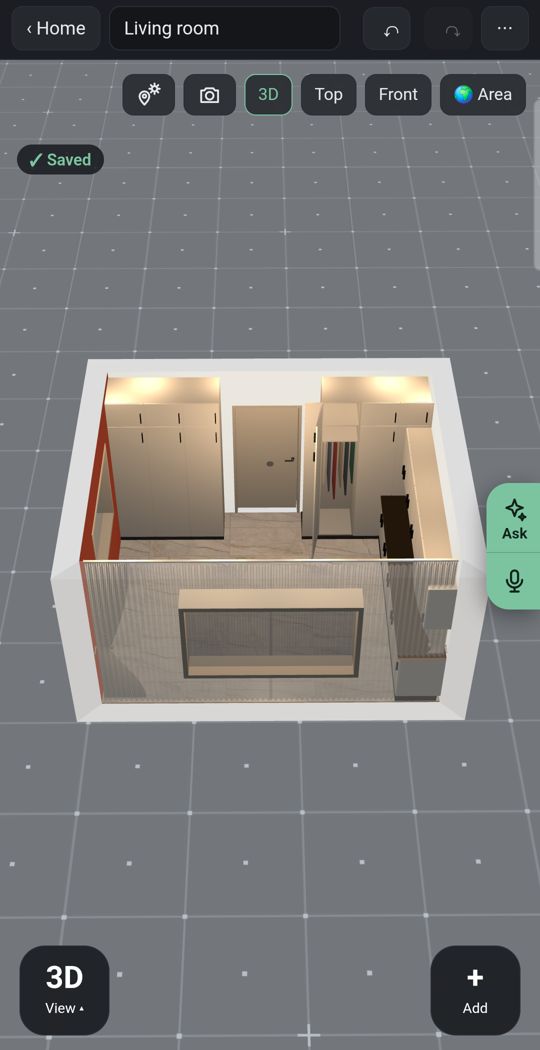
Light fittings
Once the sun has dropped towards the river, try ceiling lights, lamps and LED strips and see which rooms need them.
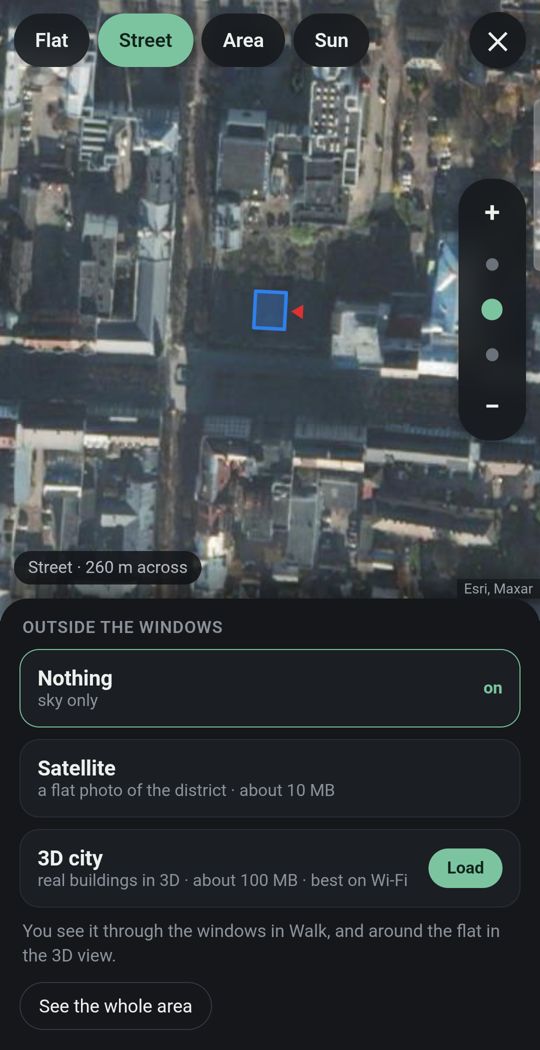
Neighbours in 3D
Give your address and the terrace, the dock block or the street around you goes up in 3D, as far as the map covers it.
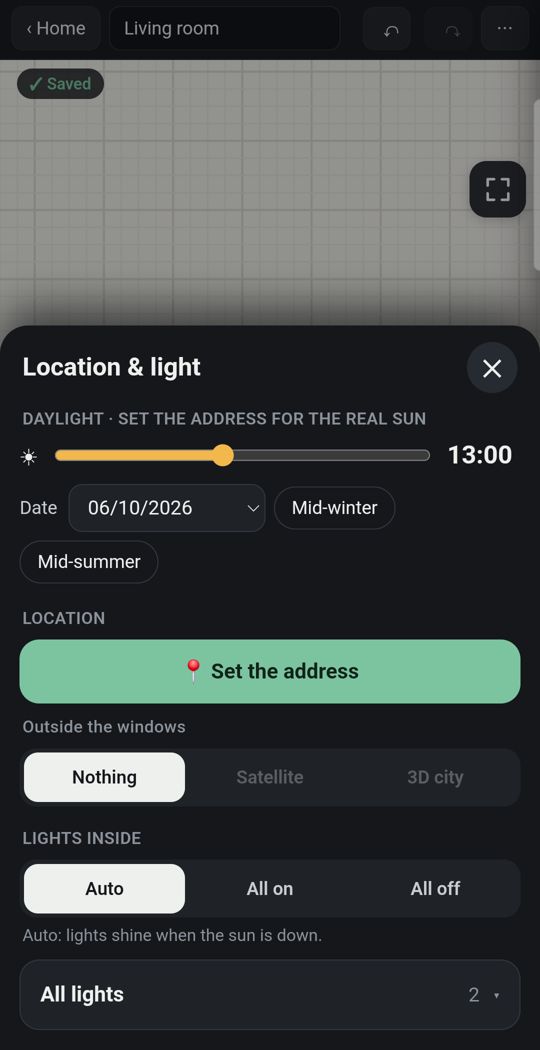
Sun at your address
Your address under the real sun, at any date and hour, with a count of each room's time in direct sun.
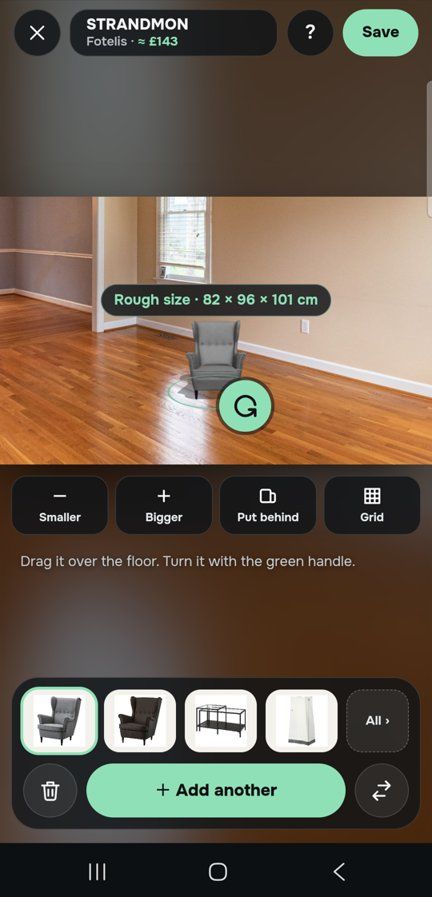
Camera or photo
One sofa on your own floorboards, true to size: see it live through the camera, or placed in a picture of the room.
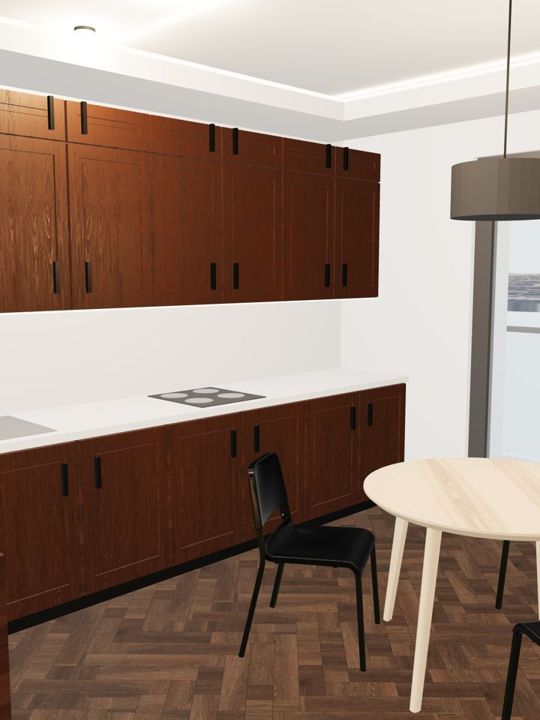
Fittings and finishes
A joiner's eye for detail: window and door types, and kitchens, wardrobes and bathrooms fitted unit after unit.
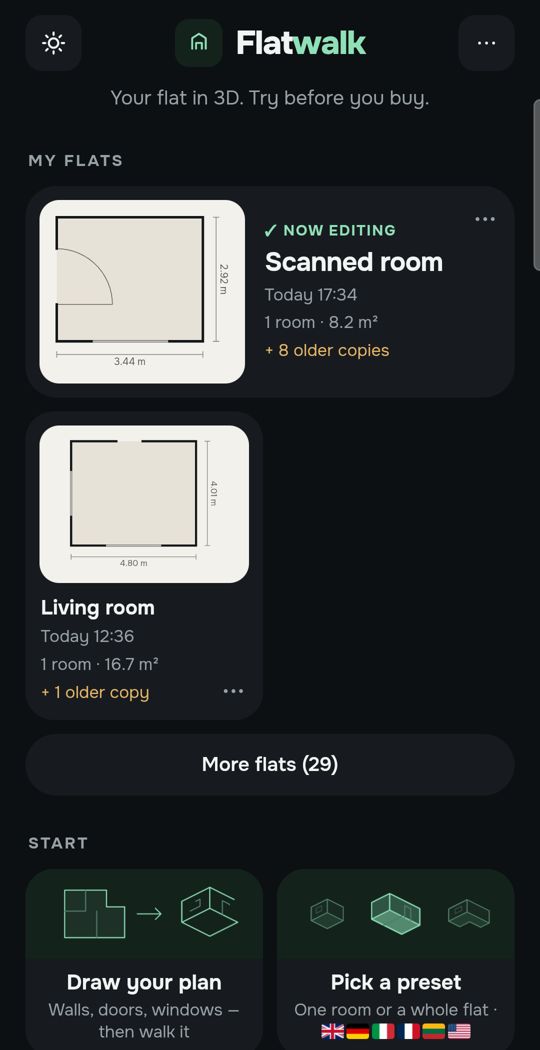
Thumb-sized
Your thumb is the clock hand: push the hour along and watch the light travel across the rooms.
Swipe for more. Every picture is the app itself.
One flat, free
For one home, which is all most people are planning, Flatwalk asks for no card and runs no trial clock. Drawing, sunlight, lights, furniture, walking round it: none of it is locked, and every AI tool lets you have one go for nothing. A membership is what you would buy for extra flats or more AI.
Questions people ask
What is the sun path in Liverpool? Think of a bow that flattens in winter and stretches in summer. In December it runs low from the southeast, about 13° high at midday, to the southwest; in June it climbs from the northeast to about 60° and comes down in the northwest, over the river side of the city. Late March and late September sit halfway, with the sun rising near due east and setting near due west.
What time is sunset in Liverpool in December? At 15:54 GMT on 21 December, the shortest day; the sun rose at 08:25, so there are only 7h 29m of daylight. By 21 June sunset has moved to 21:44 BST.
Where does the sun set in Liverpool? In the southwest in midwinter, at about 230° on 21 December, and in the northwest in midsummer, at about 313° on 21 June. Sunrise on those days comes at about 130° and 47°. That summer sunset is the one west-facing waterfront flats look towards across the river.
Which way should my flat face in Liverpool? South, southeast or southwest gives winter sun, as long as nothing tall is close in front. Waterfront flats facing west get the summer evenings; east-facing ones get the mornings. North is the poor relation: no direct sun reaches it from late September to about 20 March.
How high is the sun in Liverpool in December? Roughly 13° at midday on 21 December, which makes a five-storey building's shadow about 64 m long.
Flatwalk puts the real sun for your address into a 3D plan of your flat, by date and hour, free for one flat. It is coming soon to Google Play; join the waiting list at flatwalk.app.
Join the waiting list