Short answer. Expect a stubby winter day and a very long summer one. On 21 December the sun over Manchester clears the horizon at 08:22, is gone by 15:51 GMT and never climbs past about 13°, which leaves 7h 28m of daylight; on 21 June it is up by 04:39, lingers until 21:41 BST, 17h 02m in all, and reaches about 60°. December's sun appears low in the southeast (about 130°) and drops away in the southwest (about 230°), whereas June's swings far round, rising in the northeast at about 47° and setting in the northwest at about 313°. So a south-facing window with a clear view keeps the sun for the whole of a December day, and a north-facing one goes without direct sun from late September until about 20 March.
See the sun at your own window
Sunrise, sunset and sun height in Manchester, month by month
One row per month, always the 15th, calculated for 2026 at Albert Square in the middle of town. Summer rows are on BST, which runs from 29 March to 25 October, and the rest on GMT. A bearing of 90° points east, 180° south and 270° west, all measured clockwise from true north.
| Date | Sunrise | Sunset | Daylight | Sun at noon (height) | Sunrise direction | Sunset direction |
|---|---|---|---|---|---|---|
| 15 Jan | 08:16 GMT | 16:20 GMT | 8h 03m | 16° | 126° (SE) | 234° (SW) |
| 15 Feb | 07:27 GMT | 17:19 GMT | 9h 51m | 24° | 110° (ESE) | 250° (WSW) |
| 15 Mar | 06:23 GMT | 18:13 GMT | 11h 49m | 35° | 92° (E) | 268° (W) |
| 15 Apr | 06:09 BST | 20:09 BST | 14h 00m | 46° | 72° (ENE) | 288° (WNW) |
| 15 May | 05:08 BST | 21:03 BST | 15h 54m | 55° | 56° (NE) | 305° (NW) |
| 15 Jun | 04:39 BST | 21:39 BST | 17h 00m | 60° | 47° (NE) | 313° (NW) |
| 15 Jul | 04:59 BST | 21:30 BST | 16h 31m | 58° | 50° (NE) | 309° (NW) |
| 15 Aug | 05:48 BST | 20:37 BST | 14h 48m | 50° | 65° (ENE) | 295° (WNW) |
| 15 Sep | 06:42 BST | 19:24 BST | 12h 42m | 39° | 84° (E) | 276° (W) |
| 15 Oct | 07:35 BST | 18:12 BST | 10h 36m | 28° | 103° (ESE) | 256° (WSW) |
| 15 Nov | 07:34 GMT | 16:12 GMT | 8h 37m | 18° | 121° (ESE) | 239° (WSW) |
| 15 Dec | 08:18 GMT | 15:49 GMT | 7h 30m | 13° | 130° (SE) | 230° (SW) |
Dates to pin on the fridge:
- 21 December: Manchester's sun rises at 08:22, sets at 15:51, and is highest, at roughly 13°, at 12:07 GMT; that is 7h 28m of light in total.
- 21 March: close to due east at 06:09 and close to due west at 18:24 GMT, with about 37° at midday.
- 21 June: a 17h 02m day that begins at 04:39, ends at 21:41 and hits its top of about 60° at 13:10 BST.
Why does Manchester's midday sun come after 12? Because the city sits a little west of the Greenwich line, the sun only gets to due south (solar noon) at about 12:07 GMT in winter. BST then shifts that to about 13:10 on the summer clock, just after 1 pm.
Hours of sun on each side of a building in Manchester
Imagine a wall with nothing whatever in front of it: no mill, no tree, no hill. These are the hours of direct sun such a wall could get on three days of the year, depending on the way it faces. Real Manchester streets trim the figures back, and the sun tool puts those obstacles in for your address.
| Wall faces | 21 December | 21 March | 21 June |
|---|---|---|---|
| North | none | 17m | 7h 31m |
| Northeast | 22m | 3h 32m | 6h 42m |
| East | 3h 44m | 6h 06m | 8h 31m |
| Southeast | 7h 05m | 8h 41m | 10h 19m |
| South | 7h 28m | 11h 57m | 9h 30m |
| Southwest | 7h 05m | 8h 42m | 10h 19m |
| West | 3h 44m | 6h 08m | 8h 31m |
| Northwest | 22m | 3h 33m | 6h 42m |
Reading across the rows:
- December belongs to south walls. Between sunrise and sunset on the shortest day a south wall need never lose the sun; turn that wall east or west and it is down to under four hours.
- A north window's sun comes early and late. In June it can have about 7h 30m, in the early morning and again in the evening, yet nothing at midday. In winter it gets no direct sun at all.
- Summer's winners face southeast and southwest: in June they have the sun at midday and again through one end of the long day, morning or evening.
What that means for flats in Manchester
A lot of central Manchester living happens inside old cotton mills and warehouses, in Ancoats, Castlefield and the Northern Quarter. Their tall red-brick walls often face each other across narrow streets, so a flat on the lower floors can spend most of a winter's day in shade while the top floors clear the roofs opposite. Further out, many flats are in converted Victorian terraces, where the houses across the road are lower and more sky shows; in the city-centre towers the problem flips, because little stands in the way high up but a flat with windows on one side only gets just what that side allows. As Manchester's building heights are measured, the tool knows how tall the mill across your street really is.
- Pick the side. Want winter sun in a Manchester flat? Put the main window on the south, southeast or southwest side. East brings the mornings and west the evenings, until about 9:40 pm in June. Windows on two sides, say south and west, give the most of all.
- Height counts in winter. Picture a five-storey block, about 15 m tall, on the far side of a street 20 m wide. At midday on 21 December its shadow runs about 64 m, enough to climb your wall to about 10.3 m, so the fourth storey sits right on the line and only the fifth storey and above see the midday sun; on a narrower mill street the shadow climbs higher still. Come 21 March that shadow has shrunk to about 20 m and barely reaches your side, so every floor gets sun at midday. For mill streets narrower than this, or blocks taller, run through which floor gets the most sun.
- South balconies, summer shade. All winter long, the low sun reaches a balcony facing south. By summer it rides so high, about 60°, that the balcony overhead shades your window at midday, and a west balcony becomes the place for summer evenings. Our piece on how much sun each side of a house gets takes each side in turn.
- Back gardens. Behind a Manchester terrace, a garden on the south side keeps the sun all day, since a house's midday shadow is thrown north, away from it. December stretches every shadow, though: a 7 m high house casts about 30 m at midday, enough to leave a north-facing garden with little winter sun near the house, and to reach into a short south-facing one from the houses behind it. The guide which way does my garden face helps you tell which you have.
- Gap sites. Manchester keeps building, and a cleared lot or a planning application to your south could cost you hours of winter sun later; will a new building block my sun explains what to look for.
Check your own window in Manchester in 3 steps
In Manchester, Flatwalk's free Sun at your window tool draws the sun's path over your building in 3D from measured building heights (the Environment Agency laser survey of 2022), tree crowns and the shape of the ground and hills.
- Go to your street. Your building comes first: put the address under "See the sun at your window", spot its roof on the satellite map, then say whether it is A whole house or A flat (a flat also asks for Your floor).
- Tell it where the window is. Each wall wears a tag, "South wall · sun side" being one, so the sides are easy to tell apart. Choose the wall that holds your window, touch the place on it where the window is, and finish with See my sun.
- Read the result. Begin with Shortest day, the hard December test, then run your eye along the 12 month bars. Typical weather folds in Manchester's usual cloud, worth seeing in a city with a rainy name, and if the answer disappoints, What takes your sun points to the cause, whether a mill, a tree or a block across the street.
What the numbers leave out:
- No meter by the mill window. The tool never visits: its hours come from maps and the sun's position, not a light meter on your sill.
- Missing or changed things. If a block went up after the map data was made, or a tree was planted or felled since about 2017 to 2019, the model shows it wrongly or not at all, and Something off? is how you put it right.
- Cloud. The cloud is Manchester's average month by month over 2005 to 2023; tomorrow's forecast it is not, and at a single window it may miss by about 10 to 15%.
- Not the garden or roof. It reads windows. Lawns, terrace floors and roofs meant for solar panels draw a blank.
- Not for a solicitor's file. In a dispute you would want a right to light survey, which this is not, and nothing it shows is a legal or certified report.
- Small stuff: it takes no account of window frames, the tint of the glass or the shape of your own roof, and a mapped outline can stray a metre from the real wall.
See the sun at your own window
What Flatwalk does that older planners skip
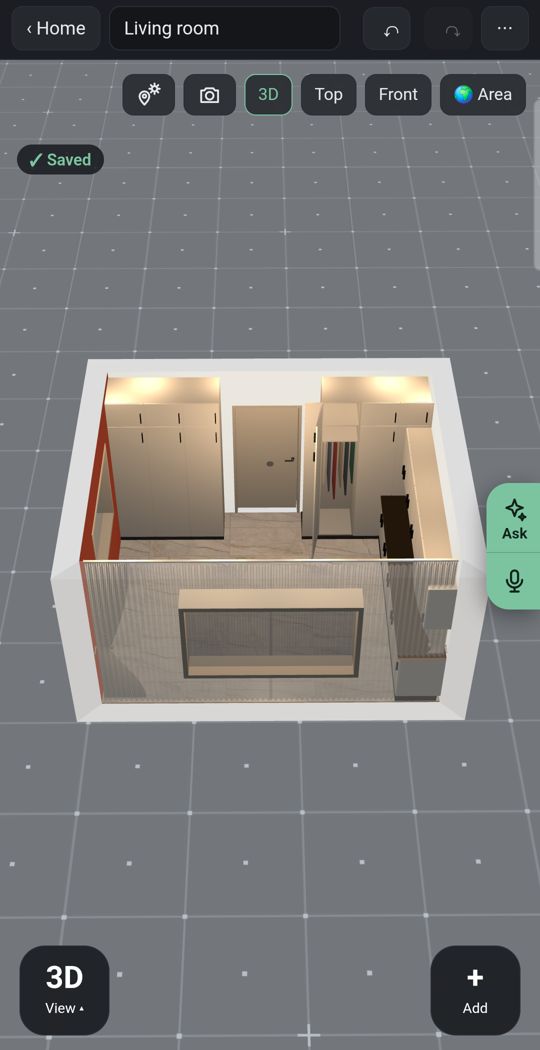
Lamps after dark
Hang ceiling lights, set out lamps and run LED strips, then let the sun go down to see which corners stay gloomy.
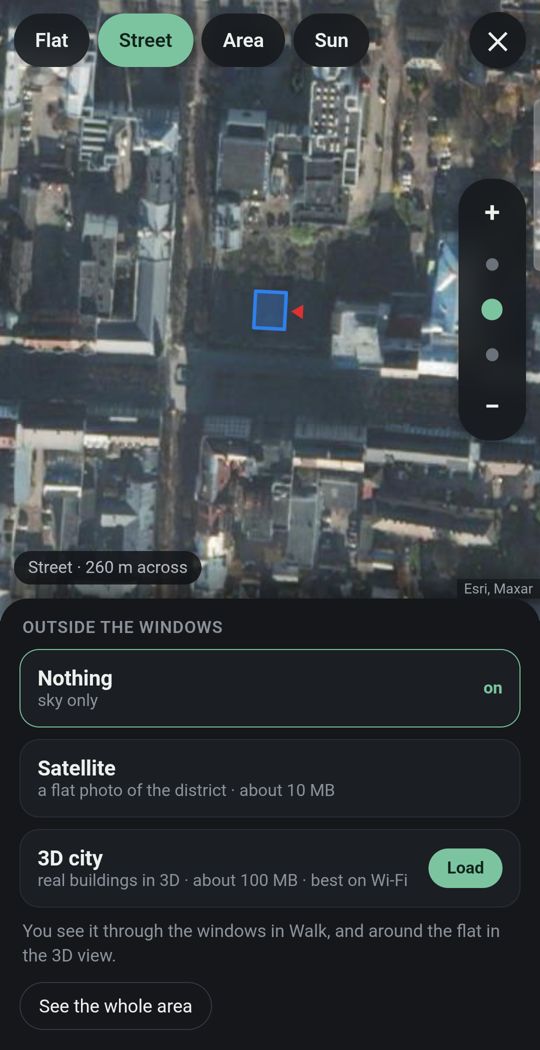
Your street, in 3D
Type in where you live and the mills, terraces and blocks nearby go up in 3D, as far as the map covers them.
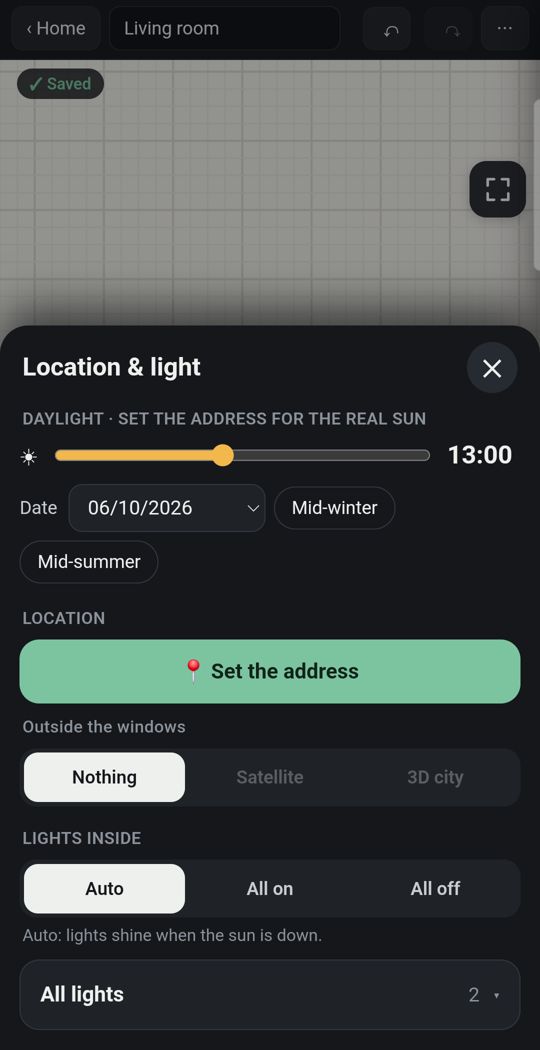
Your own sunlight
Real sunlight on any date, at any hour, for your own address, with each room's time in direct sun.
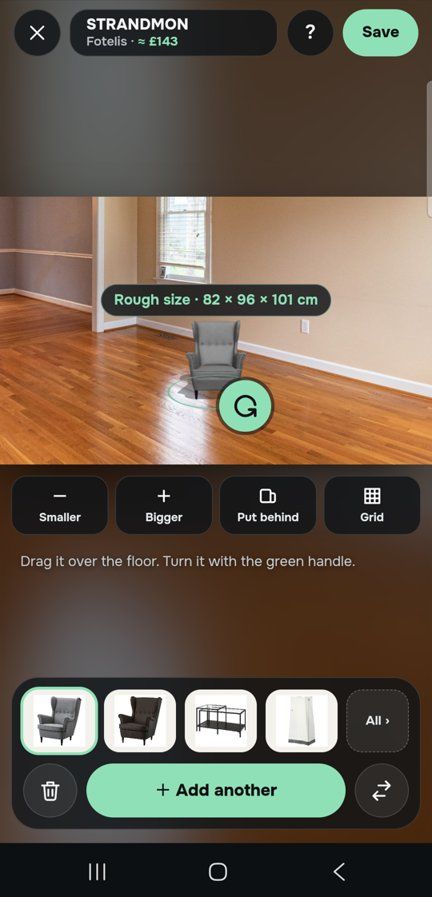
A sofa, tried in place
One sofa, real size, standing on your own floor: through the live camera, or dropped into a photo of the room.
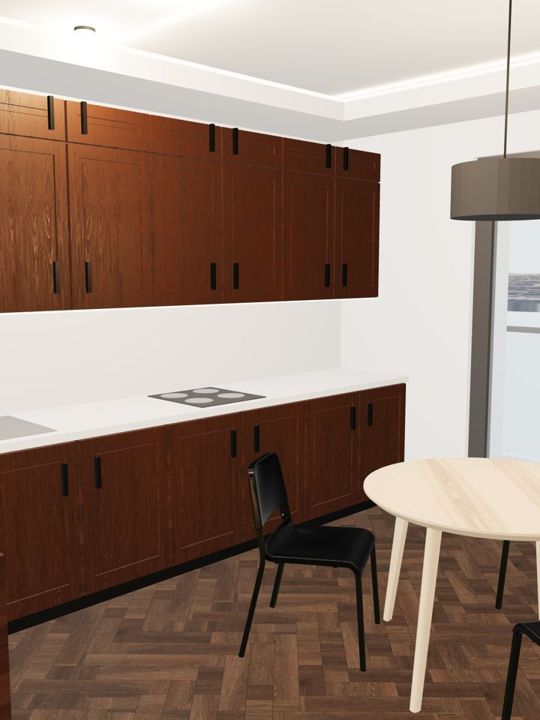
Built in detail
From window and door types to fitted kitchens, wardrobes and bathrooms, it is built up part by part.
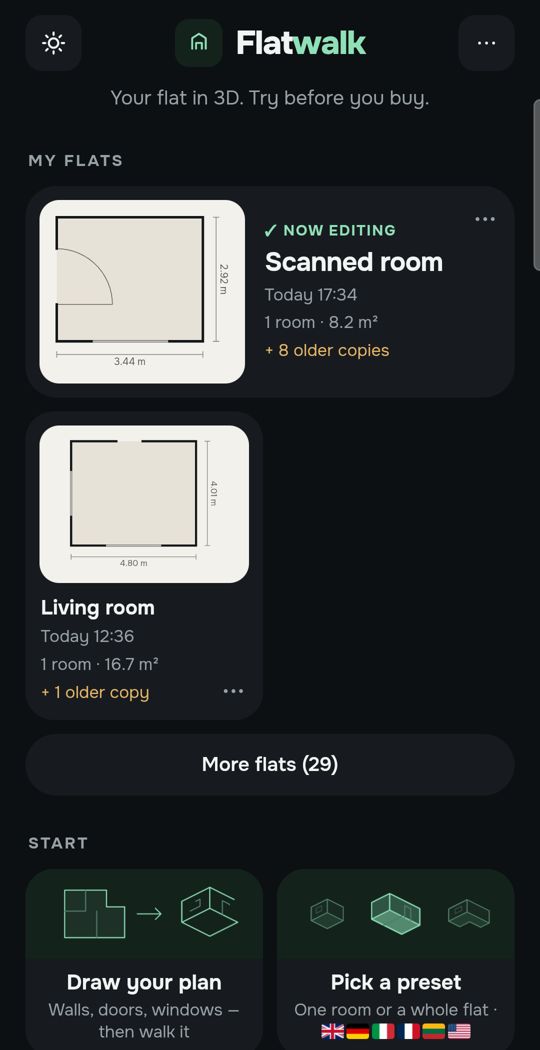
One thumb
Everything answers to one thumb: slide the hour and watch the light cross your rooms.
Swipe for more. Every picture is the app itself.
One flat, free
Most people only ever plan one home, and on Flatwalk that one costs nothing: no card, no trial clock counting down. That one home gets everything: the drawing, its sun, lights, furniture, the walk-through and one free try of each AI tool. Membership money only comes into it for extra flats or extra AI.
Questions people ask
What is the sun path in Manchester? Low and brief in winter, rising in the southeast, peaking near 13° and setting in the southwest; high and drawn out in summer, from the northeast up to about 60° and down into the northwest. Either equinox, March or September, puts sunrise close to due east and sunset close to due west.
Where does the sun rise and set in Manchester? Southeast and southwest in midwinter, at about 130° and 230° on 21 December. By 21 June both points have swung north: up at about 47°, northeast, and down at about 313°, northwest.
How many hours of daylight does Manchester get in winter? Only 7h 28m on the shortest day, 21 December, with sunrise at 08:22 and sunset at 15:51 GMT. Compare that with 17h 02m on 21 June, from 04:39 to 21:41 BST.
Which way should my flat face in Manchester? For winter sun, south, southeast or southwest, provided nothing tall stands close in front, which on a narrow mill street it may. For summer evenings go west; for bright breakfasts, east. Do not count on north: from late September to about 20 March a north-facing Manchester window gets no direct sun.
How high is the sun in Manchester in December? Barely 13° at midday on 21 December, and at that angle a five-storey building casts a shadow about 64 m long, which is why lower floors on tight streets often go without. By June the midday sun is up at about 60°.
Flatwalk puts the real sun for your address into a 3D plan of your flat, by date and hour, free for one flat. It is coming soon to Google Play; join the waiting list at flatwalk.app.
Join the waiting list