Short answer. No big English city lies further north than Newcastle, and December proves it. On 21 December the sun is up for just 7h 10m, rising at 08:29 and setting at 15:39 GMT, and at its highest it stands only about 12° above the horizon. Midsummer, 21 June, brings 17h 22m between 04:27 and 21:49 BST, with the sun near 58° at its peak. The winter sun climbs out of the southeast at about 132° and has gone by the time it reaches about 228° in the southwest, while the June sun swings right round, rising near 44° in the northeast and setting near 316° in the northwest. Because the winter sun skims so low, whatever stands across the street counts for more on Tyneside than it does down south.
See the sun at your own window
Sunrise, sunset and sun height in Newcastle, month by month
Times in this table are for Grey's Monument on the 15th of every month of 2026, and they follow the clock on your kitchen wall: GMT until 29 March, BST from then until 25 October, then GMT again. For the direction columns, picture a compass laid on Grey Street, with true north as the starting point and the count running clockwise through east at 90°, south at 180° and west at 270°.
| Date | Sunrise | Sunset | Daylight | Sun at noon (height) | Sunrise direction | Sunset direction |
|---|---|---|---|---|---|---|
| 15 Jan | 08:22 GMT | 16:10 GMT | 7h 48m | 14° | 127° (SE) | 233° (SW) |
| 15 Feb | 07:28 GMT | 17:13 GMT | 9h 44m | 22° | 111° (ESE) | 249° (WSW) |
| 15 Mar | 06:21 GMT | 18:10 GMT | 11h 48m | 33° | 92° (E) | 268° (W) |
| 15 Apr | 06:03 BST | 20:10 BST | 14h 07m | 45° | 72° (ENE) | 289° (WNW) |
| 15 May | 04:59 BST | 21:07 BST | 16h 08m | 54° | 54° (NE) | 306° (NW) |
| 15 Jun | 04:27 BST | 21:47 BST | 17h 20m | 58° | 45° (NE) | 315° (NW) |
| 15 Jul | 04:47 BST | 21:36 BST | 16h 48m | 57° | 49° (NE) | 311° (NW) |
| 15 Aug | 05:40 BST | 20:39 BST | 14h 58m | 49° | 64° (ENE) | 296° (WNW) |
| 15 Sep | 06:38 BST | 19:23 BST | 12h 44m | 38° | 84° (E) | 276° (W) |
| 15 Oct | 07:35 BST | 18:07 BST | 10h 31m | 26° | 104° (ESE) | 256° (WSW) |
| 15 Nov | 07:38 GMT | 16:03 GMT | 8h 25m | 17° | 122° (ESE) | 238° (WSW) |
| 15 Dec | 08:25 GMT | 15:38 GMT | 7h 13m | 12° | 132° (SE) | 228° (SW) |
The dates worth remembering on Tyneside:
- 21 December: Tyneside's shortest day starts at 08:29 and is over by 15:39, 7h 10m in all, and at 12:04 GMT the sun reaches its winter best of about 12°.
- 21 March: a midday sun of about 35°, and a day that runs from 06:06 to 18:21 GMT with sunrise and sunset close to due east and due west.
- 21 June: the long one, with the sun up from 04:27 until 21:49 (17h 22m) and as high as about 58° at 13:08 BST.
When is the sun due south in Newcastle? In the dark half of the year it happens at about 12:04 GMT, and once the clocks go forward it moves to about 13:08 BST. The city sits a little west of the Greenwich meridian, which is why the sun crosses due south a few minutes after 12 by the clock before BST shifts everything on by an hour.
Hours of sun on each side of a building in Newcastle
Each figure is the most direct sun a wall facing that way could catch on the day, under clear sky with nothing in front. Your own window will see less once the neighbours and the trees have taken their share of the low sun, and that share is what the sun tool works out for your address.
| Wall faces | 21 December | 21 March | 21 June |
|---|---|---|---|
| North | none | 17m | 7h 43m |
| Northeast | 13m | 3h 30m | 6h 50m |
| East | 3h 35m | 6h 07m | 8h 41m |
| Southeast | 6h 56m | 8h 43m | 10h 31m |
| South | 7h 10m | 11h 57m | 9h 38m |
| Southwest | 6h 57m | 8h 45m | 10h 31m |
| West | 3h 35m | 6h 08m | 8h 41m |
| Northwest | 13m | 3h 31m | 6h 50m |
How to read those hours:
- A south wall gets every December minute. Under open sky, the full 7h 10m of 21 December can land on a wall that faces south, against roughly 3h 35m on one that faces east or west.
- North rooms wait for summer. A north-facing window on Tyneside is a summer affair: it can see about 7h 43m of sun in June, split between the early morning and the evening, with nothing in the middle of the day. From late September through to about 20 March it waits in shade.
- June belongs to the diagonals. Turned southeast or southwest, a wall gets the midday sun as well as one long end of the summer day, and on 21 June that adds up to the best figure in the June column, 10h 31m.
What that means for flats in Newcastle
- Face south, and see far. South, southeast or southwest brings the most winter sun, and here an open outlook that way matters more than it would in southern England. West gives the long summer evenings, east the mornings, and windows on two sides share the sun out across the day.
- Tyneside flats. Many streets in Heaton and Jesmond are lined with Tyneside flats: an upstairs and a downstairs flat in one terrace, each with its own front door. Most have windows on the street at the front and on the yard and back lane behind, so a north-facing front often means a south-facing back, and it pays to ask which rooms sit on the sunny side.
- The steep bank of the Tyne. On the Newcastle side of the Quayside the ground climbs steeply from the river and looks south across the water, so flats on that slope face the winter sun with nothing tall in the way over the river.
- How high up you live. A sun this low is easy to block. Say the far side of your street, 20 m away, is a five-storey block about 15 m tall: at noon on 21 December its shadow runs about 73 m, right across the road and up your front wall to about 10.9 m, so storeys one to four are in shade and only the fifth storey and above catch the sun. In Grainger Town, where tall stone frontages stand close on some of the narrower streets, lower floors can sit in shade like this all winter even when they face south. Come 21 March that block's shadow is down to about 21 m, which only just overshoots the street: it nicks the bottom of a ground-floor window and leaves every floor above in midday sun. Our floor-by-floor guide, which floor gets the most sun, goes deeper.
- Out on a Tyneside balcony. A south balcony on Tyneside gathers what little winter sun there is. Come summer, the noon sun is so steep that the balcony one floor up throws the room underneath into shade. Turn it west and you can sit out in the sun on a June evening until about 9:49 pm. Every compass point gets its turn in the guide on how much sun each side of a house gets.
- The back garden. Behind a Tyneside terrace, a garden or yard that faces south has sun through the day unless the next terrace stands close on its south side. The house itself throws its midday shadow north, about 35 m of it in December for a 7 m high house, so a north-facing garden may see little winter sun near the house. For lawns and yards there is a whole guide: which way does my garden face.
- Furthest north, longest shadows. On the shortest day the midday sun here, at about 12°, sits about 2° below Manchester's or Nottingham's, and each degree lost stretches the shadows, so a given block casts a longer one on Tyneside than it would in London.
- Land to your south. A cleared site to the south, or a planning notice on a lamp post there, is worth a second look: whatever rises on it could later take hours of your winter sun. Our guide will a new building block my sun explains how to weigh it up.
Check your own window in Newcastle in 3 steps
Sun at your window is the free Flatwalk tool for this: it lifts your building into 3D and draws the sun's path across the sky above it. Every Newcastle building has its true outline in it, but none has a measured height; the tool estimates each one from the building's type and size, and flags that on screen. If the terrace or block across from you comes out too short or too tall, put it right with Something off? by fixing its height.
- Your building first. Type the address, a Heaton upper flat or a Quayside block alike, under "See the sun at your window", then find its roof on the satellite map. Then choose between A whole house and A flat, and if it is a flat, tell it Your floor.
- Pin your window to its wall. Each wall wears a compass tag, "South wall · sun side" for one, so you know which way it looks. One tap picks the wall, a second marks where on it your window sits, and See my sun does the rest.
- Look at the results. This far north the test that matters is December, so open Shortest day first, and only then look across the 12 month bars. Typical weather folds in Newcastle's usual cloud, and What takes your sun points at whatever is casting the shade.
Where it stops:
- Geometry, not a gadget. The hours on screen are geometry: map data plus the sun's position, with no light meter anywhere near your window.
- Heights here are guesses. The measured-height cities are London, Manchester, Cardiff, Edinburgh and Glasgow, and Newcastle is not among them, so cast an eye over the buildings in front of your window and fix any height that looks off.
- Anything built or felled lately. The map is a snapshot: a block finished after its data was gathered, or a tree planted or cut down since about 2017 to 2019, will show up missing or wrong until you report it with Something off?
- Cloud is an average. Switching on Typical weather applies the usual cloud for each month, averaged over 2005 to 2023; it is no forecast, and a single window can come out about 10 to 15% wrong.
- Windows and nothing else. Lawns and terrace floors are outside it, and so is a roof you might fit with solar panels: windows are all it measures.
- No legal weight. Lawyers and surveyors will want a right to light survey; this is not one, and no part of it is a certified report.
- Fine detail left out. Your own roof shape, the window frames and any tint in the glass are not part of the model, and a map outline can be a metre out from where the wall really is.
See the sun at your own window
What Flatwalk does that older planners skip
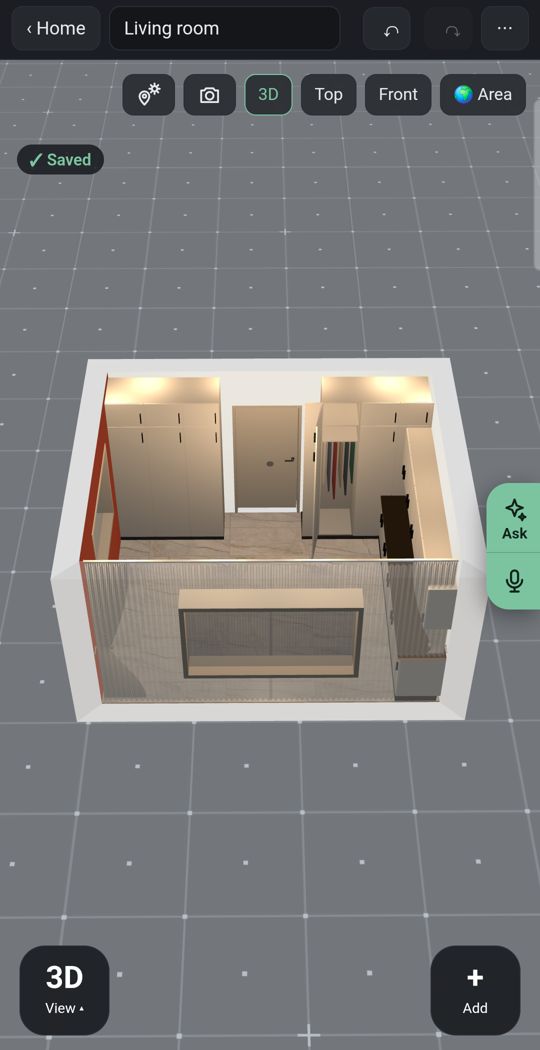
Lamps for after dark
Long Tyneside winter evenings are when ceiling lights, lamps and LED strips earn their keep, so place them and find the dark corners before you buy.
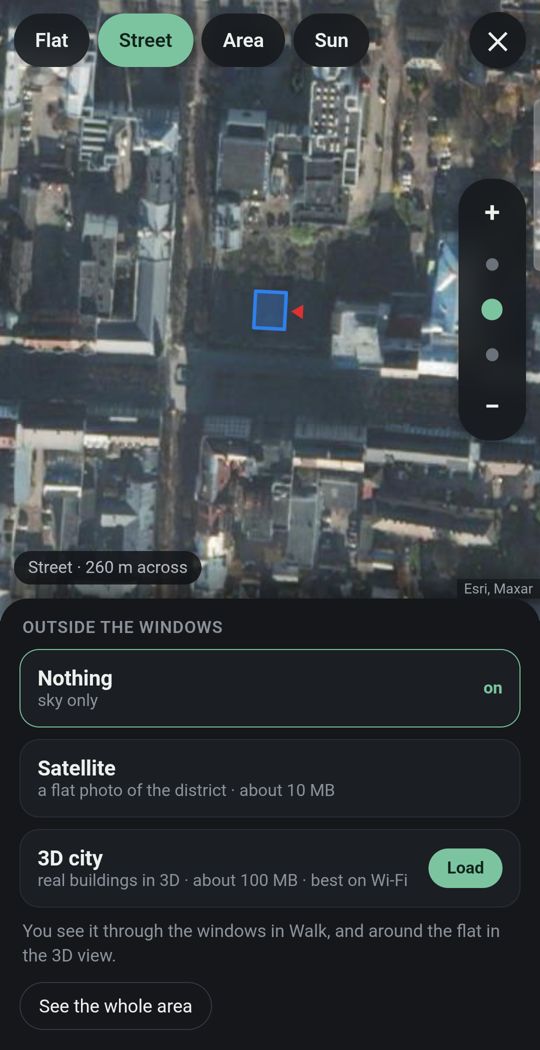
Your street, standing up
Type in where you live and the neighbours go up in 3D around your flat, street and all, wherever the map covers them.
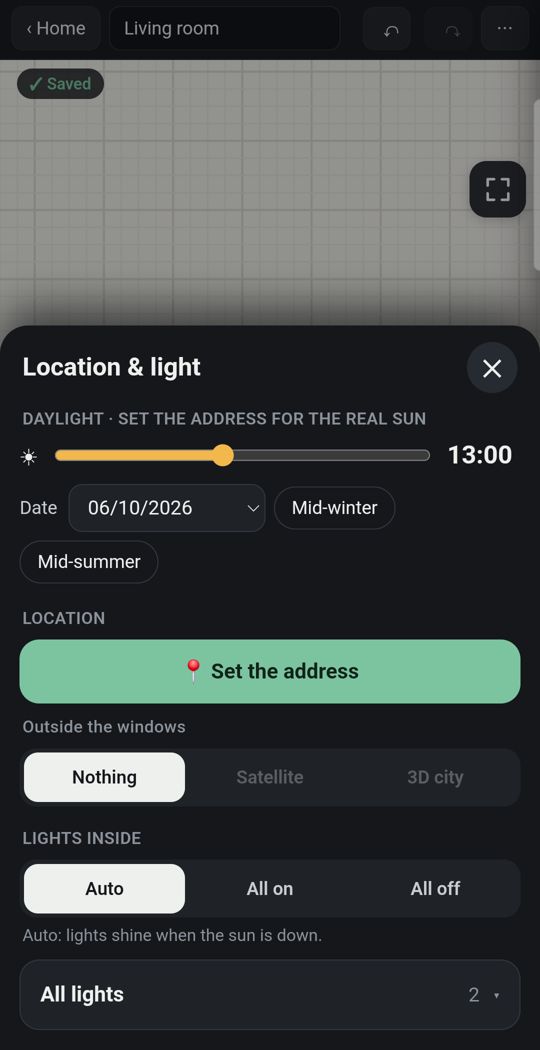
Sunlight for your door number
Whatever the date and hour, it shows the real sun falling on your address and times each room's spell of direct sun.
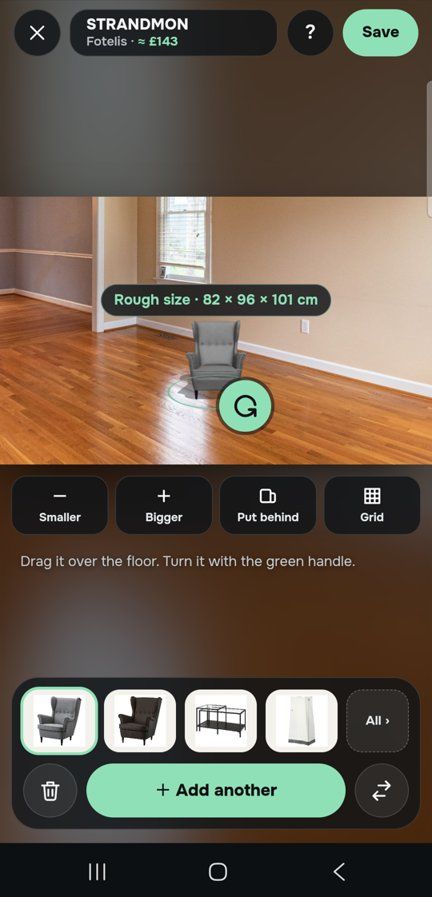
Real size, real room
Before buying, check a sofa against your own floor at its true size, using the live camera or a photo of the room.
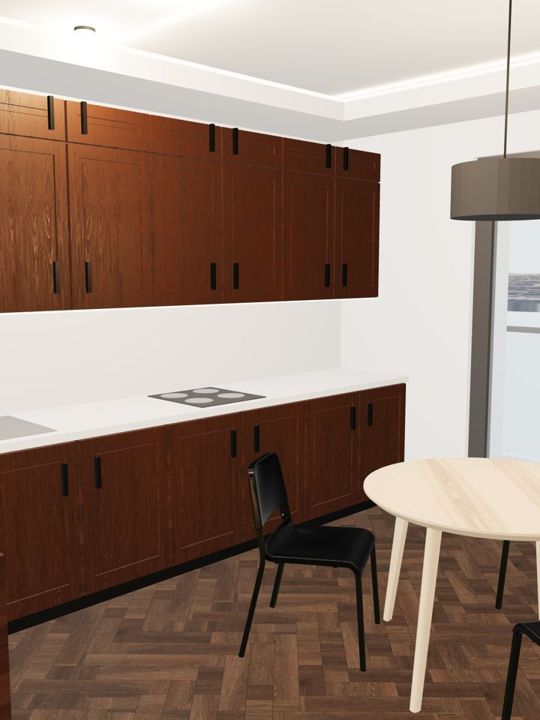
Built to the detail
From the type of each window and door to the last wardrobe, kitchen unit and bathroom fitting, the flat goes together one piece at a time.
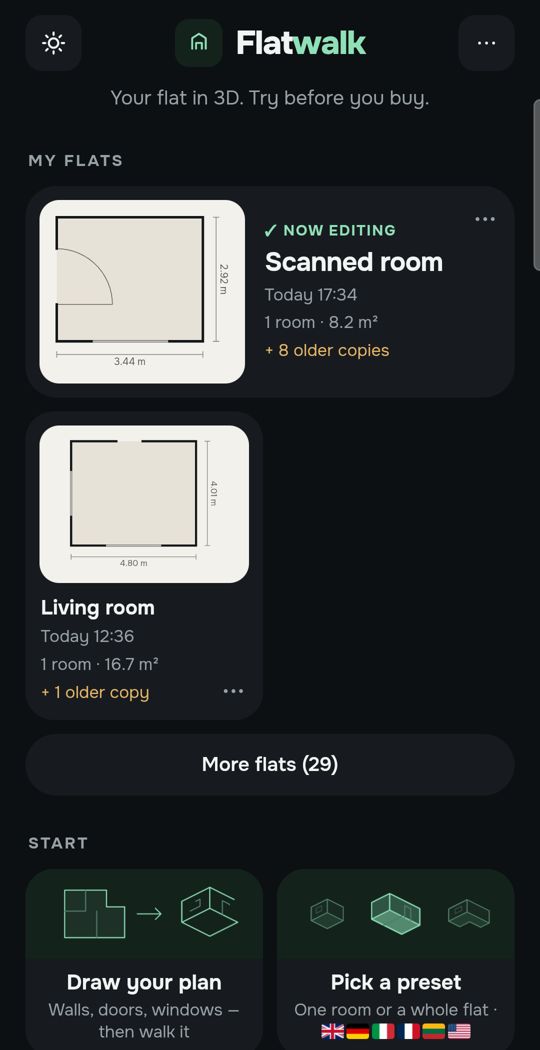
Thumb control
The hour slider answers to a single finger on the phone, and the light in the rooms changes as you drag it.
Swipe for more. Every picture is the app itself.
One flat, free
Most of us only ever plan one home, and for that Flatwalk is free: no trial countdown, no card asked for. Lights, furniture, the walk-through, the sun for the address and drawing the flat itself are all in that, plus one free try of each AI tool. The one thing that costs money is a membership, for those who want more flats or more AI.
Questions people ask
What is the sun path in Newcastle? Picture a shallow December curve that lifts out of the southeast, peaks at only about 12° and sinks in the southwest, against a tall June curve that starts in the northeast, rises to about 58° and ends in the northwest. Halfway through the year's swing, in late March and late September, sunrise lines up close to due east and sunset close to due west.
How many hours of daylight does Newcastle get in winter? Just 7h 10m on 21 December: the sun rises at 08:29 and has set by 15:39 GMT. By 21 June the day has grown to 17h 22m.
Where does the sun rise and set in Newcastle? Midwinter sunrise is low in the southeast at about 132°, and the sun is gone again at about 228° in the southwest; at midsummer the same points move round to about 44° in the northeast and about 316° in the northwest.
Which way should my flat face in Newcastle? Aim for south, southeast or southwest with nothing tall close in front, and in a Tyneside flat check which side the main rooms are on. Westward rooms get the summer evenings and eastward ones the mornings, while a north-facing room goes without direct sun from late September to about 20 March.
How high is the sun in Newcastle in December? At midday on 21 December it gets no higher than roughly 12°, so low that a five-storey building's shadow stretches about 73 m along the ground.
Flatwalk puts the real sun for your address into a 3D plan of your flat, by date and hour, free for one flat. It is coming soon to Google Play; join the waiting list at flatwalk.app.
Join the waiting list