Short answer. Nottingham's darkest day, 21 December, gives you 7h 34m between an 08:15 sunrise and a 15:49 sunset (GMT), and the sun is never more than about 14° up. At the other end of the year, 21 June stretches to 16h 55m, sunrise at 04:38 and sunset at 21:34 BST, with a midday sun of about 60°. Winter's sun keeps to the southern sky, coming up at about 130° in the southeast and going down at about 230° in the southwest, while summer's rises far round in the northeast near 47° and sets in the northwest near 313°. For a flat that matters in plain ways: with open sky a south window keeps every minute of December's daylight, and a north one gets no direct sun between late September and about 20 March.
See the sun at your own window
Sunrise, sunset and sun height in Nottingham, month by month
The figures belong to the Council House end of Old Market Square, on the 15th of each month in 2026, and are given in clock time, so GMT in winter and BST between 29 March and 25 October. In the direction columns 90° is due east, 180° due south and 270° due west, every bearing counted clockwise from true north.
| Date | Sunrise | Sunset | Daylight | Sun at noon (height) | Sunrise direction | Sunset direction |
|---|---|---|---|---|---|---|
| 15 Jan | 08:10 GMT | 16:18 GMT | 8h 08m | 16° | 125° (SE) | 235° (SW) |
| 15 Feb | 07:21 GMT | 17:16 GMT | 9h 54m | 25° | 110° (ESE) | 250° (WSW) |
| 15 Mar | 06:19 GMT | 18:08 GMT | 11h 49m | 35° | 92° (E) | 268° (W) |
| 15 Apr | 06:06 BST | 20:04 BST | 13h 58m | 47° | 72° (ENE) | 288° (WNW) |
| 15 May | 05:06 BST | 20:56 BST | 15h 49m | 56° | 56° (NE) | 304° (NW) |
| 15 Jun | 04:38 BST | 21:32 BST | 16h 53m | 60° | 47° (NE) | 313° (NW) |
| 15 Jul | 04:57 BST | 21:22 BST | 16h 25m | 59° | 51° (NE) | 309° (NW) |
| 15 Aug | 05:45 BST | 20:31 BST | 14h 45m | 51° | 65° (ENE) | 295° (WNW) |
| 15 Sep | 06:38 BST | 19:20 BST | 12h 41m | 40° | 84° (E) | 276° (W) |
| 15 Oct | 07:30 BST | 18:09 BST | 10h 38m | 28° | 103° (ESE) | 257° (WSW) |
| 15 Nov | 07:27 GMT | 16:09 GMT | 8h 41m | 19° | 121° (ESE) | 239° (WSW) |
| 15 Dec | 08:11 GMT | 15:48 GMT | 7h 36m | 14° | 130° (SE) | 230° (SW) |
Solstice and equinox days, seen from Old Market Square:
- 21 December: Nottingham's shortest day, sunrise 08:15, sunset 15:49, 7h 34m in total; just after clock noon, at 12:02 GMT, the sun tops out near 14°.
- 21 March: close to the equinox, so sunrise (06:04) and sunset (18:19 GMT) sit near due east and due west, and noon brings the sun to about 37°.
- 21 June: the year's longest daylight, 16h 55m from 04:38 to 21:34; the sun peaks near 60° at 13:06 BST.
When is the sun highest in Nottingham? Close to 12:02 GMT in winter, barely after clock noon, since the city sits only just west of Greenwich. In summer the moment moves to about 13:06 BST.
Hours of sun on each side of a building in Nottingham
The table gives the ceiling for each facing: the most direct sun a wall could have with clear sky and nothing in the way. Neighbouring buildings, trees and the slope of the ground opposite take a share, and the sun tool works out how big that share is for your window.
| Wall faces | 21 December | 21 March | 21 June |
|---|---|---|---|
| North | none | 16m | 7h 28m |
| Northeast | 25m | 3h 32m | 6h 40m |
| East | 3h 46m | 6h 06m | 8h 27m |
| Southeast | 7h 08m | 8h 40m | 10h 14m |
| South | 7h 34m | 11h 57m | 9h 27m |
| Southwest | 7h 08m | 8h 41m | 10h 14m |
| West | 3h 47m | 6h 08m | 8h 27m |
| Northwest | 25m | 3h 34m | 6h 40m |
Read across the rows and a pattern appears:
- December's sun stays south. A wall facing that way can hold it from sunrise to sunset on 21 December, all 7h 34m, while a wall turned east or west has roughly 3h 46m of it.
- North windows live on summer's edges. Their June ration, about 7h 28m, comes at the very start and the very end of the day, never around noon, and from late September until about 20 March they get no direct sun whatsoever.
- The corner facings lead in June. A southeast or southwest wall enjoys noon sun and also one end of the long summer day, which is why it tops the 21 June column at 10h 14m.
What that means for flats in Nottingham
- Which side to buy on. Ask which way the main rooms look: south, southeast or southwest holds the winter sun, east has the mornings, and west the afternoons and evenings. A flat with windows on two sides, for example south and east, holds sun for more of the day.
- Lace Market lofts. Many flats in the Lace Market sit in tall Victorian brick warehouses that once handled the lace trade, facing each other across narrow streets. On streets like these the building opposite stands close, so the lower floors can go without the low winter sun even on the south-facing side.
- Hills of sandstone. Nottingham is built on sandstone hills, and in many streets the ground rises or falls steeply. A home on a slope facing south gains winter sun, while one on a north-facing slope, or with rising ground opposite, can lose it.
- Which storey sees the sun. Imagine a five-storey building about 15 m high across a 20 m street. At midday on 21 December it casts a shadow about 62 m long, which climbs your wall to about 10.1 m: the fourth storey is right at its edge, and the fifth storey and upwards have the midday sun. On 21 March, though, the same shadow is only about 20 m: it just reaches the foot of your building, and every floor is in sun at noon. More on choosing a storey: which floor gets the most sun.
- Sitting out. Facing south, a balcony soaks up whatever low winter sun gets past the buildings opposite; by summer the noon sun is so steep that the balcony above casts the room behind it into shade. Point it west instead and it becomes a summer-evening balcony, with the June sun setting at about 9:34 pm. How each facing compares is set out in how much sun each side of a house gets.
- Out in the garden. A back garden facing south has sun all day long, because its own house throws its midday shade the other way. In December a 7 m high house casts about 30 m of shadow at midday, so a garden on the north side may get little winter sun close to the house. If the garden is what you are buying for, see which way does my garden face.
- The Midlands advantage. Nottingham's winter sun stands about 3° higher than Edinburgh's, so a building opposite casts a shorter shadow here. A block across a narrow street still keeps it off the lower floors.
- Before you sign. Walk round to the south side of the building: a gap site or a planning application there could take away hours of winter sun later, and will a new building block my sun shows what to look for.
Check your own window in Nottingham in 3 steps
Sun at your window is Flatwalk's free tool for exactly this question, and it lays the sun's path over your building in 3D. Nottingham's buildings all come with their outlines, but their heights are estimates worked out from each building's type and size, as the screen tells you. A building across the road that looks too low or too tall can be corrected: tap Something off? and give it the right height.
- Search. Start at "See the sun at your window": put in the address, whether it is a Lace Market loft or a Sneinton terrace, and pick your building out on the satellite map. A house is A whole house; a flat is A flat, and that also wants Your floor.
- Place your window. Find your wall by its tag, which reads something like "South wall · sun side", tap it, then tap the window's spot on it, and press See my sun.
- Check the hours. The December test lives under Shortest day, the rest of the year in the 12 month bars, and Typical weather adjusts for the cloud Nottingham usually gets. Whatever stands between you and the sun is listed under What takes your sun.
The limits:
- Calculated, never metered. There is no light meter in this: the hours are derived from maps and the sun's position alone.
- Nottingham's heights are estimated. Unlike London, Manchester, Cardiff, Edinburgh and Glasgow, where heights are measured, Nottingham's are estimated, so look hard at the buildings in front of your window and correct any that are wrong.
- Gaps in the map. Anything finished after the map data was collected is absent or wrong, and the same goes for trees planted or cut down since about 2017 to 2019; Something off? is how you put them in.
- Weather as a long average. Rather than a forecast, Typical weather gives the average cloud for each month across 2005 to 2023, and at a single window that may leave it about 10 to 15% adrift.
- For windows. It was built to time the sun at windows, so a lawn, a terrace floor or a roof you have in mind for solar panels is outside its scope.
- Not for a dispute. Should a neighbour's plans end up with solicitors, you will need a right to light survey, and this is neither that nor any kind of legal or certified report.
- It skips the small stuff. Window frames and glass tint are ignored, as is the shape of your own roof, and any map outline could be a metre adrift of the real wall.
See the sun at your own window
What Flatwalk does that older planners skip
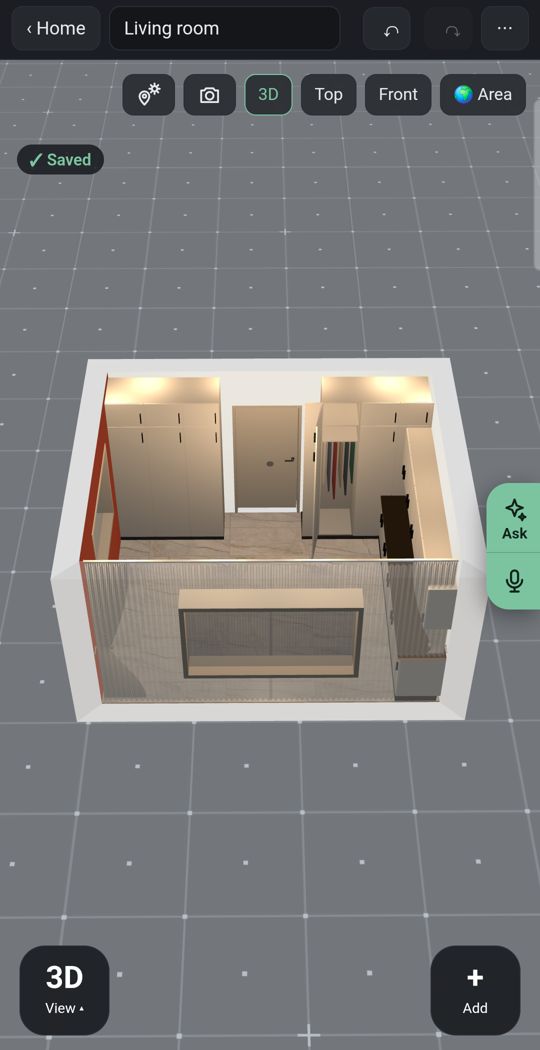
Lit up after sunset
A dark December teatime is the real test, so drop in ceiling lights, lamps and LED strips and see which corners still need help.
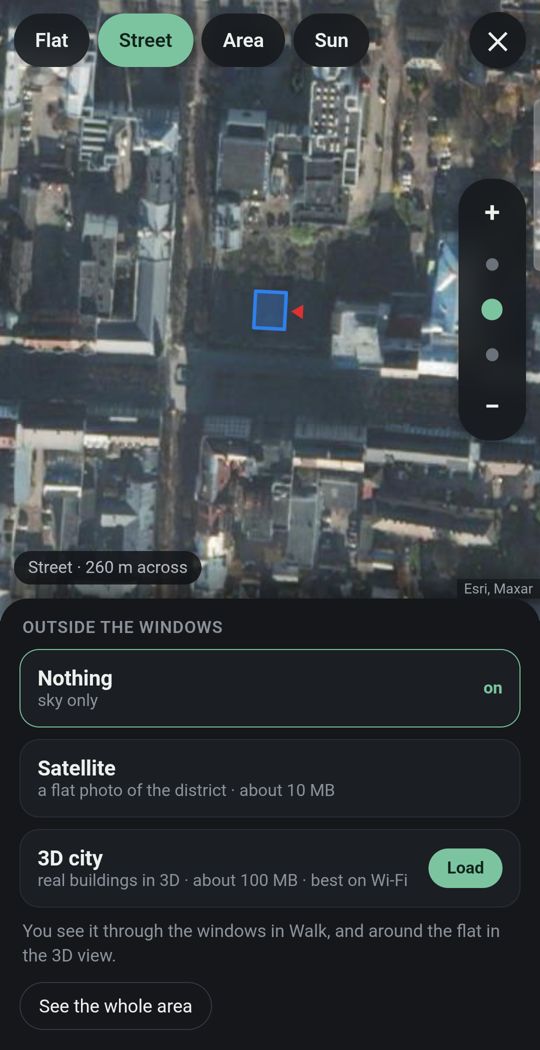
The neighbourhood in 3D
Nearby streets and buildings are modelled in 3D around your flat from its address, wherever the map has data.
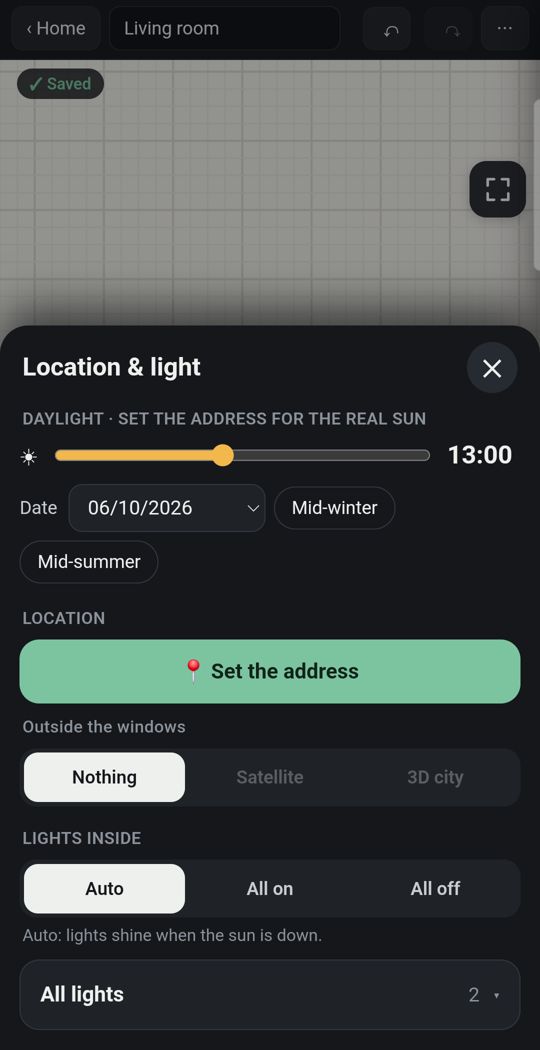
Sun at your door
The actual sun on your address for whatever date and hour you set, room by room, along with how long each room stays in direct sun.
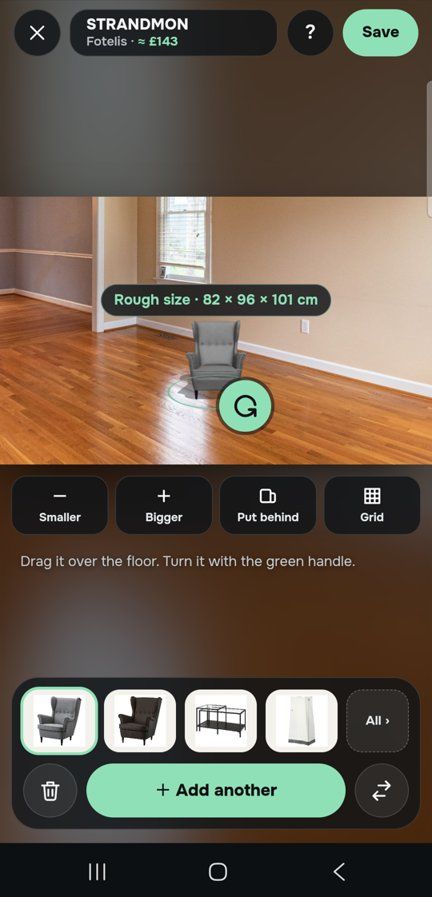
Test a piece for size
Hold the phone up in the live camera view, or work from a photo of the room, and set a sofa on your own floor at the size it really is.
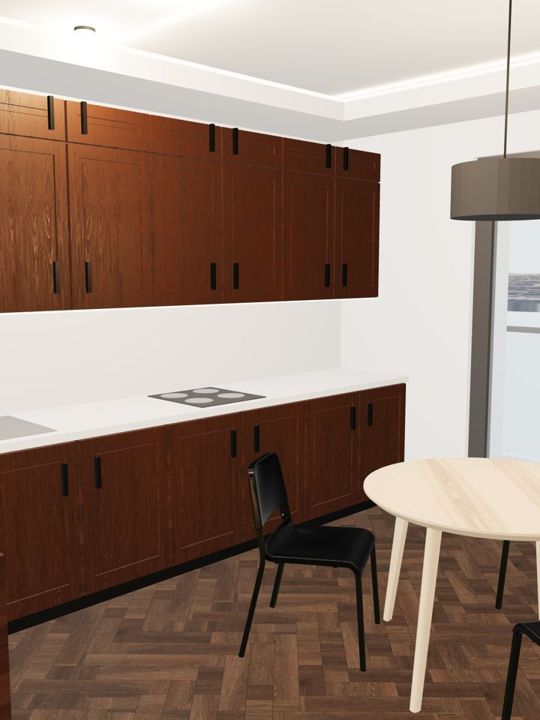
Down to the last cupboard
Kitchens, wardrobes and bathrooms are assembled piece by piece, and windows and doors come in their own types.
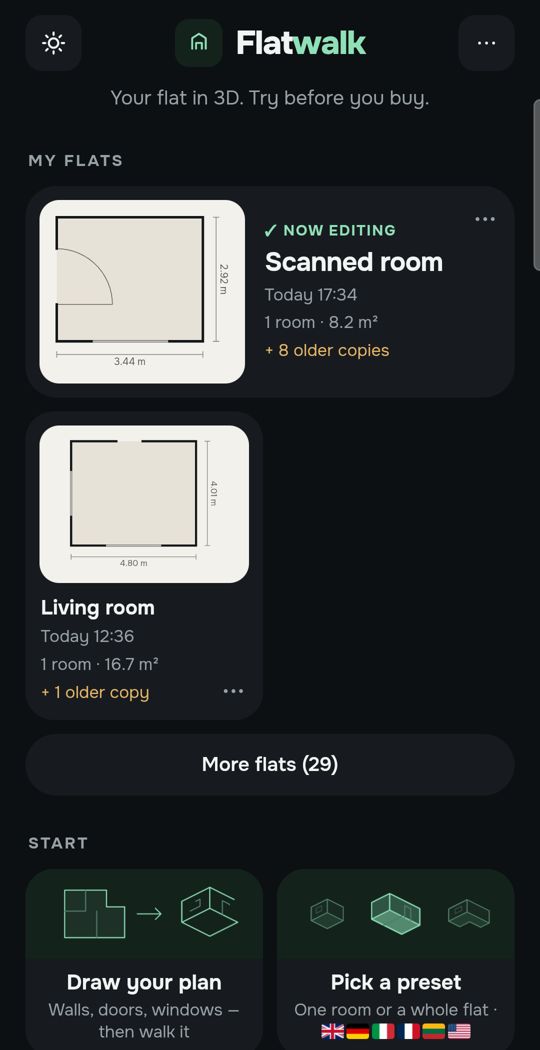
One finger is enough
On the phone, a single finger moves the clock through the day while the light follows it from room to room.
Swipe for more. Every picture is the app itself.
One flat, free
If you are planning a single home, Flatwalk will not charge you: there is no trial that runs out and nobody asks for a card. Your one flat gets the drawing tools, its own sun, lights, furniture and a walk-through, and you may try each AI tool once for free. A membership is the upgrade for more flats or more AI.
Questions people ask
What is the sun path in Nottingham? Low and to the south in winter: up in the southeast, no higher than about 14° at noon, down in the southwest. By midsummer the arc is broad and steep, rising in the northeast, near 60° at noon and setting in the northwest. At the equinoxes, sunrise is near due east and sunset near due west.
What time is sunrise in Nottingham in winter? Late: 08:15 GMT on 21 December, and it is down again at 15:49, leaving 7h 34m of daylight. Midsummer sunrise is far earlier, at 04:38 BST.
Where does the sun rise and set in Nottingham? The bearings swing a long way: sunrise about 130° and sunset about 230° on 21 December, in the southeast and southwest, but about 47° and 313° on 21 June, in the northeast and northwest.
Which way should my flat face in Nottingham? Pick south, southeast or southwest for winter sun, and on a narrow Lace Market street check that nothing tall stands close in front. An evening person will like a west window in summer, an early riser an east one. North windows are the weak spot: between late September and about 20 March no direct sun reaches them.
How high is the sun in Nottingham in December? Its winter peak, at midday on 21 December, is only about 14°, and at that angle a five-storey building throws a shadow roughly 62 m long.
Flatwalk puts the real sun for your address into a 3D plan of your flat, by date and hour, free for one flat. It is coming soon to Google Play; join the waiting list at flatwalk.app.
Join the waiting list