Short answer. In Vancouver the midday sun stands about 17° above the horizon on December 21 and about 64° on June 21. The shortest day has 8h 10m of daylight (sunrise 9:05 a.m., sunset 5:16 p.m. UTC-7); the longest has 16h 15m (sunrise 5:06 a.m., sunset 9:21 p.m. UTC-7). In winter the sun rises in the southeast (about 126°) and sets in the southwest (about 234°); in summer it rises in the northeast (about 51°) and sets in the northwest (about 309°). A south-facing window with open sky can get every hour of December daylight; a north-facing one gets no direct sun from late September to about March 17.
See the sun at your own window
Sunrise, sunset and sun height in Vancouver, month by month
The 15th of each month in 2026, at downtown Vancouver (49.28° N, 123.12° W). Clock time: PST (UTC-8) in January and February 2026; British Columbia moved its clocks forward on March 8, 2026 and has stayed there, so from March the times are on UTC-7 all year (B.C.'s new Pacific Time). Directions are compass bearings from true north: 90° is east, 180° south, 270° west. Elsewhere in the city the times differ by a minute or two.
| Date | Sunrise | Sunset | Daylight | Sun at noon (height) | Sunrise direction | Sunset direction |
|---|---|---|---|---|---|---|
| Jan 15 (PST) | 8:02 a.m. | 4:42 p.m. | 8h 40m | 20° | 122° (ESE) | 238° (WSW) |
| Feb 15 (PST) | 7:21 a.m. | 5:32 p.m. | 10h 11m | 28° | 108° (ESE) | 252° (WSW) |
| Mar 15 (UTC-7) | 7:25 a.m. | 7:18 p.m. | 11h 52m | 39° | 92° (E) | 268° (W) |
| Apr 15 (UTC-7) | 6:20 a.m. | 8:05 p.m. | 13h 45m | 51° | 74° (ENE) | 287° (WNW) |
| May 15 (UTC-7) | 5:28 a.m. | 8:49 p.m. | 15h 20m | 60° | 59° (ENE) | 301° (WNW) |
| Jun 15 (UTC-7) | 5:06 a.m. | 9:20 p.m. | 16h 13m | 64° | 51° (NE) | 309° (NW) |
| Jul 15 (UTC-7) | 5:23 a.m. | 9:12 p.m. | 15h 49m | 62° | 55° (NE) | 305° (NW) |
| Aug 15 (UTC-7) | 6:04 a.m. | 8:28 p.m. | 14h 24m | 55° | 67° (ENE) | 292° (WNW) |
| Sep 15 (UTC-7) | 6:49 a.m. | 7:25 p.m. | 12h 35m | 44° | 85° (E) | 275° (W) |
| Oct 15 (UTC-7) | 7:33 a.m. | 6:21 p.m. | 10h 47m | 32° | 102° (ESE) | 257° (WSW) |
| Nov 15 (UTC-7) | 8:23 a.m. | 5:30 p.m. | 9h 07m | 22° | 118° (ESE) | 242° (WSW) |
| Dec 15 (UTC-7) | 9:01 a.m. | 5:14 p.m. | 8h 12m | 17° | 126° (SE) | 234° (SW) |
The clocks went forward on March 8, 2026 and, for the first time, will not go back on November 1: British Columbia now stays on UTC-7 all year. So the November and December times are an hour later than in past years, and from the winter of 2026 to 2027 on, January and February sunrises and sunsets come an hour later than the two PST rows show.
The key days:
- December 21: sunrise 9:05 a.m., sunset 5:16 p.m., 8h 10m of daylight, the sun highest at 1:10 p.m. UTC-7 at about 17°.
- March 21: sunrise 7:12 a.m., sunset 7:27 p.m. UTC-7, about 41° at midday; the sun rises and sets close to due east and due west.
- June 21: sunrise 5:06 a.m., sunset 9:21 p.m., 16h 15m of daylight, the sun highest at 1:14 p.m. UTC-7 at about 64°.
Why is the sun highest after 1 p.m.? Solar noon, when the sun is due south, comes at about 1:14 p.m. in June and 1:10 p.m. in December, because Vancouver sits west of the middle of its time zone and the clocks now stay an hour ahead all year. The upside is lighter winter evenings: sunset on December 21 is at 5:16 p.m. The cost is dark mornings: sunrise is after 9 a.m. from about December 14 to the end of the year and into January.
Hours of sun on each side of a building in Vancouver
Hours of direct sun on a wall facing each way, on three days, with open sky and nothing in the way. This is the most a window on that wall could get: buildings, trees and hills cut it, which is exactly what the sun tool adds.
| Wall faces | December 21 | March 21 | June 21 |
|---|---|---|---|
| North | none | 17m | 7h 10m |
| Northeast | 44m | 3h 38m | 6h 31m |
| East | 4h 05m | 6h 06m | 8h 07m |
| Southeast | 7h 26m | 8h 34m | 9h 44m |
| South | 8h 10m | 11h 56m | 9h 04m |
| Southwest | 7h 26m | 8h 35m | 9h 44m |
| West | 4h 05m | 6h 07m | 8h 07m |
| Northwest | 44m | 3h 40m | 6h 31m |
What it shows:
- South is the winter wall. On the shortest day a south wall can see the sun from sunrise to sunset (8h 10m); east and west walls get about 4h 05m each, a north wall none.
- North walls get summer sun, at the ends of the day. In June a north window can get about 7h 10m, early in the morning and in the evening, but no midday sun.
- Southeast and southwest walls get the most in summer (9h 44m on June 21, against 9h 04m for south), because they see the midday sun and one end of the long June day.
What that means for apartments and condos in Vancouver
- Which way to face. For winter sun, main windows or a balcony facing anywhere between southeast and southwest. West gets the evening sun (until about 9:21 p.m. in June); east gets the morning. An apartment or condo with windows on two sides, such as south and west, gets the most.
- Downtown's grid is turned. On the downtown peninsula the streets run at about 45° to the compass, so towers there face northeast, southeast, southwest and northwest rather than due south; most of the city outside downtown follows the compass. The wall tags in the sun tool show the true direction.
- Which floor. At noon on December 21 the sun is about 17° up, so a five-storey building 15 m (49 ft) tall throws a shadow about 48 m (160 ft) long. Across a street 20 m (66 ft) wide, wall to wall, that shadow covers the facing wall up to about 8.8 m (29 ft): counting the ground floor as the 1st floor, with floors about 3 m (10 ft) high, windows on the 1st to 3rd floors get no midday sun on the shortest day, and the 4th floor is the first to see it. By March 21 the same shadow is about 17 m (56 ft) long, shorter than the street, so every floor gets the midday sun. See which floor gets the most sun.
- Towers. A 30-storey tower (about 90 m, 295 ft) throws a midday shadow about 290 m (945 ft) long on December 21 and about 105 m (335 ft) on March 21. A tower to your south, even a block or two away, can take your winter noon sun; one to your north takes none.
- Balconies. A south balcony gets the long, low winter sun; in summer the sun is high (about 64°), so the balcony above shades the window behind it at midday. A west balcony gets summer evenings. See how much sun each side of a house gets.
- Houses and yards. At noon on December 21 a house 7 m (23 ft) high throws a shadow about 20 m (66 ft) long, so the part of a backyard next to the house's north side gets little winter sun. In June the same shadow is about 3 m (11 ft). See is a south-facing house worth it.
- What may be built. An empty lot or a planned tower to your south can take hours of winter sun later. See will a new building block my sun.
Check your own window in Vancouver in 3 steps
Flatwalk's free tool, Sun at your window, counts the hours of direct sun on a real window, with the buildings, trees and ground around it. In Vancouver it uses measured building heights (the federal laser survey HRDEM, 2013 to 2023, with the city's building footprints), tree crowns and ground heights, so the tower across the street stands at its real height.
- Type your address under "See the sun at your window" and find your building on the satellite map. Choose A whole house, or A flat for an apartment or condo on one floor, and set Your floor. The tool counts floors the British way: street level shows as Ground and the floor above it as 1, so for a 4th-floor condo set it to 3.
- Put your window on the wall. Each outside wall has a tag, such as "South wall · sun side". Tap the wall, then tap where the window is (or drag to draw it), and tap See my sun.
- Read your sun. Tap Shortest day for the December test, look at the 12 month bars, and switch on Typical weather to see the hours with Vancouver's usual clouds. What takes your sun names what blocks it.
What it cannot tell you:
- Modelled, not measured. The hours are worked out from maps and the sun's position, not from a light meter at your window.
- New buildings and trees. Buildings finished after the map data, and trees planted or cut since the satellite pictures behind the tree map (about 2016 to 2019), are missing or wrong until you fix them with Something off? (fix a height, add a building or a tree).
- Weather. Typical weather is a monthly average from NASA satellite records (2001 to 2025), checked against Environment Canada climate normals; it is not a forecast and can be about 10 to 15% off for a window. Vancouver's grey winters make it worth switching on.
- Windows only. It does not measure sun on a yard, a terrace floor or a roof for solar panels.
- Not a legal or certified report. It is a check for yourself, not a certified daylight or shadow study.
- Small things it ignores: window frames, glass tint and your own roof shape. Map outlines can be about 1 m (3 ft) off the real wall.
Try it free: your Vancouver address, your floor, your window
What Flatwalk does that older planners skip
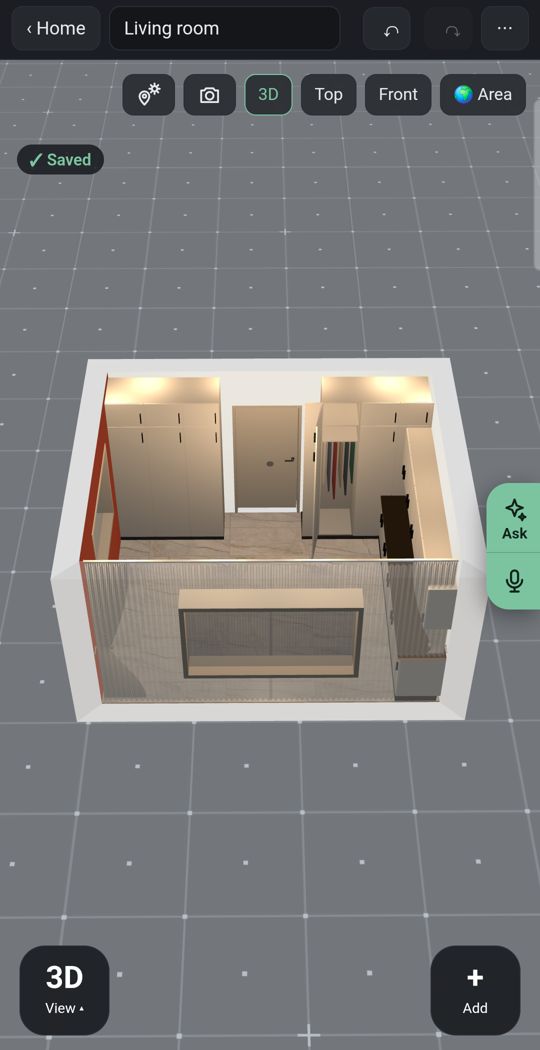
Lights
Add ceiling lights, lamps and LED strips and see where you need them after the sun goes down.
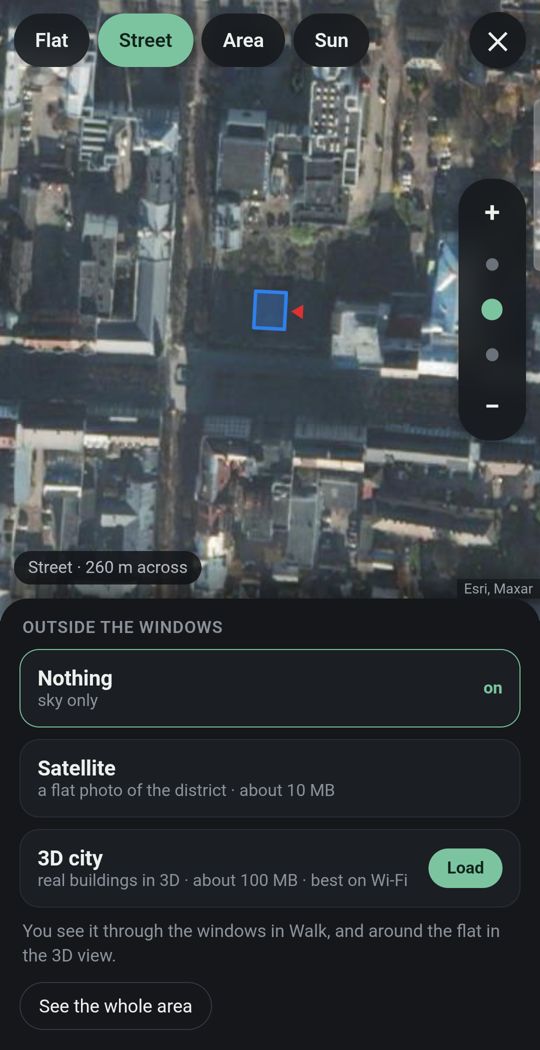
Your home in its city
Give the address and the street and buildings around you appear in 3D where the map has them.
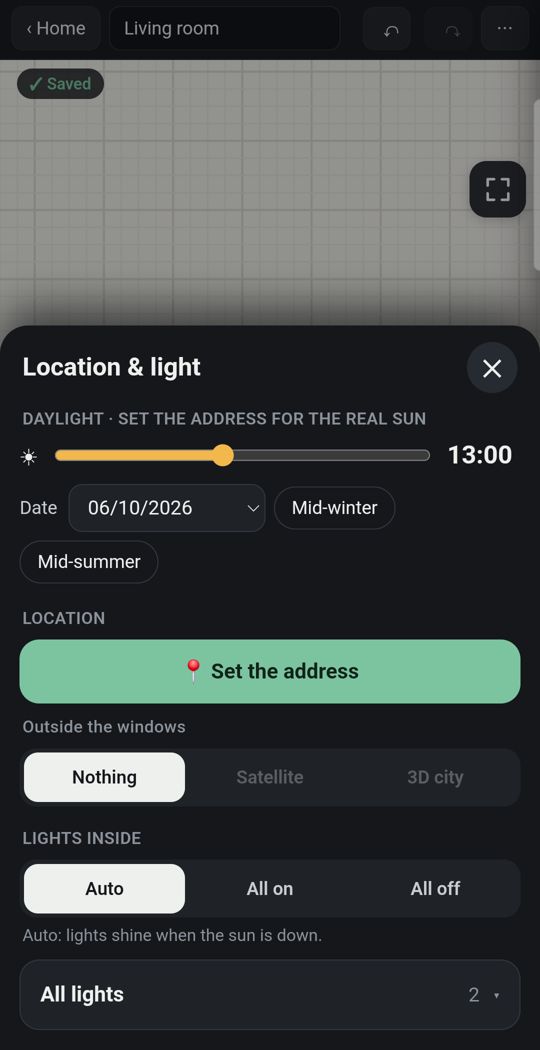
Sun for your address
Real sunlight by date and hour, and how long each room gets direct sun.
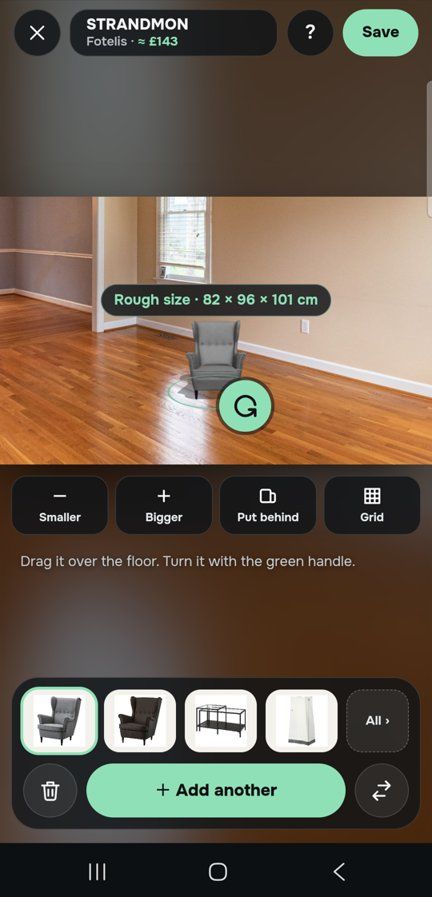
One piece, in your own room
Through the live camera or in a photo of the room, stand a sofa on your own floor at its true size.
Detail
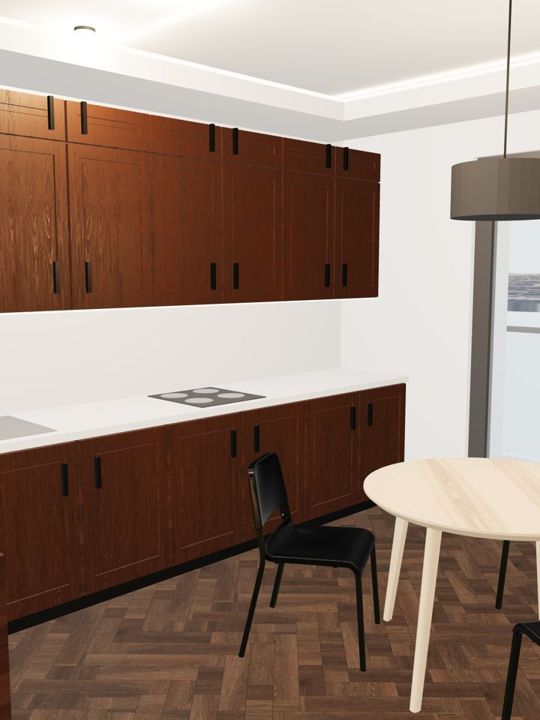
Window and door types, kitchens, closets and bathrooms built piece by piece.
Made for a thumb
Slide the hour with one finger and watch the light move through the rooms.
Swipe for more. Every picture is the app itself.
One home, free
Most people plan one home. For that, Flatwalk costs nothing: no trial clock and no card. Drawing the apartment, the sun for its address, lights, furniture and walking through it are all part of it, and each AI tool gives one free try. A membership is for people who want more homes or more AI.
Questions people ask
What is the sun path in Vancouver? In winter the sun rises in the southeast, stays low in the south (about 17° at midday on December 21) and sets in the southwest. In summer it rises in the northeast, climbs to about 64° at midday on June 21 and sets in the northwest. Around March 21 and September 23 it rises and sets close to due east and due west.
What time is sunrise and sunset in Vancouver in December? On December 21, 2026 the sun rises at 9:05 a.m. and sets at 5:16 p.m., giving 8h 10m of daylight. That is an hour later than in past winters, because British Columbia no longer turns its clocks back in November. The earliest sunsets come in early December (about 5:13 p.m.) and the latest sunrises at the end of December (about 9:07 a.m.).
Does Vancouver change the clocks? Not any more. British Columbia moved its clocks forward on March 8, 2026 and stays on that time (UTC-7) all year, so the clocks do not go back on November 1, 2026. In winter the sun is now highest at about 1:10 p.m.
Where does the sun rise and set in Vancouver? On the shortest day it rises at about 126° (southeast) and sets at about 234° (southwest). On the longest day it rises at about 51° (northeast) and sets at about 309° (northwest).
Which way should my condo face in Vancouver? For the most sun over the year, and above all in winter, between southeast and southwest. West suits people who are home in the evening; east suits early risers. Then check what stands to the south: a five-storey building across a 20 m (66 ft) street keeps the lower three floors out of the midday sun on the shortest day, and a tower can shade you from blocks away.
How high is the sun in Vancouver in winter? About 17° at midday on December 21, and no more than about 22° from mid-November to mid-January. A building that rises more than 17° above your window, seen from where you sit, hides the midday sun.
Flatwalk puts the real sun for your address into a 3D plan of your home, by date and hour, free for one home. It is coming soon to Google Play; join the waiting list at flatwalk.app.
Join the waiting list